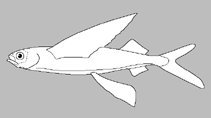
Hirundichthys indicus

Hirundichthys indicus Shakhovskoy & Parin, 2013

إضافة ملاحظاتك Fish Watcher
Native range | All suitable habitat | Point map | Year 2050
This map was computer-generated and has not yet been reviewed.
Hirundichthys indicus   AquaMaps   Data sources: GBIF OBIS
ارفع صور و مقاطع فيديو
صور قوقل
Image of Hirundichthys indicus
No image available for this species;
drawing shows typical species in Exocoetidae.

التصنيف / الأسماء الأسماء الشائعة | مرادفات | Catalog of Fishes(جنس, الانواع) | ITIS | CoL | WoRMS | Cloffa

> Beloniformes (Needle fishes) > Exocoetidae (Flyingfishes)
Etymology: Hirundichthys: latin, hirundo = swift; 1300 + Greek, ichthys = fish (Ref. 45335)indicus: Named for its occurrence in the Indian Ocean.

Taxonomic Remarks
Subspecies Hirundichthys indicus orientalis is elevated to a valid species according to Shakhovskoy, 2018 (Ref. 119460). A species record will be created for this species in the next web update. The two species differ in pelvic fin coloration in adults: Hirundichthys indicus distributed on the waters of the western and central parts (from the west coast of Africa to the meridian of 96° E, and from 15° S to the northern Arabian Sea, the southern parts of the Bay of Bengal (but does not enter the coastal waters, only at its outlet) and the Andaman Sea; not found in the western part of Arabian Sea, the Red Sea, the Gulf of Oman and the Persian Gulf). Hirundichthys orientalis distributed on the waters of the eastern parts - from the 100° E meridian, early stages of development seemingly can be transported by the Southern Equatorial Current westward up to 90° E.

البيئة: الوسط / المنطقة المناخية / نطاق العمق / نطاق التوزيع البيئة

بحري pelagic-oceanic; نطاق العمق 0 - ? m. Tropical

التوزيع الأقاليم | مناطق الفاو | النظام البيئي | الظهور | نقطة علي الخريطة | مقدمة | Faunafri

Indian Ocean: widely distributed in western and central open ocean, from East Africa to the meridian of 96° E, and from 15° S to the northern Arabian Sea, southern Bay of Bengal (but does not enter the coastal water, only at its outlet), Andaman Sea, but not in Red Sea, Gulf of Oman, Persian Gulf, western Arabian Sea,and northern Bay of Bengal.

الحجم / وزن / العمر

النضج: Lm ?  range ? - ? cm
Max length : 19.2 cm SL ذكر/ مختلط الجنس; (Ref. 93339)

وصف مختصر مفاتيح التعريف | الوصف الخارجي | قياسات المظهر الخارجي

H. indicus indicus differs from H. indicus orientalis by the absence of a dark spot on the ventral fins in specimens larger than 15.1 cm (usually the spot is absent already in fishes larger than 13.5 cm), as well as by having some less number of predorsal scales: 26-35 (modally 28-30) (Ref. 93339).
Body shape (shape guide): elongated.

أحياء     المصطلحات (على سبيل المثال epibenthic)

Caught in surface waters over the depths 390-7219 m, usually 2000-6000 m (mean 4129 m) (Ref. 93339). Juveniles of this species under 10.0 cm SL were caught in all seasons, indicating a year-round spawning of this species, with a highly pronounced peak in the summer and autumn months. Mature fishes appear at 16.0 cm SL or more (Ref. 93339).

دورة الحياة وسلوك التزاوج النضج | التكاثر | وضع البيض | بيض | الخصوبة | اليرقات

المرجع الرئيسي قم بتحميل مراجعك | مراجع | المنظم : Parin, Nikolay V. | المتعاونين

Shakhovskoy, I.B. and N.V. Parin, 2013. A review of flying fishes of the subgenus Hirundichthys (genus Hirundichthys, Exocoetidae). 1. Oceanic species: H. speculiger, H. indicus sp. nova. J. Ichthyol. 53(2):117-145. (Ref. 93339)

حالة القائمة الحمراء للاتحاد الدولي لحفظ الطبيعة والموارد الطبيعية (Ref. 130435: Version 2025-2 (Global))


CITES

Not Evaluated

CMS (Ref. 116361)

Not Evaluated

خطر للأنسان

  Harmless


استخدامات بشرية

FAO - Publication: search | FishSource |

مزيد من المعلومات

علم البيئة الغذائية
المواد الغذائية (الفرائس)
التركيبة الغذائية
استهلاك الأغذية
الحصص الغذائية
مفتريسات
البيئة
البيئة
الديناميكيات السكانية
معاملات النمو
الحد الأقصى للأعمار/الأحجام
علاقة الطول بالوزن.
علاقة الطول بالطول.
الطول- الترددات
التحويل الجماعي
توظيف
الوفرة
دورة الحياة
التكاثر
النضج
النضج/الخياشيم المتعلقة.
الخصوبة
وضع البيض
تجمعات التفريخ
بيض
تطور البيضة
اليرقات
حركة انتقال اليرقات
التوزيع
الأقاليم
مناطق الفاو
النظام البيئي
الظهور
مقدمة
بروفس - فيديوهات
التشريح
منطقة الخياشيم
الدماغ
الأوتوليث
علم وظائف الأعضاء
تكوين الجسم
المغذيات
استهلاك الأوكسجين
نوع السباحة
سرعة السباحة
الأصباغ البصرية
صوت السمك
الأمراض والطفيليات
السمية (LC50s)
جيني
الوراثة
جيني
التغاير
التوريث
التنوع الوراثي
ذات الصلة بالبشر
أنظمة الاستزراع المائي
ملامح تربية الأحياء المائية
سلالات
حالات سيغواتيرا
طوابع بريدية وعملات معدنية ومتنوعة
التوعية
المتعاونين
التصنيف
الأسماء الشائعة
مرادفات
الوصف الخارجي
قياسات المظهر الخارجي
صور
مراجع
مراجع

أدوات

تقارير خاصة

تنزيل XML

مصادر علي الأنترنت

AFORO (otoliths) | Aquatic Commons | BHL | Cloffa | Websites from users | البحث في مراقبي الأسماك | CISTI | Catalog of Fishes: جنس, الانواع | DiscoverLife | ECOTOX | FAO - Publication: search | Faunafri | Fishipedia | Fishtrace | GloBI | Google Books | Google Scholar | Google | IGFA World Record | OneZoom | Open Tree of Life | Otolith Atlas of Taiwan Fishes | PubMed | Reef Life Survey | Socotra Atlas | TreeBase | شجرة الحياة | Wikipedia: ذهب, بحث | World Records Freshwater Fishing | Zoobank | سجلات علم الحيوانات

تقديرات تستند إلى النماذج

درجة الحرارة المفضلة (مرجع 123201): 1.2 - 2.1, mean 1.6 °C (based on 4530 cells).
مؤشر التنوع الشُعبي الوراثي (مرجع 82804):  PD50 = 0.5002   [Uniqueness, from 0.5 = low to 2.0 = high].
Bayesian length-weight: a=0.00646 (0.00293 - 0.01422), b=3.04 (2.85 - 3.23), in cm total length, based on LWR estimates for this (Sub)family-body shape (Ref. 93245).
مستوى غذائي (مرجع 69278):  3.0   ±0.1 se; based on size and trophs of closest relatives
المرونه (مرجع 120179):  عالي, الحد الزمني الأدني لتضاعف عدد أفراد المجتمع أقل من 15 شهر (Preliminary K or Fecundity.).
ضعف الصيد (Ref. 59153):  Low vulnerability (13 of 100). 🛈