



Konia eisentrauti (Trewavas, 1962)
Konye
アップロード 写真 そして ビデオ
画像 | グーグルの画像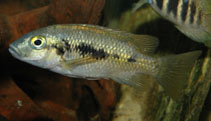 Konia eisentrauti
画像によって Albering, J.
画像 | グーグルの画像
画像によって Albering, J.
分類 / 名前 共通名の | 類義語 | Catalog of Fishes(部類, 種) | ITIS | CoL | WoRMS | Cloffa
> Cichliformes (Cichlids, convict blennies) > Cichlidae (Cichlids) > Pseudocrenilabrinae
Etymology: Konia: Greek, konia, as = ash, sand (Ref. 45335).
Eponymy: Professor Dr Martin Eisentraut (1902–1994) was a German zoologist and collector. [...] (Ref. 128868), visit book page.
More on author: Trewavas.
Etymology: Konia: Greek, konia, as = ash, sand (Ref. 45335).
Eponymy: Professor Dr Martin Eisentraut (1902–1994) was a German zoologist and collector. [...] (Ref. 128868), visit book page.
More on author: Trewavas.
環境:環境 / 気候帯 / 深さの範囲 / 分布範囲 生態学
; 新鮮な水 底生の漂泳性. Tropical; 25°C - 27°C (Ref. 13614); 10°N - 3°N
分布 領土 | 国連食糧農業機関の区域 | エコシステム | 事件 | 目的のマップ | 導入 | Faunafri
Africa: endemic to Lake Barombi-Mbo, Cameroon (Ref. 81260).
サイズ / 重さ / 年齢
簡単な記述 検索表 | 形態学 | 形態計測学
背面の脊椎 (合計) : 15 - 16; 背鰭 (合計) : 10 - 11; 肛門の骨: 3; 臀鰭: 8 - 9; 脊つい: 29. Diagnosis: profile of the snout evenly decurved, descending to a nearly horizontal mouth; narrow interorbital space (24-27% head length)(Ref. 53940, 53949). Lower jaw not, or only slightly inclined from the horizontal; lower pharyngeal jaw only slightly longer than wide (Ref. 81260). Dentigerous area of lower pharyngeal bone longer than anterior blade in young and of characteristic shape, with a narrow anterior apical portion (Ref. 53949). Blade of lower pharyngeal bone 0.7-0.95 times median length of toothed area; 3 regular rows of teeth; upper series of black blotches parallel to dorsal outline; black band of uneven width extending from opercular spot to anterior part of caudal peduncle; posterior end of caudal peduncle with vertical blotch meeting its fellow over top; fins colorless; tilapia mark absent (Ref. 53940).
Body shape (shape guide): fusiform / normal.
Body shape (shape guide): fusiform / normal.
Feeds on algae, small insects and fish eggs (Ref. 52307). Also kleptoparasite of freshwater crabs (Ref. 53950). Ovophilic mouthbrooder with both sexes as possible incubator; from aquarium observations: a few days prior to spawning, both partners remain close together for much of the time; the genital papilla of the female is clearly visible immediately before spawning and is much broader and larger than the male's; females are normally more successful than males when it comes to brooding the fry; when mouthbrooding, which ends about 3 weeks post-spawning, the specimens are relatively shy and prefer to lie silently near the bottom in secluded areas; once free swimming, juveniles normally do not return to the parent's mouth again (Ref. 52307).
ライフサイクルと交尾行動 成熟 | 繁殖 | 放精 | 卵 | 生産力 | 幼生
Male or female carries the egg in the mouth (Ref. 52307, Ref. 13614). A few days prior to spawning, both partners remain close together for much of the time; the genital papilla of the female is clearly visible immediately before spawning and is much broader and larger then the male's; females normally more succesfull in brooding the fry; specimens are relatively shy and prefer to lie silently near the bottom in secluded areas when mouthbrooding, which ends about three weeks post-spawning; once free swimming, the fry normally does not return to the parent's mouth (Ref. 52307).
主な参考文献
参考文献のアップロード | 参考文献 | コーディネーター : Kullander, Sven O. | 協力者
Lamboj, A., 2004. The cichlid fishes of Western Africa. Birgit Schmettkamp Verlag, Bornheim, Germany. 255 p. (Ref. 52307)
IUCNのレッドリストの状況は (Ref. 130435: Version 2025-2 (Global))
絶滅寸前の危機的状況 (CR) (B1ab(iii)+2ab(iii)); Date assessed: 16 February 2009
CITES
Not Evaluated
人間に対する脅威
Harmless
人間の用途
FAO - Publication: search | FishSource |
より多くの情報
解剖学
カマ
脳
オトリス
カマ
脳
オトリス
生理学
体組成
栄養素
酸素消費
水泳タイプ
泳ぐ速さ
視覚色素
フィッシュ・サウンド
病気と寄生虫
毒性(LC50)
体組成
栄養素
酸素消費
水泳タイプ
泳ぐ速さ
視覚色素
フィッシュ・サウンド
病気と寄生虫
毒性(LC50)
遺伝子の
ゲノム
遺伝子の
ヘテロ接合性
遺伝
遺伝的多様性
ゲノム
遺伝子の
ヘテロ接合性
遺伝
遺伝的多様性
用具
オーガニック・クイズ | 電子書籍 | 野外観察図鑑 | 検索表 | 長さ-周波数ウィザード | 生活史の基盤ツール | 目的のマップ |
キャッチ-MSY |
特記事項
XMLをダウンロードして下さい
インターネットの情報源
AFORO (otoliths) | Aquatic Commons | BHL | Cloffa | Websites from users | Check FishWatcher | CISTI | Catalog of Fishes: 部類, 種 | DiscoverLife | ECOTOX | FAO - Publication: search | Faunafri | Fishipedia | Fishtrace | GloBI | Google Books | Google Scholar | Google | IGFA World Record | OneZoom | Open Tree of Life | Otolith Atlas of Taiwan Fishes | 公共の水族館 | PubMed | Reef Life Survey | Socotra Atlas | TreeBase | 生命の木 | Wikipedia: 行く, 検索する | World Records Freshwater Fishing | 動物に関する記録
モデルに基づく推定値
系統多様性指数 (参照 82804): PD50 = 0.7500 [Uniqueness, from 0.5 = low to 2.0 = high].
Bayesian length-weight: a=0.01445 (0.00671 - 0.03113), b=2.99 (2.82 - 3.16), in cm total length, based on LWR estimates for this (Sub)family-body shape (Ref. 93245).
栄養段階 (参照 69278): 3.6 ±0.45 se; based on food items.
回復力 (参照 120179): 高い, 15か月以下の倍増期間の最小個体群 (Preliminary K or Fecundity.).