



Konia eisentrauti (Trewavas, 1962)
Konye
Ανεβάστε το φωτογραφίες και Βίντεο
Φωτογραφίες | Google image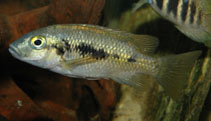 Konia eisentrauti
Εικόνα από Albering, J.
Φωτογραφίες | Google image
Εικόνα από Albering, J.
Ταξινόμηση / Ονόματα Κοινά ονόματα | Συνώνυμα | Catalog of Fishes(Γένος, Είδη) | ITIS | CoL | WoRMS | Cloffa
> Cichliformes (Cichlids, convict blennies) > Cichlidae (Cichlids) > Pseudocrenilabrinae
Etymology: Konia: Greek, konia, as = ash, sand (Ref. 45335).
Eponymy: Professor Dr Martin Eisentraut (1902–1994) was a German zoologist and collector. [...] (Ref. 128868), visit book page.
More on author: Trewavas.
Etymology: Konia: Greek, konia, as = ash, sand (Ref. 45335).
Eponymy: Professor Dr Martin Eisentraut (1902–1994) was a German zoologist and collector. [...] (Ref. 128868), visit book page.
More on author: Trewavas.
Περιβάλλον: περιβάλλον / κλιματική ζώνη / εύρος βάθους / εύρος διανομής Οικολογία
; Γλυκού νερού βενθοπελαγικό. Tropical; 25°C - 27°C (Ref. 13614); 10°N - 3°N
Κατανομή Εδάφη | Περιοχές FAO | Οικοσυστήματα | Παρουσίες | Σημειακός χάρτης | Εισαγωγές | Faunafri
Africa: endemic to Lake Barombi-Mbo, Cameroon (Ref. 81260).
Μέγεθος / Βάρος / Ηλικία
Σύντομη περιγραφή Κλείδες προσδιορισμού | Μορφολογία | Μορφομετρία
Ραχιαίες άκανθες (συνολικά) : 15 - 16; Μαλακές ραχιαίες ακτίνες (συνολικά) : 10 - 11; Εδρικές άκανθες: 3; Μαλακές εδρικές ακτίνες: 8 - 9; Σπόνδυλοι: 29. Diagnosis: profile of the snout evenly decurved, descending to a nearly horizontal mouth; narrow interorbital space (24-27% head length)(Ref. 53940, 53949). Lower jaw not, or only slightly inclined from the horizontal; lower pharyngeal jaw only slightly longer than wide (Ref. 81260). Dentigerous area of lower pharyngeal bone longer than anterior blade in young and of characteristic shape, with a narrow anterior apical portion (Ref. 53949). Blade of lower pharyngeal bone 0.7-0.95 times median length of toothed area; 3 regular rows of teeth; upper series of black blotches parallel to dorsal outline; black band of uneven width extending from opercular spot to anterior part of caudal peduncle; posterior end of caudal peduncle with vertical blotch meeting its fellow over top; fins colorless; tilapia mark absent (Ref. 53940).
Body shape (shape guide): fusiform / normal.
Body shape (shape guide): fusiform / normal.
Feeds on algae, small insects and fish eggs (Ref. 52307). Also kleptoparasite of freshwater crabs (Ref. 53950). Ovophilic mouthbrooder with both sexes as possible incubator; from aquarium observations: a few days prior to spawning, both partners remain close together for much of the time; the genital papilla of the female is clearly visible immediately before spawning and is much broader and larger than the male's; females are normally more successful than males when it comes to brooding the fry; when mouthbrooding, which ends about 3 weeks post-spawning, the specimens are relatively shy and prefer to lie silently near the bottom in secluded areas; once free swimming, juveniles normally do not return to the parent's mouth again (Ref. 52307).
Κύκλος ζωής και συμπεριφορά ζευγαρώματος Γεννητική Ωρίμανση | Αναπαραγωγή | Γεννοβολία | Αβγά | Γονιμότητα | Προνύμφες
Male or female carries the egg in the mouth (Ref. 52307, Ref. 13614). A few days prior to spawning, both partners remain close together for much of the time; the genital papilla of the female is clearly visible immediately before spawning and is much broader and larger then the male's; females normally more succesfull in brooding the fry; specimens are relatively shy and prefer to lie silently near the bottom in secluded areas when mouthbrooding, which ends about three weeks post-spawning; once free swimming, the fry normally does not return to the parent's mouth (Ref. 52307).
Κύρια αναφορά
Ανεβάστε τις αναφορές σας | Αναφορές | Συντονιστής : Kullander, Sven O. | Συνεργάτες
Lamboj, A., 2004. The cichlid fishes of Western Africa. Birgit Schmettkamp Verlag, Bornheim, Germany. 255 p. (Ref. 52307)
Κατάσταση Κόκκινου Καταλόγου IUCN (Ref. 130435: Version 2025-2 (Global))
Critically Endangered (CR) (B1ab(iii)+2ab(iii)); Date assessed: 16 February 2009
CITES
Not Evaluated
Απειλή για τον άνθρωπο
Harmless
Ανθρώπινες χρήσεις
FAO - Publication: search | FishSource |
Περισσότερες πληροφορίες
Πληθυσμιακή δυναμική
Παράμετροι Αύξησης
Μέγιστες ηλικίες / μεγέθη
Μήκος-βάρος σχετ.
Μήκος-μήκος rel.
Μήκος-συχνότητες
Μετατροπή μάζας
Στρατολόγηση
Αφθονία
Παράμετροι Αύξησης
Μέγιστες ηλικίες / μεγέθη
Μήκος-βάρος σχετ.
Μήκος-μήκος rel.
Μήκος-συχνότητες
Μετατροπή μάζας
Στρατολόγηση
Αφθονία
Κύκλος ζωής
Αναπαραγωγή
Γεννητική Ωρίμανση
Ωριμότητα / Gills rel.
Γονιμότητα
Γεννοβολία
Συγκεντρώσεις αναπαραγωγής
Αβγά
Ανάπτυξη αυγών
Προνύμφες
Δυναμική προνυμφών
Αναπαραγωγή
Γεννητική Ωρίμανση
Ωριμότητα / Gills rel.
Γονιμότητα
Γεννοβολία
Συγκεντρώσεις αναπαραγωγής
Αβγά
Ανάπτυξη αυγών
Προνύμφες
Δυναμική προνυμφών
Ανατομία
Επιφάνεια βραγχίων
Εγκέφαλος
Ωτόλιθος
Επιφάνεια βραγχίων
Εγκέφαλος
Ωτόλιθος
Φυσιολογία
Σύνθεση σώματος
Θρεπτικά συστατικά
Κατανάλωση οξυγόνου
Τύπος κολύμβησης
Ταχύτητα κολύμβησης
Οπτικές χρωστικές ουσίες
Ήχος ψαριών
Ασθένειες & παράσιτα
Τοξικότητα (LC50)
Σύνθεση σώματος
Θρεπτικά συστατικά
Κατανάλωση οξυγόνου
Τύπος κολύμβησης
Ταχύτητα κολύμβησης
Οπτικές χρωστικές ουσίες
Ήχος ψαριών
Ασθένειες & παράσιτα
Τοξικότητα (LC50)
Γενετική
Γονιδίωμα
Γενετική
Ετεροζυγωτία
Κληρονομικότητα
Γενετική ποικιλομορφία
Γονιδίωμα
Γενετική
Ετεροζυγωτία
Κληρονομικότητα
Γενετική ποικιλομορφία
Ανθρώπινη σχέση
Συστήματα υδατοκαλλιέργειας
Προφίλ υδατοκαλλιεργειών
Στελέχοι
Περιπτώσεις Ciguatera
Γραμματόσημα, νομίσματα, διάφορα.
Συστήματα υδατοκαλλιέργειας
Προφίλ υδατοκαλλιεργειών
Στελέχοι
Περιπτώσεις Ciguatera
Γραμματόσημα, νομίσματα, διάφορα.
Εργαλεία
Βιολογικό κουίζ | Ηλεκτρονικό βιβλίο | Οδηγός πεδίου | Κλείδες προσδιορισμού | Ανάλυση κατά μήκος συνθέσεων | Εργαλείο ιστορίας ζωής | Σημειακός χάρτης |
Catch-MSY |
Ειδικές εκθέσεις
Έλεγχος για συντήρηση ενυδρείου | Ελέγξτε για ενημερωτικά δελτία ειδών | Ελέγξτε για ενημερωτικά δελτία υδατοκαλλιέργειας
Λήψη XML
Διαδικτυακές πηγές
AFORO (otoliths) | Aquatic Commons | BHL | Cloffa | Websites from users | Check FishWatcher | CISTI | Catalog of Fishes: Γένος, Είδη | DiscoverLife | ECOTOX | FAO - Publication: search | Faunafri | Fishipedia | Fishtrace | GloBI | Google Books | Google Scholar | Google | IGFA World Record | OneZoom | Open Tree of Life | Otolith Atlas of Taiwan Fishes | Δημόσια ενυδρεία | PubMed | Reef Life Survey | Socotra Atlas | TreeBase | Δέντρο Ζωής | Wikipedia: Go, αναζήτηση | World Records Freshwater Fishing | Zoological Record
Εκτιμήσεις βάσει μοντέλων
Δείκτης φυλογενετικής ποικιλότητας (Αναφ. 82804): PD50 = 0.7500 [Uniqueness, from 0.5 = low to 2.0 = high].
Bayesian length-weight: a=0.01445 (0.00671 - 0.03113), b=2.99 (2.82 - 3.16), in cm total length, based on LWR estimates for this (Sub)family-body shape (Ref. 93245).
Τροφικό Επίπεδο (Αναφ. 69278): 3.6 ±0.45 se; based on food items.
Ελαστικότητα (Αναφ. 120179): Υψηλό, ελάχιστος χρόνος για διπλασιασμό πληθυσμού < 15 μήνες (Preliminary K or Fecundity.).