



Notopterus notopterus (Pallas, 1769)
Bronze featherback
Sube tu fotos y Vídeos
Imágenes | Google image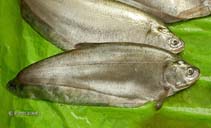 Notopterus notopterus
Foto de Sen, S.K.
Imágenes | Google image
Foto de Sen, S.K.
Clasificación / Nombres Nombres comunes | Sinónimos | Catalog of Fishes(Género, Especie) | ITIS | CoL | WoRMS | Cloffa
> Osteoglossiformes (Bony tongues) > Notopteridae (Featherbacks or knifefishes) > Notopterinae
Etymology: Notopterus: Greek, noton = back + Greek, pteron = wing, fin (Ref. 45335).
More on author: Pallas.
Etymology: Notopterus: Greek, noton = back + Greek, pteron = wing, fin (Ref. 45335).
More on author: Pallas.
Entorno: milieu / zona climática / rango de profundidad / gama de distribución Ecología
; agua dulce; salobre demersal; pH range: 6.0 - 6.5; dH range: 3 - 8; potamodromo (Ref. 51243). Tropical; 24°C - 28°C (Ref. 1672); 35°N - 10°S
Distribución Territorios | Áreas FAO | Ecosistemas | Ocurrencias, apariciones | Mapa de puntos | Introducciones | Faunafri
Southeast Asia: Peninsular Malaysia, Thailand (Mekong River), Indonesia (Sumatra and Java) and Myanmar (Lake Inle, Salween basin).
Longitud en la primera madurez / Tamaño / Peso / Edad
Madurez: Lm ?, range 15 - ? cm
Max length : 60.0 cm SL macho / no sexado; (Ref. 7050); common length : 25.0 cm TL macho / no sexado; (Ref. 4832)
Max length : 60.0 cm SL macho / no sexado; (Ref. 7050); common length : 25.0 cm TL macho / no sexado; (Ref. 4832)
Descripción breve Claves de identificación | Morfología | Morfometría
Radios blandos dorsales (total) : 7 - 9; Radios blandos anales: 97 - 111. Distinguishable by its plain brown adult coloration and the convex or only slightly concave dorsal head profile; juveniles (<5 cm SL) with dark bars on the whole body (Ref. 27732); preopercular scale rows 6-8 (Ref. 7431); silvery-white with numerous fine grey spots on body and head (Ref. 4832).
Body shape (shape guide): elongated.
Body shape (shape guide): elongated.
Obligate air-breathing (Ref. 126274); Found in clear streams and enters brackish waters (Ref. 4832). Adults inhabit standing and sluggish waters of lakes, floodplains, canals and ponds (Ref. 12693). Undertake localized lateral migrations from the Mekong River to floodplains during the flood season and back to the mainstream or other permanent water bodies during the dry season (Ref. 37770). Common in tanks throughout the greater parts of India. Feed on insects, fish (Ref. 12693), crustaceans and some young roots of aquatic plants (Ref. 6459). Active during twilight and night. Colonize and breed seasonally during rainy days and migrates back to permanent waters in dry season (Ref. 12693). Breeding takes place in stagnant or running waters in the rainy season. Eggs are laid in small clumps on submerged vegetation. A female measuring 21-25 cm usually lays 1,200-3,000 eggs. The fish is relished both in fresh and dried state. Soup made from it is reported to be given to people with measles (Ref. 7431). Of high economic importance as food fish in South and Southeast Asia to Borneo and Sumatra and taken by all types of small-scale fishing gears (Ref. 57235).
Ciclo vital y comportamiento de apareamiento Madurez | Reproducción | Puesta | Huevos | Fecundidad | Larva
Spawning occurs at night (Ref. 1672).
Referencia principal
Suba sus referencias | Referencias | Coordinador | Colaboradores
Roberts, T.R., 1992. Systematic revision of the old world freshwater fish family Notopteridae. Ichthyol. Explor. Freshwat. 2(4):361-383. (Ref. 7431)
Situación en la Lista Roja de la UICN (Ref. 130435: Version 2025-2 (Global))
Least Concern (LC) ; Date assessed: 30 August 2019
CITES
Not Evaluated
Amenaza para el ser humano
Harmless
Usos humanos
Pesquerías: comercial; Acuicultura: comercial; Acuario: Comercial
FAO - Publication: search | FishSource |
Más información
Ecología Trófica
Alimentos (presas)
Composición de la dieta
consumo de alimento
Raciones de comida
Despredadores
Alimentos (presas)
Composición de la dieta
consumo de alimento
Raciones de comida
Despredadores
Dinámica de la población
Coeficiente del crecimiento para
Edades / tallas máximas
Longitud-peso rel.
Longitud-longitud rel.
Longitud-frecuencias
Conversión de masas
Reclutamiento
Abundancia
Coeficiente del crecimiento para
Edades / tallas máximas
Longitud-peso rel.
Longitud-longitud rel.
Longitud-frecuencias
Conversión de masas
Reclutamiento
Abundancia
Ciclo de vida
Reproducción
Madurez
Madurez/Gills rel.
Fecundidad
Puesta
Agregaciones de desove
Huevos
Desarrollo de los huevos
Larva
Dinámica larvaria
Reproducción
Madurez
Madurez/Gills rel.
Fecundidad
Puesta
Agregaciones de desove
Huevos
Desarrollo de los huevos
Larva
Dinámica larvaria
Distribución
Territorios
Áreas FAO
Ecosistemas
Ocurrencias, apariciones
Introducciones
BRUVS - Vídeos
Territorios
Áreas FAO
Ecosistemas
Ocurrencias, apariciones
Introducciones
BRUVS - Vídeos
Anatomía
Superficie branquial
Cerebro
Otolito
Superficie branquial
Cerebro
Otolito
Fisiología
Composición corporal
Nutrientes
Consumo del oxígeno
Tipo de natación
Velocidad de natación
Pigmentos visuales
Sonido de peces
Enfermedades y parásitos
Toxicidad (CL50)
Composición corporal
Nutrientes
Consumo del oxígeno
Tipo de natación
Velocidad de natación
Pigmentos visuales
Sonido de peces
Enfermedades y parásitos
Toxicidad (CL50)
Relacionados con el ser humano
Sistemas de acuicultura
Perfiles de acuicultura
Razas
Ciguatera cases
Sellos, monedas, varios
Sistemas de acuicultura
Perfiles de acuicultura
Razas
Ciguatera cases
Sellos, monedas, varios
Herramientas
Cuestionario orgánico | Libro electrónico | Guía de campo | Claves de identificación | Asistente para frecuencias de tallas | Herramienta de ciclo de vida | Mapa de puntos |
Catch-MSY |
Informes especiales
Comprobar el mantenimiento del acuario | Buscar fichas sobre especies | Consulte las hojas informativas sobre acuicultura
Descargar XML
Fuentes de Internet
AFORO (otoliths) | Aquatic Commons | BHL | Cloffa | Websites from users | Check FishWatcher | CISTI | Catalog of Fishes: Género, Especie | DiscoverLife | ECOTOX | FAO - Publication: search | Faunafri | Fishipedia | Fishtrace | GloBI | Google Books | Google Scholar | Google | IGFA World Record | OneZoom | Open Tree of Life | Otolith Atlas of Taiwan Fishes | Acuarios públicos | PubMed | Reef Life Survey | Socotra Atlas | TreeBase | Árbol de la vida | Wikipedia: Go, búsqueda | World Records Freshwater Fishing | Expediente Zoológico
Estimaciones basadas en modelos
Índice de diversidad filogenética (Referencia 82804): PD50 = 1.0010 [Uniqueness, from 0.5 = low to 2.0 = high].
Bayesian length-weight: a=0.00603 (0.00473 - 0.00768), b=3.07 (3.00 - 3.14), in cm total length, based on LWR estimates for this species (Ref. 93245).
Nivel trófico (Referencia 69278): 3.5 ±0.0 se; based on diet studies.
Resiliencia (Referencia 120179): Medio, población duplicada en un tiempo mínimo de 1.4-4.4 años (Preliminary K or Fecundity.).
Nutrientes (Ref. 124155): Calcium = 190 [79, 465] mg/100g; Iron = 1.26 [0.60, 2.73] mg/100g; Protein = 17.4 [15.6, 19.4] %; Omega3 = 0.175 [0.097, 0.306] g/100g; Selenium = 33.5 [12.4, 105.5] μg/100g; VitaminA = 20.1 [5.3, 72.1] μg/100g; Zinc = 1.19 [0.64, 2.18] mg/100g (wet weight); based on nutrient studies.