



Notopterus notopterus (Pallas, 1769)
Bronze featherback
Hochladen Photos und videos
Bilder | Google Bild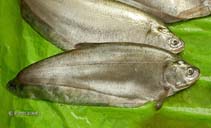 Notopterus notopterus
Photo von Sen, S.K.
Bilder | Google Bild
Photo von Sen, S.K.
Klassifizierung / Names Namen | Synonyme | Catalog of Fishes(Gattung, Arten) | ITIS | CoL | WoRMS | Cloffa
> Osteoglossiformes (Bony tongues) > Notopteridae (Featherbacks or knifefishes) > Notopterinae
Etymology: Notopterus: Greek, noton = back + Greek, pteron = wing, fin (Ref. 45335).
More on author: Pallas.
Etymology: Notopterus: Greek, noton = back + Greek, pteron = wing, fin (Ref. 45335).
More on author: Pallas.
Umwelt: Milieu / Klimazone / Tiefenbereich / Verbreitungsgebiet Ökologie
; süßwasser; brackwasser demersal; pH range: 6.0 - 6.5; dH range: 3 - 8; potamodrom (Ref. 51243). Tropical; 24°C - 28°C (Ref. 1672); 35°N - 10°S
Verbreitung Territorien | FAO Gebiete | Ökosysteme | Vorkommen | Punkt Karte | Einführungen | Faunafri
Southeast Asia: Peninsular Malaysia, Thailand (Mekong River), Indonesia (Sumatra and Java) and Myanmar (Lake Inle, Salween basin).
Länge bei der ersten Reifung / Größe / Gewicht / Alter
Geschlechtsreife: Lm ?, range 15 - ? cm
Max length : 60.0 cm SL Männchen/unbestimmt; (Ref. 7050); common length : 25.0 cm TL Männchen/unbestimmt; (Ref. 4832)
Max length : 60.0 cm SL Männchen/unbestimmt; (Ref. 7050); common length : 25.0 cm TL Männchen/unbestimmt; (Ref. 4832)
Kurzbeschreibung Bestimmungsschlüssel | Morphologie | Morphometrie
Rückenflossenweichstrahlen (insgesamt) : 7 - 9; Afterflossenweichstrahlen: 97 - 111. Distinguishable by its plain brown adult coloration and the convex or only slightly concave dorsal head profile; juveniles (<5 cm SL) with dark bars on the whole body (Ref. 27732); preopercular scale rows 6-8 (Ref. 7431); silvery-white with numerous fine grey spots on body and head (Ref. 4832).
Body shape (shape guide): elongated.
Body shape (shape guide): elongated.
Obligate air-breathing (Ref. 126274); Found in clear streams and enters brackish waters (Ref. 4832). Adults inhabit standing and sluggish waters of lakes, floodplains, canals and ponds (Ref. 12693). Undertake localized lateral migrations from the Mekong River to floodplains during the flood season and back to the mainstream or other permanent water bodies during the dry season (Ref. 37770). Common in tanks throughout the greater parts of India. Feed on insects, fish (Ref. 12693), crustaceans and some young roots of aquatic plants (Ref. 6459). Active during twilight and night. Colonize and breed seasonally during rainy days and migrates back to permanent waters in dry season (Ref. 12693). Breeding takes place in stagnant or running waters in the rainy season. Eggs are laid in small clumps on submerged vegetation. A female measuring 21-25 cm usually lays 1,200-3,000 eggs. The fish is relished both in fresh and dried state. Soup made from it is reported to be given to people with measles (Ref. 7431). Of high economic importance as food fish in South and Southeast Asia to Borneo and Sumatra and taken by all types of small-scale fishing gears (Ref. 57235).
Lebenszyklus und Paarungsverhalten Geschlechtsreife | Fortpflanzung | Ablaichen | Eier | Fruchtbarkeit | Larven
Spawning occurs at night (Ref. 1672).
Hauptreferenz
Laden Sie Ihre Referenzen hoch | Referenzen | Koordinator | Partner
Roberts, T.R., 1992. Systematic revision of the old world freshwater fish family Notopteridae. Ichthyol. Explor. Freshwat. 2(4):361-383. (Ref. 7431)
IUCN Rote Liste Status (Ref. 130435: Version 2025-2 (Global))
nicht bedroht (LC) ; Date assessed: 30 August 2019
CITES
Not Evaluated
Bedrohung für Menschen
Harmless
Nutzung durch Menschen
Fischereien: kommerziell; Aquakultur: kommerziell; Aquarium: Kommerziell
FAO - Publication: search | FishSource |
Mehr Information
Trophische Ökologie
Lebensmittel (Beutetiere)
Nahrungszusammensetzung
Nahrungsaufnahme
Lebensmittelrationen
Räuber
Lebensmittel (Beutetiere)
Nahrungszusammensetzung
Nahrungsaufnahme
Lebensmittelrationen
Räuber
Populationsdynamik
Wachstumsparameter
Max. Alter/Größen
Länge-Gewicht-Rel.
Länge-Länge-Verhältnis.
Längenhäufigkeiten
Massenkonvertierung
Rekrutierung
Dichte
Wachstumsparameter
Max. Alter/Größen
Länge-Gewicht-Rel.
Länge-Länge-Verhältnis.
Längenhäufigkeiten
Massenkonvertierung
Rekrutierung
Dichte
Lebenszyklus
Fortpflanzung
Geschlechtsreife
Reifung/Kiemen rel.
Fruchtbarkeit
Ablaichen
Laichaggregationen
Eier
Eientwicklung
Larven
Larven Pop.Dyn.
Fortpflanzung
Geschlechtsreife
Reifung/Kiemen rel.
Fruchtbarkeit
Ablaichen
Laichaggregationen
Eier
Eientwicklung
Larven
Larven Pop.Dyn.
Anatomie
Kiemenoberfläche
Gehirn
Otolith
Kiemenoberfläche
Gehirn
Otolith
Physiologie
Körperliche Zusammensetzung
Nährstoffe
Sauerstoffverbrauch
Schwimmart
Schwimmgeschwindigkeit
Visuelle Pigmente
Fischgeräusche
Krankheiten und Parasiten
Toxizität (LC50s)
Körperliche Zusammensetzung
Nährstoffe
Sauerstoffverbrauch
Schwimmart
Schwimmgeschwindigkeit
Visuelle Pigmente
Fischgeräusche
Krankheiten und Parasiten
Toxizität (LC50s)
Menschenbezogen
Aquakultur-Systeme
Aquakultur Profile
Zuchtlinien
Ciguatera-Fälle
Briefmarken, Münzen, Verschiedenes.
Aquakultur-Systeme
Aquakultur Profile
Zuchtlinien
Ciguatera-Fälle
Briefmarken, Münzen, Verschiedenes.
Tools
Bio-Quiz | E-Book | Feldführer | Bestimmungsschlüssel | Längenhäufigkeits Tool | Lebensdaten Tool | Punkt Karte |
Catch-MSY |
Zusatzinformationen
Download XML
Zusammenfassung | Punktdaten | Namen | Photos
Internet Quellen
AFORO (otoliths) | Aquatic Commons | BHL | Cloffa | Websites from users | FishWatcher Einträge suchen | CISTI | Catalog of Fishes: Gattung, Arten | DiscoverLife | ECOTOX | FAO - Publication: search | Faunafri | Fishipedia | Fishtrace | GloBI | Google Books | Google Scholar | Google | IGFA World Record | OneZoom | Open Tree of Life | Otolith Atlas of Taiwan Fishes | Öffentliche Aquarien | PubMed | Reef Life Survey | Socotra Atlas | TreeBase | Tree of Life | Wikipedia: Gehe zu, Suchen | World Records Freshwater Fishing | Zoologischer Rekord
Schätzungen auf der Grundlage von Modellen
Phylogenetischer Diversitätsindex (Ref. 82804): PD50 = 1.0010 [Uniqueness, from 0.5 = low to 2.0 = high].
Bayesian length-weight: a=0.00603 (0.00473 - 0.00768), b=3.07 (3.00 - 3.14), in cm total length, based on LWR estimates for this species (Ref. 93245).
Trophische Ebene (Ref. 69278): 3.5 ±0.0 se; based on diet studies.
Widerstandsfähigkeit (Ref. 120179): mittel, Verdopplung der Population dauert 1,4 - 4,4 Jahre. (Preliminary K or Fecundity.).
Nährstoffe (Ref. 124155): Calcium = 190 [79, 465] mg/100g; Iron = 1.26 [0.60, 2.73] mg/100g; Protein = 17.4 [15.6, 19.4] %; Omega3 = 0.175 [0.097, 0.306] g/100g; Selenium = 33.5 [12.4, 105.5] μg/100g; VitaminA = 20.1 [5.3, 72.1] μg/100g; Zinc = 1.19 [0.64, 2.18] mg/100g (wet weight); based on nutrient studies.