



Leiognathus equula (Forsskål, 1775)
Common ponyfish
อัพโหลดของคุณ ภาพถ่าย และ วิดีโอ
รูปภาพหลายรูป | Google image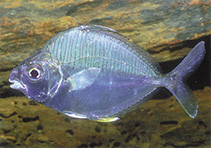 Leiognathus equula
ภาพโดย Allen, G.R.
รูปภาพหลายรูป | Google image
ภาพโดย Allen, G.R.
การจำแนกประเภท / ชื่อ ชื่อสามัญ | ชื่อพ้อง | Catalog of Fishes(สกุล, ชนิด) | ITIS | CoL | WoRMS | Cloffa
> Acanthuriformes (Surgeonfishes) > Leiognathidae (Slimys, slipmouths, or ponyfishes) > Leiognathinae
Etymology: Leiognathus: Greek, leios = smooth + Greek, gnathos = jaw (Ref. 45335).
More on author: Forsskål.
Etymology: Leiognathus: Greek, leios = smooth + Greek, gnathos = jaw (Ref. 45335).
More on author: Forsskål.
สิ่งแวดล้อม : สิ่งแวดล้อม / เขตภูมิอากาศ / ระดับความลึก / ระยะการกระจายสินค้า นิเวศวิทยา
เกี่ยวกับทะเล,น้ำเค็ม; น้ำจืด; กร่อย สัตว์น้ำหน้าดิน; สัตว์น้ำที่อพยพไปๆมาๆ ระหว่างแหล่งน้ำจืดกับทะเล ที่เป็นไปตามช่วงชีวิต; ระดับความลึก 10 - 110 m (Ref. 12260). Tropical; 26°C - 29°C (Ref. 4959); 30°N - 36°S, 27°E - 170°W
การแพร่กระจาย อาณาเขต | พื้นที่จำแนกตาม FAO | ระบบนิเวศหลายระบบ | การปรากฏขึ้น,การเกิดขึ้น,พบ | ตำแหน่งบนแผนที่ | การแนะนำ | Faunafri
Indo-West Pacific: Red Sea, Persian Gulf and East Africa (including Reunion, Comoros, Seychelles, Madagascar and Mauritius) to Fiji, north to the Ryukyu Islands, south to Australia.
ความยาวเมื่อครบกำหนดครั้งแรก / ขนาด / น้ำหนัก / อายุ
วัยเจริญพันธุ์: Lm 10.7 range ? - ? cm
Max length : 28.0 cm TL เพศผู้/กระเทย; (Ref. 9710); common length : 18.0 cm TL เพศผู้/กระเทย; (Ref. 47581)
Max length : 28.0 cm TL เพศผู้/กระเทย; (Ref. 9710); common length : 18.0 cm TL เพศผู้/กระเทย; (Ref. 47581)
คำอธิบายสั้นๆ เครื่องมือที่ใช้ในการแยกชนิดสัตว์,สิ่งมีชีวิตออกจากกัน | สัณฐานวิทยา | ความยาวต่างๆ
เงี่ยงครีบหลัง (รวม) : 8; ก้านครีบอ่อนที่หาง (รวม) : 15 - 16; เงี่ยงครีบก้น: 3; ก้านครีบอ่อนที่ก้น: 14 - 15. This species is distinguished by the following characters: body very deep, compressed, with a strongly humped back; body depth 1.7-1.9 times in standard length; mouth pointing downward when protracted; gill rakers short and fleshy, less than 1/2 length of corresponding gill lamellae, total gill rakers on first gill arch 18-22; head and breast scaleless; tubed scales on lateral line 61-66. Colour of adults, back greyish, belly silvery and many parallel close-set faint bars on back; usually a dark brown saddle on caudal peduncle; axil of pectoral fins grey to black; margin of soft dorsal fin black; both caudal-fin lobes with broad dusky margins; pectoral, pelvic, and anal fins colourless to yellowish. In juveniles (5-7 cm TL), thin, closely arranged, grey vertical lines descending from back to about midheight; membrane between anal-fin spines conspicuously yellow; posterior margin of caudal-fin lobes pale yellow and dusky; other fins hyaline; snout dotted black (Ref. 47581).
Body shape (shape guide): short and / or deep; Cross section: compressed.
Body shape (shape guide): short and / or deep; Cross section: compressed.
Found in river mouths and muddy inshore areas (Ref. 2847, 37816), often in mangrove areas (Ref. 48635). Adults are coastal inhabitants found on soft bottoms, usually between depths of 10-70 meters. Juveniles are commonly found in mangrove estuaries and tidal creeks, sometimes entering the lower reaches of freshwater streams (Ref. 44894). Adults move in schools. Frequently ascend into freshwater reaches of rivers (Ref. 12693). Active by day (Ref. 12693). Feed on polychaetes, small crustaceans, small fishes (Ref. 30573) and worms (Ref. 12693). Important food fish in the tropics (Ref. 4376). Caught near the bottom with bottom trawls, set nets, push nets, dip nets, and beach seines. In Indian waters, schools near the surface during April-May when caught with drift gill nets. Larger specimens sorted for human consumption and marketed fresh or dried-salted, but surplus fish used to feed ducks, converted to fishmeal, or discarded (Ref. 47581).
วงจรชีวิตและพฤติกรรมการผสมพันธุ์ วัยเจริญพันธุ์ | การสืบพันธุ์ | การวางไข่ | เซลสืบพันธ์ของเพศเมีย(ไข่) | ความดกของไข่ | ตัวอ่อน
อ้างอิงหลัก
อัพโหลดข้อมูลอ้างอิงของคุณ | อ้างอิง | ผู้ประสานงาน : Woodland, David J. | ผู้ร่วมมือ
James, P.S.B.R., 1984. Leiognathidae. In W. Fischer and G. Bianchi (eds.) FAO species identification sheets for fishery purposes. Western Indian Ocean (Fishing Area 51). Vol. 2. FAO, Rome. pag. var. (Ref. 3424)
สถานะบัญชีแดงของ IUCN (Ref. 130435: Version 2025-2 (Global))
Least Concern (LC) ; Date assessed: 02 July 2016
CITES
Not Evaluated
ภัยคุกคามต่อมนุษย์
Harmless
การใช้ของมนุษย์
การประมง: มีการค้าเพียงเล็กน้อย; การเพาะเลี้ยงสัตว์น้ำ: การค้า
FAO - Publication: search | FishSource | ทะเลรอบๆเรา
ข้อมูลเพิ่มเติม
พลวัตของประชากร
พารามิเตอร์การเจริญเติบโต
อายุสูงสุด / ขนาด
ความยาว-น้ำหนักสัมพันธ์
ความยาว-ความยาวสัมพันธ์
ความยาว-ความถี่
การแปลงมวล
การทดแทนที่
อุดมสมบรูณ์
พารามิเตอร์การเจริญเติบโต
อายุสูงสุด / ขนาด
ความยาว-น้ำหนักสัมพันธ์
ความยาว-ความยาวสัมพันธ์
ความยาว-ความถี่
การแปลงมวล
การทดแทนที่
อุดมสมบรูณ์
วงจรชีวิต
การสืบพันธุ์
วัยเจริญพันธุ์
ความสมบูรณ์พันธุ์/เหงือกที่เกี่ยวข้อง
ความดกของไข่
การวางไข่
การรวมตัวของสปอน
เซลสืบพันธ์ของเพศเมีย(ไข่)
การพัฒนาไข่
ตัวอ่อน
พลวัตของสัตว์น้ำวัยอ่อน
การสืบพันธุ์
วัยเจริญพันธุ์
ความสมบูรณ์พันธุ์/เหงือกที่เกี่ยวข้อง
ความดกของไข่
การวางไข่
การรวมตัวของสปอน
เซลสืบพันธ์ของเพศเมีย(ไข่)
การพัฒนาไข่
ตัวอ่อน
พลวัตของสัตว์น้ำวัยอ่อน
การแพร่กระจาย
อาณาเขต
พื้นที่จำแนกตาม FAO
ระบบนิเวศหลายระบบ
การปรากฏขึ้น,การเกิดขึ้น,พบ
การแนะนำ
BRUVS - วิดีโอ
อาณาเขต
พื้นที่จำแนกตาม FAO
ระบบนิเวศหลายระบบ
การปรากฏขึ้น,การเกิดขึ้น,พบ
การแนะนำ
BRUVS - วิดีโอ
สรีรวิทยา
องค์ประกอบของร่างกาย
สารอาหาร
การใช้ออกซิเจน
ประเภทการว่ายน้ำ
ระดับความเร็วในการว่ายน้ำ
เม็ดสีที่มองเห็นได้
เสียงปลา
โรคและปรสิต
ความเป็นพิษ (LC50s)
องค์ประกอบของร่างกาย
สารอาหาร
การใช้ออกซิเจน
ประเภทการว่ายน้ำ
ระดับความเร็วในการว่ายน้ำ
เม็ดสีที่มองเห็นได้
เสียงปลา
โรคและปรสิต
ความเป็นพิษ (LC50s)
เกี่ยวข้องกับมนุษย์
ระบบการเพาะเลี้ยงสัตว์น้ำ
ประวัติการเพาะเลี้ยงสัตว์น้ำ
สายพันธุ์
กรณีซิเกวเทอรา
แสตมป์ เหรียญ อื่นๆ
ระบบการเพาะเลี้ยงสัตว์น้ำ
ประวัติการเพาะเลี้ยงสัตว์น้ำ
สายพันธุ์
กรณีซิเกวเทอรา
แสตมป์ เหรียญ อื่นๆ
เครื่องมือ
หนังสืออิเล็กทรอนิกส์ | คู่มือภาคสนาม | เครื่องมือที่ใช้ในการแยกชนิดสัตว์,สิ่งมีชีวิตออกจากกัน | ผู้มีความชำนาญในเรื่องความถี่ของความยาว | เครื่องมือในการศึกษาชีวประวัติ | ตำแหน่งบนแผนที่ |
จับ-MSY |
รายงานพิเศษ
ตรวจสอบการบำรุงรักษาตู้ปลา | ตรวจสอบเอกสารข้อเท็จจริงเกี่ยวกับสายพันธุ์ | ตรวจสอบเอกสารข้อเท็จจริงเกี่ยวกับการเพาะเลี้ยงสัตว์น้ำ
ดาวน์โหลด XML
หน้าสรุป | ข้อมูลสำคัญ | ชื่อสามัญ | ภาพถ่าย
แหล่งที่มาจากอินเตอร์เน็ต
AFORO (otoliths) | Aquatic Commons | BHL | Cloffa | Websites from users | Check FishWatcher | CISTI | Catalog of Fishes: สกุล, ชนิด | DiscoverLife | ECOTOX | FAO - Publication: search | Faunafri | Fishipedia | Fishtrace | GloBI | Google Books | Google Scholar | Google | IGFA World Record | ฐานข้อมูลแห่งชาติ | OneZoom | Open Tree of Life | Otolith Atlas of Taiwan Fishes | PubMed | Reef Life Survey | Socotra Atlas | TreeBase | แผนภูมิชีวิตแบบต้นไม้ | Wikipedia: Go, ค้นหา | World Records Freshwater Fishing | บันทึกทางด้านสัตววิทยา
การประมาณค่าตามแบบจำลอง
อุณหภูมิที่ต้องการ (อ้างอิง 123201): 24.7 - 29.1, mean 28 °C (based on 1800 cells).
ดัชนีความหลากหลายทางวิวัฒนาการ (อ้างอิง 82804): PD50 = 0.5312 [Uniqueness, from 0.5 = low to 2.0 = high].
Bayesian length-weight: a=0.01479 (0.01164 - 0.01879), b=3.08 (3.01 - 3.15), in cm total length, based on LWR estimates for this species (Ref. 93245).
ระดับชั้นอาหาร (อ้างอิง 69278): 3.0 ±0.37 se; based on food items.
Generation time: 1.2 (0.9 - 1.6) years. Estimated as median ln(3)/K based on 11 growth studies.
ความสามารถในการกลับคืนสู่ปกติ (อ้างอิง 120179): ความสูง, เวลาต่ำสุดที่จะทำให้ประชากรเพิ่มขึ้นเป็น 2 เท่าใช้เวลาน้อยกว่า 15 เดือน (K=0.35-1.88).
สารอาหาร (Ref. 124155): Calcium = 209 [112, 444] mg/100g; Iron = 1.6 [0.9, 2.9] mg/100g; Protein = 18.9 [17.4, 20.5] %; Omega3 = 0.22 [0.12, 0.41] g/100g; Selenium = 73.2 [37.7, 156.1] μg/100g; VitaminA = 7.83 [2.57, 24.74] μg/100g; Zinc = 1.49 [1.02, 2.25] mg/100g (wet weight);