



Cottus asper Richardson, 1836
Prickly sculpin
Uploaden van uw Foto's en video's
Afbeeldingen | Google afbeelding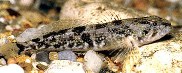 Cottus asper
Afbeelding van The Native Fish Conservancy
Afbeeldingen | Google afbeelding
Afbeelding van The Native Fish Conservancy
Classificatie / Namen Lokale namen | Synoniemen | Catalog of Fishes(Genus, Soort(en)) | ITIS | CoL | WoRMS | Cloffa
> Perciformes/Cottoidei (Sculpins) > Cottidae (Sculpins)
Etymology: Cottus: Greek, kottos = a fish (Ref. 45335); asper: asper meaning rough (Ref. 1998).
More on author: Richardson.
Etymology: Cottus: Greek, kottos = a fish (Ref. 45335); asper: asper meaning rough (Ref. 1998).
More on author: Richardson.
Milieu: milieu / Klimaatzone / Diepte / verspreidingsgebied Ecologie
marien; zoet water; brak water demersaal; katadroom (Ref. 138280). Temperate; 60°N - 32°N
Verspreiding Gebieden | FAO regio's | Ecosystemen | Voorkomen | Verspreidingskaart | Introducties | Faunafri
North America: Pacific slope drainages from Seward, Alaska to Ventura River, California, USA; also east of Continental Divide in upper Peace River in British Columbia, Canada. Exhibits coastal and inland forms that are genetically distinct (Ref. 27547).
Grootte / Gewicht / Leeftijd
Maturiteit: Lm ? range ? - ? cm
Max length : 30.0 cm TL mannelijk / geslacht onbekend; (Ref. 5723); common length : 7.0 cm TL mannelijk / geslacht onbekend; (Ref. 12193); max. gerapporteerde leeftijd: 7 Jaren (Ref. 28210)
Max length : 30.0 cm TL mannelijk / geslacht onbekend; (Ref. 5723); common length : 7.0 cm TL mannelijk / geslacht onbekend; (Ref. 12193); max. gerapporteerde leeftijd: 7 Jaren (Ref. 28210)
Korte beschrijving Determinatiesleutels | Morfologie | Morfometrie
Dorsale stekels (totaal) : 7 - 10; Dorsale zachte stralen (totaal) : 18 - 23; Anale stekels: 0; Anale zachte stralen: 15 - 19; Wervels: 34 - 39. Distinguished by a complete lateral line, a single pore at the tip of the chin, the presence of 15 to 19 anal rays, and well developed palatine teeth (Ref. 27547). Pectorals large and fan-shaped; caudal truncate or slightly rounded (Ref. 27547). Dark brown, olive or gray above and on sides, whitish yellow to white below; usually three dark irregular blotches or bars below soft dorsal; vague irregular dark mark on sides; fins (except anal) have dark bars, the first dorsal with a dark spot towards the rear (Ref. 27547). Both sexes show an orange band on the edge of the first dorsal fin at spawning time (Ref. 27547). The inland form is generally more densely prickled over a larger portion of the body while the coastal form shows a reduced number of prickles (Ref. 28211).
Body shape (shape guide): elongated.
Body shape (shape guide): elongated.
There appears to be two genetically distinct forms (Ref. 27547), an inland form found in sandy and rocky shores of lakes, and a coastal form usually found over sand in quiet runs of small to medium rivers; sometimes in salt water near river mouths (Ref. 2850). The coastal form moves into brackish estuaries to spawn (Ref. 27547). Oviparous with demersal, adhesive eggs and pelagic larvae (Ref. 265). Adults feed mainly on aquatic insect larvae and bottom invertebrates (Ref. 1998). Too small to be used as food and too difficult to capture in large numbers to be used for anything else (Ref. 27547) but large individuals are reported to be excellent eating as well as good bait fishes (Ref. 2850).
Levenscyclus en paargedrag Maturiteit | Voortplanting | Paaien | Eieren | Fecunditeit | Larven
Prior to breeding, males move downstream and select a nesting site under boulders or flat rocks. Females aggregate some distance upstream and move down singly to the spawning area. Courtship behavior occurs outside the nest until a female is selected. The pair enter the nesting site, courting continues until eggs are deposited and fertilized. The female then leaves the nest and goes back upstream to feed, while the male spawns with other females or fans and guards the eggs. The male does not feed until the eggs have hatched, moving upstream only in the late summer (Ref. 1998, 27547). During the planktonic stage, larvae of the freshwater nonanadromous form in lakes show distinct diurnal vertical migrations, being most abundant at the surface during the darkest hours of the night. They apparently stay deep in the water during the day and on bright moonlight nights (Ref. 28920). Metamorphosis is complete by the end of the planktonic period and the young take up a demersal mode of life. The young coastal form may move upstream during the fall, although the young may remain in the estuary for a full year (Ref. 27547).
Hoofdreferentie
Upload uw referenties | Referenties | Coördinator | Medewerkers
Page, L.M. and B.M. Burr, 1991. A field guide to freshwater fishes of North America north of Mexico. Houghton Mifflin Company, Boston. 432 p. (Ref. 5723)
Status op de Rode Lijst van het IUCN (Ref. 130435: Version 2025-2 (Global))
Niet bedreigd (LC) ; Date assessed: 08 November 2011
CITES
Not Evaluated
Gevaar voor de mens
Harmless
Gebruik door de mens
Visserij: commercieel; Aquarium: Publieke aquaria; aas: occasionally
FAO - Publication: search | FishSource |
Meer informatie
Trofische ecologie
Voedsel (prooien)
Dieetsamenstelling
Voedselconsumptie
Voedselrantsoenen
Predatoren
Voedsel (prooien)
Dieetsamenstelling
Voedselconsumptie
Voedselrantsoenen
Predatoren
Populatiedynamica
Groeiparameters
Max. leeftijden / maten
Lengte-gewicht rel.
Lengte-lengte rel.
Lengtefrequenties
Massaconversie
Rekrutering
Abundantie
Groeiparameters
Max. leeftijden / maten
Lengte-gewicht rel.
Lengte-lengte rel.
Lengtefrequenties
Massaconversie
Rekrutering
Abundantie
Levenscyclus
Voortplanting
Maturiteit
Rijpheid/kieuwen rel.
Fecunditeit
Paaien
Paaibestanden
Eieren
Ontwikkeling van de eieren
Larven
Larvale populatiedynamiek
Voortplanting
Maturiteit
Rijpheid/kieuwen rel.
Fecunditeit
Paaien
Paaibestanden
Eieren
Ontwikkeling van de eieren
Larven
Larvale populatiedynamiek
Anatomie
Kieuwoppervlak
Hersenen
Otoliet
Kieuwoppervlak
Hersenen
Otoliet
Fysiologie
Lichaamssamenstelling
Voedingsstoffen
Zuurstofverbruik
Type zwemmen
Zwemsnelheid
Visuele pigmenten
Vis geluid
Ziekten en parasieten
Toxiciteit (LC50)
Lichaamssamenstelling
Voedingsstoffen
Zuurstofverbruik
Type zwemmen
Zwemsnelheid
Visuele pigmenten
Vis geluid
Ziekten en parasieten
Toxiciteit (LC50)
Genetica
genoom
Genetica
Heterozygositeit
Erfelijkheid
Genetische diversiteit
genoom
Genetica
Heterozygositeit
Erfelijkheid
Genetische diversiteit
Menselijk gerelateerd
Aquacultuursystemen
Aquacultuurprofielen
Kweeklijnen
Ciguatera gevallen
Postzegels, munten, diversen.
Aquacultuursystemen
Aquacultuurprofielen
Kweeklijnen
Ciguatera gevallen
Postzegels, munten, diversen.
Tools
Biologische quiz | E-boek | Veldgids | Determinatiesleutels | Lengtefrequentie Tool | Levenscyclus tool | Verspreidingskaart |
Vangst-MSY |
Speciale rapporten
Bekijk gegevens voor het houden in een aquarium | Bekijk Fact Sheets voor de soort | Bekijk Aquacultuur Fact Sheets
Download XML
Internetbronnen
AFORO (otoliths) | Exoten/Invasieve soorten database | Aquatic Commons | BHL | Cloffa | Websites from users | Bekijk FishWatcher | CISTI | Catalog of Fishes: Genus, Soort(en) | DiscoverLife | ECOTOX | FAO - Publication: search | Faunafri | Fishipedia | Fishtrace | GloBI | Google Books | Google Scholar | Google | IGFA World Record | OneZoom | Open Tree of Life | Otolith Atlas of Taiwan Fishes | Publieke aquaria | PubMed | Reef Life Survey | Socotra Atlas | TreeBase | Tree of Life | Wikipedia: ga naar, zoek | World Records Freshwater Fishing | Zoobank | Zoological Record
Schattingen op basis van modellen
Fylogenetische diversiteitsindex (Ref. 82804): PD50 = 0.5000 [Uniqueness, from 0.5 = low to 2.0 = high].
Bayesian length-weight: a=0.00832 (0.00345 - 0.02005), b=3.16 (2.98 - 3.34), in cm total length, based on LWR estimates for this Genus-body shape (Ref. 93245).
Trofisch niveau (Ref. 69278): 3.2 ±0.0 se; based on diet studies.
Weerstandsvermogen (Ref. 120179): Gemiddeld, minimale populatieverdubbelingstijd 1,4-4,4 jaar (tmax=7; Fec=280).