This website uses cookies to enhance your browsing experience and ensure the functionality of our site. For more detailed information about the types of cookies we use and how we protect your privacy, please visit our Privacy Information page.
×
Cookie Settings
This website uses different types of cookies to enhance your experience. Please select your preferences below:
Asia: Pakistan to Thailand and south China. Several countries report adverse ecological impact after introduction.
Longueur à la première maturité / Taille / Poids / Âge
Maturité: Lm18.0, range 23 - ? cm Max length : 100.0 cm SL mâle / non sexé; (Ref. 2686); common length : 61.0 cm TL mâle / non sexé; (Ref. 44091); poids max. publié: 3.0 kg (Ref. 40637)
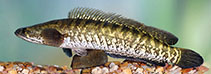
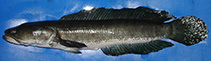
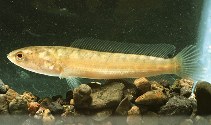
Épines dorsales (Total) : 0; Rayons mous dorsaux (Total) : 38 - 43; Épines anales: 0; Rayons mous anaux: 23 - 27. Body sub-cylindrical; head depressed; caudal fin rounded (Ref. 2847). The dorsal surface and sides is dark and mottled with a combination of black and ochre, and white on the belly; a large head reminiscent of a snake's head; deeply-gaping, fully toothed mouth; very large scales (Ref. 44091). Body shape (shape guide): elongated; Cross section: other (see Diagnosi.
Obligate air-breathing (Ref. 126274); Adults inhabit ponds, streams and rivers, preferring stagnant and muddy water of plains (Ref. 41236). Found mainly in swamps, but also occurs in the lowland rivers. More common in relatively deep (1-2 m), still water. Very common in freshwater plains (Ref. 4515, 57235). Occur in medium to large rivers, brooks, flooded fields and stagnant waters including sluggish flowing canals (Ref. 12975). Recorded as having been or being farmed in rice fields (Ref. 119549). Survive dry season by burrowing in bottom mud of lakes, canals and swamps as long as skin and air-breathing apparatus remain moist (Ref. 2686) and subsists on the stored fat (Ref. 1479). Feed on fish, frogs, snakes, insects, earthworms, tadpoles (Ref. 1479) and crustaceans (Ref. 2847). Undertake lateral migration from the Mekong mainstream, or other permanent water bodies, to flooded areas during the flood season and return to the permanent water bodies at the onset of the dry season (Ref. 37770). During winter and dry season, its flesh around coelomic cavity is heavily infested by a larval trematode Isoparorchis hypselobargi. Other parasites infecting this fish include Pallisentis ophicephali in the intestine and Neocamallanus ophicepahli in the pyloric caecae (Ref. 1479). Processed into pra-hoc, mam-ruot, and mam-ca-loc (varieties of fish paste) in Kampuchea (Ref.4929). Perhaps the main food fish in Thailand, Indochina and Malaysia (Ref. 2686). Firm white flesh almost bone-free, heavy dark skin good for soup and usually sold separately (Ref. 2686). In Hawaiian waters the largest specimen taken reportedly exceeded 150 cm (Ref. 44091). Very economic important on both cultures and captures throughout southern and southeastern Asia (Ref. 57235).
Breeds in ditches, ponds and flooded paddy fields. Young shoal at the surface and are guarded by the male parent (Ref. 54793), hiding below the surface water (Ref. 1479). In captivity, as soon as the male bends its body close to the female during mating, milt is released following the release of the eggs (Ref. 45162).
Cycle de vie Reproduction Maturité Maturité/épines rel. Fécondité Frai Agrégats de frai Œufs Développement de l'œuf Larves Dynamique des populations larvaires