



Загрузить свой Фото и Видео
изображения | Марки, монеты и прочее. | Изображение на Google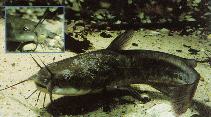 Ameiurus nebulosus
Изображение сделано Zienert, S.
изображения | Марки, монеты и прочее. | Изображение на Google
Изображение сделано Zienert, S.
Классификация / Имена народные названия | синонимы | Catalog of Fishes(род, виды) | ITIS | CoL | WoRMS | Cloffa
> Siluriformes (Catfishes) > Ictaluridae (North American freshwater catfishes)
Etymology: Ameiurus: Greek, a = without + Greek, meiouros, -os, -on = without tail (Ref. 45335); nebulosus: nebulosus meaning clouded, in relation to mottled and grey coloring (Ref. 1998).
More on author: Lesueur.
Etymology: Ameiurus: Greek, a = without + Greek, meiouros, -os, -on = without tail (Ref. 45335); nebulosus: nebulosus meaning clouded, in relation to mottled and grey coloring (Ref. 1998).
More on author: Lesueur.
Окружающая среда: среда / климатическая зона / пределы глубины / диапазон распространения экология
; пресноводный демерсальный; мигрирует в реке (Ref. 126106); пределы глубины 0 - 12 m (Ref. 1998). Subtropical; 0°C - 37°C (Ref. 35682); 54°N - 25°N, 104°W - 61°W (Ref. 86798)
распространение Территории | регионы FAO | Экосистемы | места находок | карта точек | интродукции | Faunafri
North America: Atlantic and Gulf Slope drainages from Nova Scotia and New Brunswick in Canada to Mobile Bay in Alabama in USA; St. Lawrence-Great Lakes, Hudson Bay, and Mississippi River basins from Quebec west to southeastern Saskatchewan in Canada, and south to Louisiana, USA. Introduced into several countries. Several countries report adverse ecological impact after introduction.
Длина при первой зрелости / Размер / Вес / Возраст
половая зрелость: Lm 26.6, range 20 - 33 cm
Max length : 55.0 cm TL самец/пол неопределен; (Ref. 40637); common length : 25.0 cm TL самец/пол неопределен; (Ref. 556); наибольший вес (опубликованные данные): 2.7 kg (Ref. 40637); наибольший возраст (опубликованны данные): 9 годы (Ref. 59043)
Max length : 55.0 cm TL самец/пол неопределен; (Ref. 40637); common length : 25.0 cm TL самец/пол неопределен; (Ref. 556); наибольший вес (опубликованные данные): 2.7 kg (Ref. 40637); наибольший возраст (опубликованны данные): 9 годы (Ref. 59043)
Краткое описание определительные ключи | морфология | морфометрия
колючие лучи спинного плавника (общее число) : 1; членистые (мягкие) лучи спинного плавника (общее число) : 6 - 7; колючие лучи анального плавника: 1. Caudal fin with 18-19 rays.
Body shape (shape guide): fusiform / normal.
Body shape (shape guide): fusiform / normal.
Adults occur in pools and sluggish runs over soft substrates in creeks and small to large rivers. Also found in impoundments, lakes, and ponds (Ref. 86798). They rarely enter brackish waters (Ref. 1998). They are nocturnal feeders that feed on mollusks, insects, leeches, crayfish and plankton, worms, algae, plant material, fishes, eggs of least cisco, herring and lake trout (Ref. 1998). Juveniles (3-6 cm) feed mostly on chironomid larvae, cladocerans, ostracods, amphipods, bugs and mayflies (Ref. 1998). Can tolerate high carbon dioxide and low oxygen concentrations and temperatures up to 31.6 °C although experiments show upper lethal temp. to be 37.5 °C; resistant to domestic and industrial pollution (Ref. 1998). They have been observed to bury itself in mud to escape adverse environmental conditions (Ref. 1998). Prepared hot-smoked and also cooked in various ways (Ref. 1998).
Жизненный цикл и брачное поведение половая зрелость | размножение | нерест | икра | Плодовитость | личинки
Nests are built by one or both sexes. After a period of caressing each other with their barbels, male and female settle over the nest, face opposite directions (while maintaining body contact) and spawn. Although eggs are cared for by one or both parents, there have been reports of parents eating their own eggs. Caring entails fanning by the paired fins, moving and stirring by the barbels, and may be picked up and ejected from the mouth; this ensures hatching.
Основная ссылка
Загрузите свои рекомендации | ссылки | координатор | соавторы
Page, L.M. and B.M. Burr, 2011. A field guide to freshwater fishes of North America north of Mexico. Boston : Houghton Mifflin Harcourt, 663p. (Ref. 86798)
Статус Красного Списка МСОП (Ref. 130435: Version 2025-2 (Global))
Не вызывающий беспокойства (LC) ; Date assessed: 14 October 2011
CITES
Not Evaluated
Угроза для людей
Potential pest
Использование человеком
рыболовство: не имеет хозяйственного значения; аквакультура (рыбоводство): коммерческий; объект спортивного рыболовства: да
FAO - рыболовство: landings search; Publication: search | FishSource |
дополнительная информация
Трофическая экология
Пищевые предметы (добыча)
состав пищи
потребление пищи
Продовольственные пайки
хищники
Пищевые предметы (добыча)
состав пищи
потребление пищи
Продовольственные пайки
хищники
Динамика численности населения
Параметры роста
Макс. возраст / размер
Отношение длины к весу.
Отношение длины к длине.
Размерный состав
Преобразование массы
пополнение
численность
Параметры роста
Макс. возраст / размер
Отношение длины к весу.
Отношение длины к длине.
Размерный состав
Преобразование массы
пополнение
численность
Жизненный цикл
размножение
половая зрелость
Зрелость/Жиры относительно.
Плодовитость
нерест
Нерестовые скопления
икра
Развитие икры
личинки
динамика численности личинок
размножение
половая зрелость
Зрелость/Жиры относительно.
Плодовитость
нерест
Нерестовые скопления
икра
Развитие икры
личинки
динамика численности личинок
Физиология
Состав тела
Питательные вещества
Потребление кислорода
Тип плавания
Скорость плавания
Зрительные пигменты
Звук рыбы
Болезни и паразиты
Токсичность (LC50s)
Состав тела
Питательные вещества
Потребление кислорода
Тип плавания
Скорость плавания
Зрительные пигменты
Звук рыбы
Болезни и паразиты
Токсичность (LC50s)
Связанные с человеком
Системы аквакультуры
особенности рыбоводства
степень растяжения
Случаи заболевания сигуатерой
Марки, монеты и прочее.
Системы аквакультуры
особенности рыбоводства
степень растяжения
Случаи заболевания сигуатерой
Марки, монеты и прочее.
инструменты
Органическая викторина | Электронная книга | полевой определитель | определительные ключи | Длина-Частота | онтогенез | карта точек |
Catch-MSY |
Специальные отчеты
Проверить содержание в аквариумах | Проверить опубликованные видовые данные | Проверить опубликованные данные по аквакультуре
Скачать в формате XML
ресурсы в Интернет
AFORO (otoliths) | Alien/Invasive Species database | Aquatic Commons | BHL | Cloffa | Websites from users | Проверить FishWatcher | CISTI | Catalog of Fishes: род, виды | DiscoverLife | ECOTOX | FAO - рыболовство: landings search; Publication: search | Faunafri | Fishipedia | Fishtrace | GloBI | Google Books | Google Scholar | Google | IGFA World Record | национальные базы данных | OneZoom | Open Tree of Life | Otolith Atlas of Taiwan Fishes | общественные аквариумы | PubMed | Reef Life Survey | Socotra Atlas | TreeBase | Tree of Life | Wikipedia: Вперёд, поиск | | Зоологическая летопись
Оценки, основанные на моделях
|
Индекс филогенетического разнообразия (ссылка 82804) |
PD50 = 0.5078 [Uniqueness, from 0.5 = low to 2.0 = high]. |
| Bayesian length-weight | a=0.00832 (0.00640 - 0.01080), b=3.12 (3.05 - 3.19), in cm total length, based on LWR estimates for this species (Ref. 93245). |
|
Трофический уровень (ссылка 69278) |
3.7 ±0.1 se; based on diet studies. |
|
устойчивость к внешним воздействиям (ссылка 120179) |
средний (среднего размера), минимальное время удвоения популяции 1.4-4.4 года (K=0.47; tm=3; tmax=8). |
|
Уязвимость рыбной ловли (Ref. 59153) |
Moderate vulnerability (38 of 100). 🛈 |
|
Категория цены (Ref. 80766) |
Unknown. |