



Xenentodon cancila (Hamilton, 1822)
Freshwater garfish
Ladda upp din foton och Videor
Bilder | Google image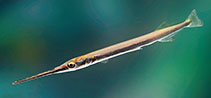 Xenentodon cancila
Bild av Ramani Shirantha
Bilder | Google image
Bild av Ramani Shirantha
Klassificering / Namn Populärnamn | synonymer | Catalog of Fishes(Släkte, Arter) | ITIS | CoL | WoRMS | Cloffa
> Beloniformes (Needle fishes) > Belonidae (Needlefishes)
Etymology: Xenentodon: Greek, xenos = strange + Greek, odous = teeth (Ref. 45335).
More on author: Hamilton.
Etymology: Xenentodon: Greek, xenos = strange + Greek, odous = teeth (Ref. 45335).
More on author: Hamilton.
Miljö: miljö / Klimatzon / djupintervall / distributionsområde Ekologi
; sötvatten; brackvatten pelagic-neritic; pH range: 7.0 - 7.5; dH range: 20 - ?; ej vandrande (Ref. 126106); djupintervall 0 - 2 m (Ref. 58302). Tropical; 22°C - 28°C (Ref. 1672); 38°N - 5°N
Utbredning Territorier | FAO områden | Ekosystem | Förekomster | Prickkarta | Utplanteringar | Faunafri
Asia: Sri Lanka and India eastward to the Mekong.
Storlek / Vikt / Ålder
Könsmognad: Lm ? range ? - ? cm
Max length : 40.0 cm TL hane/ej könsbestämd; (Ref. 4833); common length : 30.0 cm TL hane/ej könsbestämd; (Ref. 4833)
Max length : 40.0 cm TL hane/ej könsbestämd; (Ref. 4833); common length : 30.0 cm TL hane/ej könsbestämd; (Ref. 4833)
Kort beskrivning Bestämningsnycklar | Morfologi | Morfometri
Taggstrålar i ryggfenan (totalt) : 0; Mjukstrålar i ryggfenan (totalt) : 15 - 18; Taggstrålar i analfenan: 0; Mjukstrålar i analfenan: 16 - 18. Body very elongate and slightly compressed. Dorsal fin inserted usually anterior to a vertical through the origin of the anal fin. Green-silvery dorsally, grading to whitish below. A silvery band with a dark margin run along the side; a series of four or five blotches (absent in young specimens) on sides between the pectoral and anal fins. Dorsal and anal fins with dark edges.
Body shape (shape guide): elongated.
Body shape (shape guide): elongated.
Adults occur primarily in rivers (Ref. 4833); also in ponds, canals, beels, and inundated fields (Ref. 1479). Often found in slow-flowing pools in rivers with a rock or sand substrate (Ref. 6028). They inhabit large and medium-sized rivers with adults occurring in areas that lack floating vegetation (Ref. 12693). A solitary species that swims in midwater, usually against the current, and is capable of bursts of speed, especially when in pursuit of its prey. Observed to feed exclusively on crustaceans in the wild; but take live fish only when in an aquarium (Ref. 6028). Also feeds on small fishes and insects (Ref. 12693). Oviparous (Ref. 205). Eggs may be found attached to objects in the water by tendrils on the egg's surface (Ref. 205). This fish is capable of nipping the fingers or killing a person by leaping at them at great speed (Ref. 6028; Kullander (pers. comm., 2001), however, suggests that the "killing a person" statement may be exaggerated). Marketed fresh (Ref. 12693).
Livscykel och parningsbeteende Könsmognad | Reproduktion | Lek | Ägg | Fekunditet | Larver
Male pursues a slow-moving female and upon catching up with the female, will begin shuddering from side to side while the pair is oriented parallel to each other; the pair positions themselves close to submerged vegetation; male assumes a slight head-down position , with his anal fin curled under the female's vent; the pair begins trembling until a single large egg is released; each female produces about a dozen eggs per day; eggs hatch in about a week; no parental care (Ref. 44091).
Huvudreferens
Ladda upp dina referenser | referenser | Koordinator : Collette, Bruce B. | Medarbetare
Talwar, P.K. and A.G. Jhingran, 1991. Inland fishes of India and adjacent countries. Volume 2. A.A. Balkema, Rotterdam, i-xxii + 543-1158, 1 pl. (Ref. 4833)
Status på IUCN:s rödlista (Ref. 130435: Version 2025-2 (Global))
Least Concern (LC) ; Date assessed: 12 August 2019
CITES
Not Evaluated
Hot mot människor
Traumatogenic (Ref. 6028)
Mänskliga användningsområden
Fiskeri: mindre kommeriell; Akvarium: Potentiell
FAO - Publication: search | FishSource |
Ytterligare information
Populationsdynamik
Tillväxtparametrar
Max. åldrar / storlekar
Längd-vikt rel.
Längd-längd rel.
Längd-frekvenser
Massakonvertering
Rekrytering
Abundans
Tillväxtparametrar
Max. åldrar / storlekar
Längd-vikt rel.
Längd-längd rel.
Längd-frekvenser
Massakonvertering
Rekrytering
Abundans
Livscykel
Reproduktion
Könsmognad
Mognad/Gills rel.
Fekunditet
Lek
Lekande aggregat
Ägg
Utveckling av ägg
Larver
Larvdynamik
Reproduktion
Könsmognad
Mognad/Gills rel.
Fekunditet
Lek
Lekande aggregat
Ägg
Utveckling av ägg
Larver
Larvdynamik
Anatomi
Gälyta
Hjärna
Otolit
Gälyta
Hjärna
Otolit
Fysiologi
Kroppssammansättning
Näringsämnen
Syreförbrukning
Typ av simning
Simhastighet
Visuella pigment
Ljud från fisk
Sjukdomar & Parasiter
Toxicitet (LC50)
Kroppssammansättning
Näringsämnen
Syreförbrukning
Typ av simning
Simhastighet
Visuella pigment
Ljud från fisk
Sjukdomar & Parasiter
Toxicitet (LC50)
Människorelaterad
Vattenbrukssystem
Vattenbruksprofiler
Avelslinjer
Ciguatera-fall
Frimärken, mynt, diverse.
Vattenbrukssystem
Vattenbruksprofiler
Avelslinjer
Ciguatera-fall
Frimärken, mynt, diverse.
Verktyg
Organisk frågesport | E-bok | Fälthandbok | Längdfördelnings-verktyg | Livshistorie-verktyg | Prickkarta |
Fångst-MSY |
Särskilda rapporter
Kontrollera för underhåll av akvarium | Kontrollera om det finns faktablad om arter | Kontrollera om det finns faktablad om vattenbruk
Ladda ner XML
Internet-källor
AFORO (otoliths) | Alien/Invasive Species database | Aquatic Commons | BHL | Cloffa | Websites from users | Check FishWatcher | CISTI | Catalog of Fishes: Släkte, Arter | DiscoverLife | ECOTOX | FAO - Publication: search | Faunafri | Fishipedia | Fishtrace | GloBI | Google Books | Google Scholar | Google | IGFA World Record | OneZoom | Open Tree of Life | Otolith Atlas of Taiwan Fishes | PubMed | Reef Life Survey | Socotra Atlas | TreeBase | Tree of Life | Wikipedia: Go, sök | World Records Freshwater Fishing | Zoologiskt register
Uppskattningar baserade på modeller
Index för fylogenetisk mångfald (Ref. 82804): PD50 = 0.7500 [Uniqueness, from 0.5 = low to 2.0 = high].
Bayesian length-weight: a=0.00115 (0.00094 - 0.00140), b=3.12 (3.06 - 3.18), in cm total length, based on LWR estimates for this species (Ref. 93245).
Trofisk nivå (Ref. 69278): 3.9 ±0.62 se; based on food items.
Resiliens (Ref. 120179): Hög, lägsta populationsfördubblingstid mindre än 15 månader (Preliminary K or Fecundity.).
Näringsämnen (Ref. 124155): Calcium = 284 [95, 708] mg/100g; Iron = 0.8 [0.4, 1.6] mg/100g; Protein = 16.7 [15.3, 18.3] %; Omega3 = 0.205 [0.082, 0.602] g/100g; Selenium = 36.6 [14.8, 85.7] μg/100g; VitaminA = 43.9 [18.2, 104.0] μg/100g; Zinc = 1.72 [1.04, 2.47] mg/100g (wet weight); based on nutrient studies.