



Xenentodon cancila (Hamilton, 1822)
Freshwater garfish
Carregue seu(sua) Fotos e vídeos
Fotos | Imagem do Google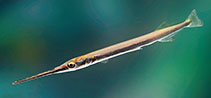 Xenentodon cancila
Foto de Ramani Shirantha
Fotos | Imagem do Google
Foto de Ramani Shirantha
Classificação / Nomes Nomes comuns | Sinônimos | Catalog of Fishes(Gênero, Espécies) | ITIS | CoL | WoRMS | Cloffa
> Beloniformes (Needle fishes) > Belonidae (Needlefishes)
Etymology: Xenentodon: Greek, xenos = strange + Greek, odous = teeth (Ref. 45335).
More on author: Hamilton.
Etymology: Xenentodon: Greek, xenos = strange + Greek, odous = teeth (Ref. 45335).
More on author: Hamilton.
Meio ambiente: milieu / Zona climática / intervalo de profundidade / faixa de distribuição Ecologia
; Água doce; estuarina pelagic-neritic; pH range: 7.0 - 7.5; dH range: 20 - ?; não migratória (Ref. 126106); intervalo de profundidade 0 - 2 m (Ref. 58302). Tropical; 22°C - 28°C (Ref. 1672); 38°N - 5°N
Distribuição Territórios | Áreas da FAO | Ecossistemas | Ocorrências | Mapa de pontos | Introduções | Faunafri
Asia: Sri Lanka and India eastward to the Mekong.
Tamanho / Peso / Idade
Maturidade: Lm ? range ? - ? cm
Max length : 40.0 cm TL macho/indeterminado; (Ref. 4833); common length : 30.0 cm TL macho/indeterminado; (Ref. 4833)
Max length : 40.0 cm TL macho/indeterminado; (Ref. 4833); common length : 30.0 cm TL macho/indeterminado; (Ref. 4833)
Descrição suscinta Chaves de identificação | Morfologia | Morfometria
Espinhos dorsais (total) : 0; Raios dorsais (total) : 15 - 18; Espinhos anais: 0; Raios anais : 16 - 18. Body very elongate and slightly compressed. Dorsal fin inserted usually anterior to a vertical through the origin of the anal fin. Green-silvery dorsally, grading to whitish below. A silvery band with a dark margin run along the side; a series of four or five blotches (absent in young specimens) on sides between the pectoral and anal fins. Dorsal and anal fins with dark edges.
Body shape (shape guide): elongated.
Body shape (shape guide): elongated.
Adults occur primarily in rivers (Ref. 4833); also in ponds, canals, beels, and inundated fields (Ref. 1479). Often found in slow-flowing pools in rivers with a rock or sand substrate (Ref. 6028). They inhabit large and medium-sized rivers with adults occurring in areas that lack floating vegetation (Ref. 12693). A solitary species that swims in midwater, usually against the current, and is capable of bursts of speed, especially when in pursuit of its prey. Observed to feed exclusively on crustaceans in the wild; but take live fish only when in an aquarium (Ref. 6028). Also feeds on small fishes and insects (Ref. 12693). Oviparous (Ref. 205). Eggs may be found attached to objects in the water by tendrils on the egg's surface (Ref. 205). This fish is capable of nipping the fingers or killing a person by leaping at them at great speed (Ref. 6028; Kullander (pers. comm., 2001), however, suggests that the "killing a person" statement may be exaggerated). Marketed fresh (Ref. 12693).
Ciclo de vida ou comportamento de acasalamento Maturidade | Reprodução | Desova | Ovos | Fecundidade | Larvas
Male pursues a slow-moving female and upon catching up with the female, will begin shuddering from side to side while the pair is oriented parallel to each other; the pair positions themselves close to submerged vegetation; male assumes a slight head-down position , with his anal fin curled under the female's vent; the pair begins trembling until a single large egg is released; each female produces about a dozen eggs per day; eggs hatch in about a week; no parental care (Ref. 44091).
Referência principal
Carregar suas referências | Referências | Coordenador : Collette, Bruce B. | Colaboradores
Talwar, P.K. and A.G. Jhingran, 1991. Inland fishes of India and adjacent countries. Volume 2. A.A. Balkema, Rotterdam, i-xxii + 543-1158, 1 pl. (Ref. 4833)
Status na Lista Vermelha da UICN (Ref. 130435: Version 2025-2 (Global))
Segura ou pouco preocupante (LC) ; Date assessed: 12 August 2019
CITES
Not Evaluated
Ameaça para os humanos
Traumatogenic (Ref. 6028)
Uso pelos humanos
Pescarias: pouco comercial; Aquário: Potencial
FAO - Publication: search | FishSource |
Mais informação
Ecologia Trófica
Itens alimentares (presas)
Composição da dieta
Consumo alimentar
Rações alimentares
Predadores
Itens alimentares (presas)
Composição da dieta
Consumo alimentar
Rações alimentares
Predadores
Dinâmica populacional
Parâmetros de crescimento
Idade máxima / tamanhos
Relação comprimento-peso.
Relação comprimento-comprimento.
Frequências de comprimento
Conversão de massa
Recrutamento
Abundância
Parâmetros de crescimento
Idade máxima / tamanhos
Relação comprimento-peso.
Relação comprimento-comprimento.
Frequências de comprimento
Conversão de massa
Recrutamento
Abundância
Ciclo de vida
Reprodução
Maturidade
Maturidade/Rel. das guelras
Fecundidade
Desova
Agregações de desova
Ovos
Desenvolvimento dos ovos
Larvas
Dinâmica larval
Reprodução
Maturidade
Maturidade/Rel. das guelras
Fecundidade
Desova
Agregações de desova
Ovos
Desenvolvimento dos ovos
Larvas
Dinâmica larval
Anatomia
Área branquial
Cérebro
Otólito
Área branquial
Cérebro
Otólito
Fisiologia
Composição corporal
Nutrientes
Consumo de oxigênio
Tipo de natação
Velocidade de natação
Pigmentos visuais
Som de peixe
Doenças e Parasitas
Toxicidade (LC50s)
Composição corporal
Nutrientes
Consumo de oxigênio
Tipo de natação
Velocidade de natação
Pigmentos visuais
Som de peixe
Doenças e Parasitas
Toxicidade (LC50s)
Relacionado a humanos
Sistemas de aquicultura
Perfis para aquacultura
Estirpes
Casos de Ciguatera
Selos, moedas, diversos.
Sistemas de aquicultura
Perfis para aquacultura
Estirpes
Casos de Ciguatera
Selos, moedas, diversos.
Ferramentas
Questionário orgânico | Livro eletrônico | Guia de campo | Ferramenta auxiliar de frequências de comprimento | Ferramenta sobre a história de vida | Mapa de pontos |
Catch-MSY |
Relatórios especiais
Checar Manutenção em Aquário | Checar Planilhas de Fatos sobre as Espécies | Checar Planilhas de Fatos sobre Aquicultura
Baixar XML
Fontes da internet
AFORO (otoliths) | Banco de dados para Espécies Aliens/Invasivas | Aquatic Commons | BHL | Cloffa | Websites from users | Checar Observador de Peixes (FishWatcher) | CISTI | Catalog of Fishes: Gênero, Espécies | DiscoverLife | ECOTOX | FAO - Publication: search | Faunafri | Fishipedia | Fishtrace | GloBI | Google Books | Google Scholar | Google | IGFA World Record | OneZoom | Open Tree of Life | Otolith Atlas of Taiwan Fishes | PubMed | Reef Life Survey | Socotra Atlas | TreeBase | Árvore da vida | Wikipedia: Ir para, procura | World Records Freshwater Fishing | Registro zoológico
Estimativas baseadas em modelos
Índice de diversidade filogenética (Ref. 82804): PD50 = 0.7500 [Uniqueness, from 0.5 = low to 2.0 = high].
Bayesian length-weight: a=0.00115 (0.00094 - 0.00140), b=3.12 (3.06 - 3.18), in cm total length, based on LWR estimates for this species (Ref. 93245).
Nível Trófico (Ref. 69278): 3.9 ±0.62 se; based on food items.
Resiliência (Ref. 120179): Elevada, tempo mínimo de duplicação da população menor que 15 meses (Preliminary K or Fecundity.).
Nutrientes (Ref. 124155): Calcium = 284 [95, 708] mg/100g; Iron = 0.8 [0.4, 1.6] mg/100g; Protein = 16.7 [15.3, 18.3] %; Omega3 = 0.205 [0.082, 0.602] g/100g; Selenium = 36.6 [14.8, 85.7] μg/100g; VitaminA = 43.9 [18.2, 104.0] μg/100g; Zinc = 1.72 [1.04, 2.47] mg/100g (wet weight); based on nutrient studies.