



Catostomus catostomus (Forster, 1773)
Longnose sucker
Uploaden van uw Foto's en video's
Afbeeldingen | Postzegels, munten, diversen. | Google afbeelding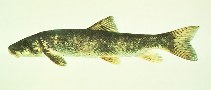 Catostomus catostomus
Afbeelding van Scarola, J.F.
Afbeeldingen | Postzegels, munten, diversen. | Google afbeelding
Afbeelding van Scarola, J.F.
Classificatie / Namen Lokale namen | Synoniemen | Catalog of Fishes(Genus, Soort(en)) | ITIS | CoL | WoRMS | Cloffa
> Cypriniformes (Carps) > Catostomidae (Suckers) > Catostominae
Etymology: Catostomus: Greek, kata = down + Greek, stoma = mouth (Ref. 45335); catostomus: catostomus meaning inferior mouth, alluding to the ventral position of the mouth.
More on author: Forster.
Etymology: Catostomus: Greek, kata = down + Greek, stoma = mouth (Ref. 45335); catostomus: catostomus meaning inferior mouth, alluding to the ventral position of the mouth.
More on author: Forster.
Milieu: milieu / Klimaatzone / Diepte / verspreidingsgebied Ecologie
; zoet water; brak water demersaal; pH range: 6.5 - 7.8; dH range: 5 - 25; potamodroom (Ref. 126106); diepte ? - 180 m (Ref. 1998). Temperate; 0°C - 15°C (Ref. 12468); 38°N - 32°N
Verspreiding Gebieden | FAO regio's | Ecosystemen | Voorkomen | Verspreidingskaart | Introducties | Faunafri
North America: throughout most of Canada and Alaska; Atlantic Slope south to Delaware River drainage in New York, USA; Great Lakes basin; upper Monongahela River drainage in Maryland and West Virginia, USA; Missouri River drainage south to Nebraska and Colorado, USA. Also in Arctic basin of Siberia in Russia. Occurs in Columbia River System (Molly Hallock, pers. comm.).
Lengte bij maturiteit / Grootte / Gewicht / Leeftijd
Maturiteit: Lm ? range ? - ? cm
Max length : 64.0 cm TL mannelijk / geslacht onbekend; (Ref. 5723); common length : 22.5 cm TL mannelijk / geslacht onbekend; (Ref. 12193); max. gepubliceerd gewicht: 3.3 kg (Ref. 28924); max. gerapporteerde leeftijd: 20 Jaren (Ref. 12193)
Max length : 64.0 cm TL mannelijk / geslacht onbekend; (Ref. 5723); common length : 22.5 cm TL mannelijk / geslacht onbekend; (Ref. 12193); max. gepubliceerd gewicht: 3.3 kg (Ref. 28924); max. gerapporteerde leeftijd: 20 Jaren (Ref. 12193)
Korte beschrijving Determinatiesleutels | Morfologie | Morfometrie
Dorsale stekels (totaal) : 0; Dorsale zachte stralen (totaal) : 9 - 11; Anale stekels: 0; Anale zachte stralen: 7; Wervels: 45 - 47. Distinguished by the sucking mouth located on the ventral sides of the head and thick papillose lips (Ref. 27547). Gill rakers short; lateral line complete, inconspicuous; caudal tips slightly rounded (Ref. 27547). Adults may be reddish brown, dark brassy green or black above, paler on the lower sides, with the ventral parts white; young fish are usually dark gray with small black spots; breeding males are usually dark above with a brilliant reddish stripe along each side, while females are greenish gold to copper, with a less brilliant red stripe; breeding males show prominent tubercles on the rays of the anal and caudal fins and also on the head (Ref. 27547).
Body shape (shape guide): fusiform / normal.
Body shape (shape guide): fusiform / normal.
Found in clear, cold, deep water of lakes and tributary streams; occasionally found in brackish water in the Arctic (Ref. 5723). Adults move from lakes into inlet streams or from slow, deep pools into shallow, gravel-bottomed portions of streams to spawn (Ref. 27547). They feed on benthic invertebrates (Ref. 1998). Young are preyed upon by other fishes and fish-eating birds; while adults in spawning streams are taken by mammals, osprey and eagles (Ref. 1998). Utilized as a food fish or as dog food (Ref. 27547).
Levenscyclus en paargedrag Maturiteit | Voortplanting | Paaien | Eieren | Fecunditeit | Larven
Spawns only during daytime (Ref. 27547). At spawning, males lie close to the bottom in the current of the spawning area while females stay along the banks and in still water (Ref. 27547). A female moves from the bank of the stream usually escorted by 2-4 males to the spawning area at the center of the stream. The males crowd beside her; egg deposition occurs as the males try to clasp the female with their pelvic fins or vibrate against her with their anal fins. This spawning act lasts for 3-5 seconds and may occur as often as 6-40 times per hour. After the eggs are deposited, the sexes separate and return to their previous stream positions (Ref.1998). Fish that moved out of a lake to spawn generally return to the lake a few days after spawning. However, river-resident fish may stay on or near the spawning area for much of the summer (Ref. 27547). Many spawn in two or even three consecutive years but others may skip one or two years between spawning (Ref. 10928).
Hoofdreferentie
Upload uw referenties | Referenties | Coördinator | Medewerkers
Page, L.M. and B.M. Burr, 1991. A field guide to freshwater fishes of North America north of Mexico. Houghton Mifflin Company, Boston. 432 p. (Ref. 5723)
Status op de Rode Lijst van het IUCN (Ref. 130435: Version 2025-2 (Global))
Niet bedreigd (LC) ; Date assessed: 21 February 2020
CITES
Not Evaluated
Gevaar voor de mens
Harmless
Gebruik door de mens
Visserij: van minder commercieel belang; sportvis: ja; Aquarium: Publieke aquaria
FAO - Publication: search | FishSource |
Meer informatie
Trofische ecologie
Voedsel (prooien)
Dieetsamenstelling
Voedselconsumptie
Voedselrantsoenen
Predatoren
Voedsel (prooien)
Dieetsamenstelling
Voedselconsumptie
Voedselrantsoenen
Predatoren
Populatiedynamica
Groeiparameters
Max. leeftijden / maten
Lengte-gewicht rel.
Lengte-lengte rel.
Lengtefrequenties
Massaconversie
Rekrutering
Abundantie
Groeiparameters
Max. leeftijden / maten
Lengte-gewicht rel.
Lengte-lengte rel.
Lengtefrequenties
Massaconversie
Rekrutering
Abundantie
Levenscyclus
Voortplanting
Maturiteit
Rijpheid/kieuwen rel.
Fecunditeit
Paaien
Paaibestanden
Eieren
Ontwikkeling van de eieren
Larven
Larvale populatiedynamiek
Voortplanting
Maturiteit
Rijpheid/kieuwen rel.
Fecunditeit
Paaien
Paaibestanden
Eieren
Ontwikkeling van de eieren
Larven
Larvale populatiedynamiek
Anatomie
Kieuwoppervlak
Hersenen
Otoliet
Kieuwoppervlak
Hersenen
Otoliet
Fysiologie
Lichaamssamenstelling
Voedingsstoffen
Zuurstofverbruik
Type zwemmen
Zwemsnelheid
Visuele pigmenten
Vis geluid
Ziekten en parasieten
Toxiciteit (LC50)
Lichaamssamenstelling
Voedingsstoffen
Zuurstofverbruik
Type zwemmen
Zwemsnelheid
Visuele pigmenten
Vis geluid
Ziekten en parasieten
Toxiciteit (LC50)
Menselijk gerelateerd
Aquacultuursystemen
Aquacultuurprofielen
Kweeklijnen
Ciguatera gevallen
Postzegels, munten, diversen.
Aquacultuursystemen
Aquacultuurprofielen
Kweeklijnen
Ciguatera gevallen
Postzegels, munten, diversen.
Tools
Biologische quiz | E-boek | Veldgids | Determinatiesleutels | Lengtefrequentie Tool | Levenscyclus tool | Verspreidingskaart |
Vangst-MSY |
Speciale rapporten
Bekijk gegevens voor het houden in een aquarium | Bekijk Fact Sheets voor de soort | Bekijk Aquacultuur Fact Sheets
Download XML
Internetbronnen
AFORO (otoliths) | Exoten/Invasieve soorten database | Aquatic Commons | BHL | Cloffa | Websites from users | Bekijk FishWatcher | CISTI | Catalog of Fishes: Genus, Soort(en) | DiscoverLife | ECOTOX | FAO - Publication: search | Faunafri | Fishipedia | Fishtrace | GloBI | Google Books | Google Scholar | Google | IGFA World Record | OneZoom | Open Tree of Life | Otolith Atlas of Taiwan Fishes | Publieke aquaria | PubMed | Reef Life Survey | Socotra Atlas | TreeBase | Tree of Life | Wikipedia: ga naar, zoek | World Records Freshwater Fishing | Zoological Record
Schattingen op basis van modellen
Fylogenetische diversiteitsindex (Ref. 82804): PD50 = 0.5000 [Uniqueness, from 0.5 = low to 2.0 = high].
Bayesian length-weight: a=0.01259 (0.00746 - 0.02125), b=3.01 (2.86 - 3.16), in cm total length, based on LWR estimates for this species & (Sub)family-body (Ref. 93245).
Trofisch niveau (Ref. 69278): 2.5 ±0.3 se; based on diet studies.
Weerstandsvermogen (Ref. 120179): laag, minimale populatieverdubbelingstijd 4,5-14 jaar (tm=2-10; tm=20).