



Προσθέστε την παρατήρησή σας στο Fish Watcher
| Native range | All suitable habitat | Point map | Year 2050 |

|
| This map was computer-generated and has not yet been reviewed. |
| Chanos chanos AquaMaps Data sources: GBIF OBIS |
Ανεβάστε το φωτογραφίες και Βίντεο
Φωτογραφίες | Βίντεο | Google image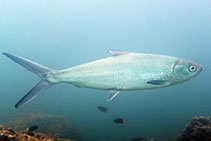 Chanos chanos
Εικόνα από Gomen See@114°E Hong Kong Reef Fish Survey
Φωτογραφίες | Βίντεο | Google image
Εικόνα από Gomen See@114°E Hong Kong Reef Fish Survey
Ταξινόμηση / Ονόματα Κοινά ονόματα | Συνώνυμα | Catalog of Fishes(Γένος, Είδη) | ITIS | CoL | WoRMS | Cloffa
> Gonorynchiformes (Milkfishes) > Chanidae (Milkfish)
Etymology: Chanos: Greek, chanos, -eos, ous, and chasma, -atos = abyss, mouth opened, inmensity (Ref. 45335).
Etymology: Chanos: Greek, chanos, -eos, ous, and chasma, -atos = abyss, mouth opened, inmensity (Ref. 45335).
Περιβάλλον: περιβάλλον / κλιματική ζώνη / εύρος βάθους / εύρος διανομής Οικολογία
Θαλασσινό(ά); Γλυκού νερού; Υφάλμυρο βενθοπελαγικό; αμφίδρομο (Ref. 9814); εύρος βάθους 1 - 30 m (Ref. 6898), usually ? - 15 m (Ref. 89972). Tropical; 15°C - 43°C (Ref. 43081); 46°N - 52°S, 19°E - 77°W
Κατανομή Εδάφη | Περιοχές FAO | Οικοσυστήματα | Παρουσίες | Σημειακός χάρτης | Εισαγωγές | Faunafri
Indo-West Pacific: South Africa to Red Sea, to Hawaii and the Marquesas, north to Japan, south to Victoria, Australia. Eastern Pacific: San Pedro, California to the Galapagos.
Μήκος κατά την πρώτη ωρίμανση / Μέγεθος / Βάρος / Ηλικία
Γεννητική Ωρίμανση: Lm 86.1, range 68 - 70 cm
Max length : 180 cm SL αρσενικό/απροσδιόριστο; (Ref. 9710); 124.0 cm SL (female); common length : 100.0 cm SL αρσενικό/απροσδιόριστο; (Ref. 9814); μεγ. δημοσιευμένο βάρος: 14.0 kg (Ref. 9814); μεγ. αναφερόμενη ηλικία: 15 έτη (Ref. 9814)
Max length : 180 cm SL αρσενικό/απροσδιόριστο; (Ref. 9710); 124.0 cm SL (female); common length : 100.0 cm SL αρσενικό/απροσδιόριστο; (Ref. 9814); μεγ. δημοσιευμένο βάρος: 14.0 kg (Ref. 9814); μεγ. αναφερόμενη ηλικία: 15 έτη (Ref. 9814)
Σύντομη περιγραφή Κλείδες προσδιορισμού | Μορφολογία | Μορφομετρία
Ραχιαίες άκανθες (συνολικά) : 2; Μαλακές ραχιαίες ακτίνες (συνολικά) : 13 - 17; Εδρικές άκανθες: 2; Μαλακές εδρικές ακτίνες: 8 - 10; Σπόνδυλοι: 46. This species is characterized by the following: body elongate and somewhat compressed; mouth small and toothless; single dorsal about mid-level of the body; pectoral fins falcate; caudal fin large and deeply forked; no scutes on belly; branchiostegal rays 4. Colour of the body olive green dorsally; flanks silvery; unpaired fins with dark margins (Ref. 49, 117228).
Body shape (shape guide): elongated; Cross section: oval.
Body shape (shape guide): elongated; Cross section: oval.
Adults are found in offshore marine waters and shallow coastal embayments, but also frequently enter estuaries and occasionally penetrate freshwater streams, along continental shelves and around islands, where temperatures are greater than 20°C. (Ref. 44894, 52331). They occur in small to large schools near the coasts or around islands where reefs are well developed. Eggs and larvae are pelagic up to 2-3 weeks. Older larvae migrate onshore and settle in coastal wetlands (mangroves, estuaries) during the juvenile stage, or occasionally enter freshwater lakes. Juveniles and sub-adults return to sea where they mature sexually. Mature adults spawn only in fully saline water. Larvae eat zooplankton; juveniles and adults eat cyanobacteria, soft algae, small benthic invertebrates, and even pelagic fish eggs and larvae. Larvae are collected from rivers and are grown in culture ponds into juveniles which are marketed fresh, smoked, canned or frozen. Brood stocks can be raised and spawned in captivity to produce larvae in the hatchery (Ref. 12868). This species can thrive and grow in water as hot as 32° C (Ref. 9987).
Κύκλος ζωής και συμπεριφορά ζευγαρώματος Γεννητική Ωρίμανση | Αναπαραγωγή | Γεννοβολία | Αβγά | Γονιμότητα | Προνύμφες
Spawns in clear shallow waters above a bottom of sand or coral and at a distance of not more than 30 km from the shore. Females spawn up to 5 million eggs which hatch in about 24 hr. The larvae seek out clear coastal and estuarine waters warmer than 23°C with 10-32 salinity and abundant phytoplankton. Spawning and fertilization take place at night.
Κύρια αναφορά
Ανεβάστε τις αναφορές σας | Αναφορές | Συντονιστής | Συνεργάτες
Bagarinao, T., 1994. Systematics, distribution, genetics and life history of milkfish, Chanos chanos. Environ. Biol. Fishes 39(1):23-41. (Ref. 9814)
Κατάσταση Κόκκινου Καταλόγου IUCN (Ref. 130435: Version 2025-2 (Global))
Least Concern (LC) ; Date assessed: 23 June 2016
CITES
Not Evaluated
Απειλή για τον άνθρωπο
Harmless
Ανθρώπινες χρήσεις
αλιεία: πολύ εμπορικό; Υδατοκαλλιέργειες: Εμπορικό(ά); αλιεία αναψυχής: ναί; δόλωμα: usually
FAO - Συστήματα υδατοκαλλιέργειας: Παραγωγή, προφίλ του είδους; αλιεία: εκφορτώσεις; Publication: search | FishSource | Η θάλασσα γύρω μας
Περισσότερες πληροφορίες
Πληθυσμιακή δυναμική
Παράμετροι Αύξησης
Μέγιστες ηλικίες / μεγέθη
Μήκος-βάρος σχετ.
Μήκος-μήκος rel.
Μήκος-συχνότητες
Μετατροπή μάζας
Στρατολόγηση
Αφθονία
Παράμετροι Αύξησης
Μέγιστες ηλικίες / μεγέθη
Μήκος-βάρος σχετ.
Μήκος-μήκος rel.
Μήκος-συχνότητες
Μετατροπή μάζας
Στρατολόγηση
Αφθονία
Κύκλος ζωής
Αναπαραγωγή
Γεννητική Ωρίμανση
Ωριμότητα / Gills rel.
Γονιμότητα
Γεννοβολία
Συγκεντρώσεις αναπαραγωγής
Αβγά
Ανάπτυξη αυγών
Προνύμφες
Δυναμική προνυμφών
Αναπαραγωγή
Γεννητική Ωρίμανση
Ωριμότητα / Gills rel.
Γονιμότητα
Γεννοβολία
Συγκεντρώσεις αναπαραγωγής
Αβγά
Ανάπτυξη αυγών
Προνύμφες
Δυναμική προνυμφών
Φυσιολογία
Σύνθεση σώματος
Θρεπτικά συστατικά
Κατανάλωση οξυγόνου
Τύπος κολύμβησης
Ταχύτητα κολύμβησης
Οπτικές χρωστικές ουσίες
Ήχος ψαριών
Ασθένειες & παράσιτα
Τοξικότητα (LC50)
Σύνθεση σώματος
Θρεπτικά συστατικά
Κατανάλωση οξυγόνου
Τύπος κολύμβησης
Ταχύτητα κολύμβησης
Οπτικές χρωστικές ουσίες
Ήχος ψαριών
Ασθένειες & παράσιτα
Τοξικότητα (LC50)
Ανθρώπινη σχέση
Συστήματα υδατοκαλλιέργειας
Προφίλ υδατοκαλλιεργειών
Στελέχοι
Περιπτώσεις Ciguatera
Γραμματόσημα, νομίσματα, διάφορα.
Συστήματα υδατοκαλλιέργειας
Προφίλ υδατοκαλλιεργειών
Στελέχοι
Περιπτώσεις Ciguatera
Γραμματόσημα, νομίσματα, διάφορα.
Εργαλεία
Βιολογικό κουίζ | Ηλεκτρονικό βιβλίο | Οδηγός πεδίου | Ανάλυση κατά μήκος συνθέσεων | Εργαλείο ιστορίας ζωής | Σημειακός χάρτης |
Catch-MSY |
Ειδικές εκθέσεις
Έλεγχος για συντήρηση ενυδρείου | Ελέγξτε για ενημερωτικά δελτία ειδών | Ελέγξτε για ενημερωτικά δελτία υδατοκαλλιέργειας
Λήψη XML
Διαδικτυακές πηγές
AFORO (otoliths) | Alien/Invasive Species database | Aquatic Commons | BHL | Cloffa | Websites from users | Check FishWatcher | CISTI | Catalog of Fishes: Γένος, Είδη | DiscoverLife | ECOTOX | FAO - Συστήματα υδατοκαλλιέργειας: Παραγωγή, προφίλ του είδους; αλιεία: εκφορτώσεις; Publication: search | Faunafri | Fishipedia | Fishtrace | GloBI | Google Books | Google Scholar | Google | IGFA World Record | Εθνικές βάσεις δεδομένων | OneZoom | Open Tree of Life | OsteoBase: skull, spine | Otolith Atlas of Taiwan Fishes | Δημόσια ενυδρεία | PubMed | Reef Life Survey | RFE Identification | Socotra Atlas | TreeBase | Δέντρο Ζωής | Wikipedia: Go, αναζήτηση | World Records Freshwater Fishing | Zoological Record
Εκτιμήσεις βάσει μοντέλων
Προτιμώμενη θερμοκρασία (Αναφ. 123201): 20.7 - 29.2, mean 28.2 °C (based on 4182 cells).
Δείκτης φυλογενετικής ποικιλότητας (Αναφ. 82804): PD50 = 1.5000 [Uniqueness, from 0.5 = low to 2.0 = high].
Bayesian length-weight: a=0.00851 (0.00649 - 0.01116), b=3.06 (2.98 - 3.14), in cm total length, based on LWR estimates for this species (Ref. 93245).
Τροφικό Επίπεδο (Αναφ. 69278): 2.5 ±0.14 se; based on food items.
Ελαστικότητα (Αναφ. 120179): Χαμηλό, ελάχιστος χρόνος για διπλασιασμό πληθυσμού 4,5 - 14 έτη (tm=4-8; tmax=15; Fec=200,000).
Prior r = 0.28, 95% CL = 0.19 - 0.42, Based on 3 data-limited stock assessments.
Θρεπτικά συστατικά (Ref. 124155): Calcium = 46.4 [25.2, 89.0] mg/100g; Iron = 0.661 [0.361, 1.169] mg/100g; Protein = 19.8 [15.5, 22.5] %; Omega3 = 0.111 [0.053, 0.225] g/100g; Selenium = 87.2 [39.4, 201.1] μg/100g; VitaminA = 11.4 [3.5, 34.1] μg/100g; Zinc = 1.39 [0.95, 2.06] mg/100g (wet weight); based on nutrient studies.