



Carcharias taurus Rafinesque, 1810
Sand tiger shark
إضافة ملاحظاتك Fish Watcher
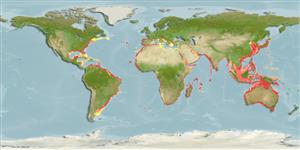
| Native range | All suitable habitat | Point map | Year 2050 |
|
| This map was computer-generated and has not yet been reviewed. |
| Carcharias taurus AquaMaps Data sources: GBIF OBIS |
ارفع صور و مقاطع فيديو
صور | مقاطع فيديو | طوابع بريدية وعملات معدنية ومتنوعة | صور قوقل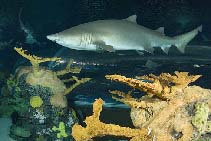 Carcharias taurus
صورة بواسطة Choromanski, J.M.
صور | مقاطع فيديو | طوابع بريدية وعملات معدنية ومتنوعة | صور قوقل
صورة بواسطة Choromanski, J.M.
التصنيف / الأسماء الأسماء الشائعة | مرادفات | Catalog of Fishes(جنس, الانواع) | ITIS | CoL | WoRMS | Cloffa
أشلاق (القروش و الشفانين) (sharks and rays) > Lamniformes (Mackerel sharks) > Carchariidae (Ragged-tooth sharks)
Etymology: Carcharias: From the Ancient Greek karkharías, shark, derived from kárkharos, sharp or jagged, referring to a shark’s teeth (See ETYFish); taurus: Latin for bull, from Pesce Tauro, local name for this shark in Sicily, Italy, type locality (See ETYFish).
More on author: Rafinesque.
Etymology: Carcharias: From the Ancient Greek karkharías, shark, derived from kárkharos, sharp or jagged, referring to a shark’s teeth (See ETYFish); taurus: Latin for bull, from Pesce Tauro, local name for this shark in Sicily, Italy, type locality (See ETYFish).
More on author: Rafinesque.
البيئة: الوسط / المنطقة المناخية / نطاق العمق / نطاق التوزيع البيئة
بحري مرتبطة بالشعاب; محيطية (Ref. 51243); نطاق العمق 1 - 191 m (Ref. 247), usually 15 - 25 m (Ref. 43278). Subtropical; 45°N - 48°S, 100°W - 155°E
التوزيع الأقاليم | مناطق الفاو | النظام البيئي | الظهور | نقطة علي الخريطة | مقدمة | Faunafri
Circumtropical: Except perhaps the eastern Pacific (Ref. 13568). Indo-West Pacific: Red Sea and off the coasts of South Africa to Japan, Korea and Australia (Ref. 13568). Present in Arafura Sea (Ref. 9819). Western Atlantic: Gulf of Maine to Argentina. Old record from Bermuda, south Brazil (Ref. 26938). Eastern Atlantic: Mediterranean to Cameroon. Northwest Atlantic: Canada (Ref. 5951).
الطول عند النضج الأول / الحجم / وزن / العمر
النضج: Lm 225.0, range 220 - 230 cm
Max length : 330 cm TL ذكر/ مختلط الجنس; (Ref. 27549); common length : 250 cm TL ذكر/ مختلط الجنس; (Ref. 6077); أعلا وزن تم نشرة: 158.8 kg (Ref. 40637)
Max length : 330 cm TL ذكر/ مختلط الجنس; (Ref. 27549); common length : 250 cm TL ذكر/ مختلط الجنس; (Ref. 6077); أعلا وزن تم نشرة: 158.8 kg (Ref. 40637)
وصف مختصر مفاتيح التعريف | الوصف الخارجي | قياسات المظهر الخارجي
الأشواك الظهرية (المجموع) : 0; شوكة شرجية: 0. A shark with a short, pointed snout, small eyes, protruding spike-like teeth and small, equal-sized dorsal and anal fins; 1st dorsal fin closer to pelvic than to pectoral fins (Ref. 5578). Caudal fin with a pronounced subterminal notch and a short ventral lobe (Ref. 13575). Pale brown or grey, paler below, with dark spots that appear faded in adults; fins plain (Ref. 6586).
Body shape (shape guide): fusiform / normal.
Body shape (shape guide): fusiform / normal.
A common littoral shark found inshore from the surf zone and in shallow bays to at least 191 m on the outer continental shelves (Ref. 13568). Often on or near the bottom but also occurs in midwater or at the surface (Ref. 247). Only shark known to gulp and store air in its stomach to maintain neutral buoyancy while swimming (Ref. 13568). Found singly or in small to large schools (Ref. 247). Feeds on bony fishes, small sharks, rays, squids, crabs, and lobsters (Ref. 5578). Ovoviviparous, embryos feeding on yolk sac and other ova produced by the mother as well as other siblings in the womb (uterine cannibalism) (Ref. 50449). Usually gives birth to 2 pups after a 9-12 months gestation period (Ref.58048). A migratory species in parts of its range, particularly in its northern and southern extremities where pronounced poleward migration occur in the summer and equatorial movements in autumn and winter (Ref. 247). Usually inoffensive and not aggressive when not provoked (Ref. 247) but has known to bite swimmers and be aggressive towards divers with speared fish (Ref. 6586). Utilized for fresh, frozen, smoked and dried for human consumption (Ref. 247); also for fishmeal, liver oil, fins, and hides for leather (Ref. 13568). Flesh highly appreciated in Japan (Ref. 36731).
دورة الحياة وسلوك التزاوج النضج | التكاثر | وضع البيض | بيض | الخصوبة | اليرقات
Exhibit ovoviparity (aplacental viviparity), with embryos feeding on other ova produced by the mother (oophagy) after the yolk sac is absorbed, then cannibalize siblings (adelphophagy) (Ref. 50449). Distinct pairing with embrace (Ref. 205). Eggs leave the ovaries, and while in transit in the oviducts are fertilized and enclosed in groups of 16 to 23 in egg cases. However, at some time between fertilization and birth only two (Ref. 5578, 6586) embryos of its group prevails, possibly by devouring its rivals, and proceeds to eat fertilized eggs and smaller potential siblings in utero until birth. According to Springer (1948) (Ref. 39565), it is evident that this species sends forth into the world not only large, well-developed, and even experienced young but may send them forth with a full stomach. The yolk sac is resorbed at a small size, less than 17 cm, and the umbilical scar may be lost. Gestation period may be from 8 to 9 months long. Size at birth 100 cm (Ref. 6586).
Pratt (2001) (Ref. 49562) relates Gordon's (1993) (Ref. 51113) detailed account of the mating behavior of the sand tiger sharks as follows: "mating activities began when the two male C. taurus, having become reluctant to feed, increased their swimming speed, accompanied by clasper flexion and eventual interest in their female tank mates...aggressive displays such as snapping and stalking became frequent, mostly toward species of smaller Carcharhinus in the tank. The males did not become interested in the female until she slowed, moved to the sand area and started cupping her pelvic fins. The two males then became competitive toward each other, circling and tailing, until the alpha male forced the beta male out of the sand area. The female bit the male prior to copulation. She exhibited shielding behavior for several days and then resumed cupping and flaring. The female gradually changed her swimming position and began displaying the submissive behavior. The alpha male swam in increasingly larger circles and began splaying its claspers, then approached the female and exhibited tailing and nosing. Copulation occurred as the male bit into the right flank and trailing edge of the pectoral fin of the female. The male swam side by side with the female, copulating with the right clasper for one to two minutes. After copulation, the male showed little interest in the female." In captivity, males show aggression toward other species after copulation (Ref. 51113, 49562). Females avoid patrolling males by 'shielding' with pelvics close to the substrate (Ref. 51113, 49562). However, female acceptance of future male partner is indicated by a show of 'submissive' body, 'cupping' and 'flaring' of pelvic fins (Ref. 51113, 49562).
المرجع الرئيسي
قم بتحميل مراجعك | مراجع | المنظم : Compagno, Leonard J.V. | المتعاونين
Last, P.R. and J.D. Stevens, 1994. Sharks and rays of Australia. CSIRO, Australia. 513 p. (Ref. 6871)
حالة القائمة الحمراء للاتحاد الدولي لحفظ الطبيعة والموارد الطبيعية (Ref. 130435: Version 2025-2 (Global))
معرضه للخطر بشكل حرج (CR) (A2bd); Date assessed: 07 December 2020
CITES
Not Evaluated
خطر للأنسان
Traumatogenic (Ref. 4690)
استخدامات بشرية
مصائد: تجاري; لعبة سمكه: نعم
FAO - مصائد: الهبوط, ملف الأنواع; Publication: search | FishSource | البحر حولنا
مزيد من المعلومات
علم البيئة الغذائية
المواد الغذائية (الفرائس)
التركيبة الغذائية
استهلاك الأغذية
الحصص الغذائية
مفتريسات
المواد الغذائية (الفرائس)
التركيبة الغذائية
استهلاك الأغذية
الحصص الغذائية
مفتريسات
الديناميكيات السكانية
معاملات النمو
الحد الأقصى للأعمار/الأحجام
علاقة الطول بالوزن.
علاقة الطول بالطول.
الطول- الترددات
التحويل الجماعي
توظيف
الوفرة
معاملات النمو
الحد الأقصى للأعمار/الأحجام
علاقة الطول بالوزن.
علاقة الطول بالطول.
الطول- الترددات
التحويل الجماعي
توظيف
الوفرة
علم وظائف الأعضاء
تكوين الجسم
المغذيات
استهلاك الأوكسجين
نوع السباحة
سرعة السباحة
الأصباغ البصرية
صوت السمك
الأمراض والطفيليات
السمية (LC50s)
تكوين الجسم
المغذيات
استهلاك الأوكسجين
نوع السباحة
سرعة السباحة
الأصباغ البصرية
صوت السمك
الأمراض والطفيليات
السمية (LC50s)
ذات الصلة بالبشر
أنظمة الاستزراع المائي
ملامح تربية الأحياء المائية
سلالات
حالات سيغواتيرا
طوابع بريدية وعملات معدنية ومتنوعة
أنظمة الاستزراع المائي
ملامح تربية الأحياء المائية
سلالات
حالات سيغواتيرا
طوابع بريدية وعملات معدنية ومتنوعة
أدوات
اختبار عضوي | كتاب إلكتروني | دليل الميدان | مفاتيح التعريف | معالج تردد الطول-التردد | أداة تاريخ الحياة | نقطة علي الخريطة |
Catch-MSY |
تقارير خاصة
البحث عن صيانت الأحواض المائيه | التحقق من وجود صفحات حقائق الأنواع | البحث عنا حقائق حول الأحواض المائيه
تنزيل XML
مصادر علي الأنترنت
AFORO (otoliths) | Aquatic Commons | BHL | Cloffa | Websites from users | البحث في مراقبي الأسماك | CISTI | Catalog of Fishes: جنس, الانواع | DiscoverLife | DORIS | ECOTOX | FAO - مصائد: الهبوط, ملف الأنواع; Publication: search | Faunafri | Fishipedia | Fishtrace | GloBI | GoMexSI (interaction data) | Google Books | Google Scholar | Google | IGFA World Record | قاعدة البينات الوطنية | OneZoom | Open Tree of Life | Otolith Atlas of Taiwan Fishes | احواض مائية عامة | PubMed | Reef Life Survey | Socotra Atlas | TreeBase | شجرة الحياة | Wikipedia: ذهب, بحث | World Records Freshwater Fishing | Zoobank | سجلات علم الحيوانات
تقديرات تستند إلى النماذج
درجة الحرارة المفضلة (مرجع 123201): 12.5 - 28, mean 24.6 °C (based on 648 cells).
مؤشر التنوع الشُعبي الوراثي (مرجع 82804): PD50 = 1.0000 [Uniqueness, from 0.5 = low to 2.0 = high].
Bayesian length-weight: a=0.00741 (0.00277 - 0.01983), b=2.99 (2.76 - 3.22), in cm total length, based on LWR estimates for this (Sub)family-body shape (Ref. 93245).
مستوى غذائي (مرجع 69278): 4.5 ±0.4 se; based on diet studies.
المرونه (مرجع 120179): منخفظ جدا, الحد الزمني الأدني لتضاعف عدد أفراد المجتمع أكثر من 14 سنة (Fec=2; K=0.14-0.17; tmax=17).
المغذيات (Ref. 124155): Calcium = 4.12 [0.71, 19.42] mg/100g; Iron = 0.397 [0.092, 1.092] mg/100g; Protein = 21.2 [18.7, 23.6] %; Omega3 = 0.215 [0.084, 0.534] g/100g; Selenium = 20.9 [5.9, 65.0] μg/100g; VitaminA = 20 [7, 64] μg/100g; Zinc = 0.286 [0.136, 0.590] mg/100g (wet weight);