



إضافة ملاحظاتك Fish Watcher
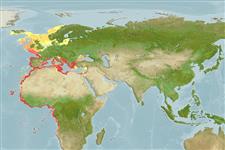
| Native range | All suitable habitat | Point map | Year 2050 |
|
| This map was computer-generated and has not yet been reviewed. |
| Oxynotus centrina AquaMaps Data sources: GBIF OBIS |
ارفع صور و مقاطع فيديو
صور | مقاطع فيديو | صور قوقل Oxynotus centrina
صورة بواسطة Costa, F.
صور | مقاطع فيديو | صور قوقل
صورة بواسطة Costa, F.
التصنيف / الأسماء الأسماء الشائعة | مرادفات | Catalog of Fishes(جنس, الانواع) | ITIS | CoL | WoRMS | Cloffa
أشلاق (القروش و الشفانين) (sharks and rays) > Squaliformes (Sleeper and dogfish sharks) > Oxynotidae (Rough sharks)
Etymology: Oxynotus: oxys (Gr.), sharp; notos (Gr.), back, referring to its keeled back (“dorso carenato”) (See ETYFish); centrina: From “Centrina,” name for this shark dating to at least Giovio’s De romanis piscibus (1524), presumably derived from centrum (L.), prickle or sharp point, referring to spines on both dorsal fins (See ETYFish).
More on author: Linnaeus.
Etymology: Oxynotus: oxys (Gr.), sharp; notos (Gr.), back, referring to its keeled back (“dorso carenato”) (See ETYFish); centrina: From “Centrina,” name for this shark dating to at least Giovio’s De romanis piscibus (1524), presumably derived from centrum (L.), prickle or sharp point, referring to spines on both dorsal fins (See ETYFish).
More on author: Linnaeus.
البيئة: الوسط / المنطقة المناخية / نطاق العمق / نطاق التوزيع البيئة
بحري قاعية المعيشة; نطاق العمق 60 - 1309 m (Ref. 128029). Deep-water; 70°N - 17°S, 25°W - 36°E (Ref. 54693)
التوزيع الأقاليم | مناطق الفاو | النظام البيئي | الظهور | نقطة علي الخريطة | مقدمة | Faunafri
Eastern Atlantic: Bay of Biscay and Mediterranean Sea to Senegal, north to Cornwall, England (apparently as a stray). Compagno et al. (Ref. 5578) reports this species as ranging south to Cape Point, South Africa but Springer 1990 (Ref. 10718) notes Bass et al. 1976 as considering specimens from Walvis Bay distinct from Oxynotus centrina calling attention to the considerably greater distance between dorsal fins in Mediterranean specimens than in specimens taken south of the equator.
الطول عند النضج الأول / الحجم / وزن / العمر
النضج: Lm ?, range 50 - ? cm
Max length : 150 cm TL ذكر/ مختلط الجنس; (Ref. 247); common length : 55.0 cm TL ذكر/ مختلط الجنس; (Ref. 26999)
Max length : 150 cm TL ذكر/ مختلط الجنس; (Ref. 247); common length : 55.0 cm TL ذكر/ مختلط الجنس; (Ref. 26999)
وصف مختصر مفاتيح التعريف | الوصف الخارجي | قياسات المظهر الخارجي
الأشواك الظهرية (المجموع) : 2; شوكة شرجية: 0. A small bizarre-looking shark with an unmistakable high body and bristly textured skin (Ref. 5578). Uniformly grey to grey-brown (Ref. 5578).
Body shape (shape guide): elongated.
Body shape (shape guide): elongated.
Found on the outer continental shelf and upper slope (Ref. 5578). Depth range from 60-660 m (Ref. 247) and from 549-777 m in the eastern Ionian Sea (Ref. 56504), and 818-1309 m NW Africa (Ref. 128029). Feeds on polychaetes (Ref. 247) and sipunculids (apparenly a suction feeder which mainly feeds on worm-like prey), which are rapidly digested, and the rapid gastric evacuation could partially explain the vacuity of several guts; teleosts, crustaceans and echinoderms are considered as accessory prey items, thus recorded predation on egg cases of the smallspotted catshark Scyliorhinus canicula remains an occasional phenomenon (Ref. 81816). Ovoviviparous (Ref. 205). Utilized for fishmeal, oil, and smoked and dried salted for human consumption (Ref. 247).
دورة الحياة وسلوك التزاوج النضج | التكاثر | وضع البيض | بيض | الخصوبة | اليرقات
Ovoviviparous, without a placenta, with about 7 or 8 young in a litter (Ref. 247). Distinct pairing with embrace (Ref. 205).
المرجع الرئيسي
قم بتحميل مراجعك | مراجع | المنظم | المتعاونين
Compagno, L.J.V., 1984. FAO Species Catalogue. Vol. 4. Sharks of the world. An annotated and illustrated catalogue of shark species known to date. Part 1 - Hexanchiformes to Lamniformes. FAO Fish. Synop. 125(4/1):1-249. Rome, FAO. (Ref. 247)
حالة القائمة الحمراء للاتحاد الدولي لحفظ الطبيعة والموارد الطبيعية (Ref. 130435: Version 2025-2 (Global))
في خطر (EN) (A2d); Date assessed: 31 August 2020
CITES
Not Evaluated
خطر للأنسان
Harmless
استخدامات بشرية
مصائد: غير مهمة تجارياً
FAO - مصائد: الهبوط, ملف الأنواع; Publication: search | FishSource | البحر حولنا
مزيد من المعلومات
علم البيئة الغذائية
المواد الغذائية (الفرائس)
التركيبة الغذائية
استهلاك الأغذية
الحصص الغذائية
مفتريسات
المواد الغذائية (الفرائس)
التركيبة الغذائية
استهلاك الأغذية
الحصص الغذائية
مفتريسات
الديناميكيات السكانية
معاملات النمو
الحد الأقصى للأعمار/الأحجام
علاقة الطول بالوزن.
علاقة الطول بالطول.
الطول- الترددات
التحويل الجماعي
توظيف
الوفرة
معاملات النمو
الحد الأقصى للأعمار/الأحجام
علاقة الطول بالوزن.
علاقة الطول بالطول.
الطول- الترددات
التحويل الجماعي
توظيف
الوفرة
التشريح
منطقة الخياشيم
الدماغ
الأوتوليث
منطقة الخياشيم
الدماغ
الأوتوليث
علم وظائف الأعضاء
تكوين الجسم
المغذيات
استهلاك الأوكسجين
نوع السباحة
سرعة السباحة
الأصباغ البصرية
صوت السمك
الأمراض والطفيليات
السمية (LC50s)
تكوين الجسم
المغذيات
استهلاك الأوكسجين
نوع السباحة
سرعة السباحة
الأصباغ البصرية
صوت السمك
الأمراض والطفيليات
السمية (LC50s)
ذات الصلة بالبشر
أنظمة الاستزراع المائي
ملامح تربية الأحياء المائية
سلالات
حالات سيغواتيرا
طوابع بريدية وعملات معدنية ومتنوعة
أنظمة الاستزراع المائي
ملامح تربية الأحياء المائية
سلالات
حالات سيغواتيرا
طوابع بريدية وعملات معدنية ومتنوعة
أدوات
كتاب إلكتروني | دليل الميدان | مفاتيح التعريف | معالج تردد الطول-التردد | أداة تاريخ الحياة | نقطة علي الخريطة |
Catch-MSY |
تقارير خاصة
البحث عن صيانت الأحواض المائيه | التحقق من وجود صفحات حقائق الأنواع | البحث عنا حقائق حول الأحواض المائيه
تنزيل XML
مصادر علي الأنترنت
AFORO (otoliths) | Aquatic Commons | BHL | Cloffa | Websites from users | البحث في مراقبي الأسماك | CISTI | Catalog of Fishes: جنس, الانواع | DiscoverLife | ECOTOX | FAO - مصائد: الهبوط, ملف الأنواع; Publication: search | Faunafri | Fishipedia | Fishtrace | GloBI | Google Books | Google Scholar | Google | IGFA World Record | قاعدة البينات الوطنية | OneZoom | Open Tree of Life | Otolith Atlas of Taiwan Fishes | PubMed | Reef Life Survey | Socotra Atlas | TreeBase | شجرة الحياة | Wikipedia: ذهب, بحث | World Records Freshwater Fishing | سجلات علم الحيوانات
تقديرات تستند إلى النماذج
درجة الحرارة المفضلة (مرجع 123201): 9.5 - 15.3, mean 13.3 °C (based on 283 cells).
مؤشر التنوع الشُعبي الوراثي (مرجع 82804): PD50 = 0.5625 [Uniqueness, from 0.5 = low to 2.0 = high].
Bayesian length-weight: a=0.00363 (0.00158 - 0.00837), b=3.15 (2.94 - 3.36), in cm total length, based on LWR estimates for this (Sub)family-body shape (Ref. 93245).
مستوى غذائي (مرجع 69278): 3.1 ±0.3 se; based on diet studies.
المرونه (مرجع 120179): منخفظ جدا, الحد الزمني الأدني لتضاعف عدد أفراد المجتمع أكثر من 14 سنة (Fec=7).
المغذيات (Ref. 124155): Calcium = 5.91 [1.03, 31.36] mg/100g; Iron = 0.271 [0.065, 0.929] mg/100g; Protein = 18.7 [16.8, 20.5] %; Omega3 = 0.229 [0.074, 0.746] g/100g; Selenium = 18.8 [5.3, 65.9] μg/100g; VitaminA = 5.9 [1.1, 30.1] μg/100g; Zinc = 0.392 [0.185, 0.747] mg/100g (wet weight);