



Squaliolus laticaudus Smith & Radcliffe, 1912
Spined pygmy shark
Thêm quan sát của bạn vào Fish Watcher
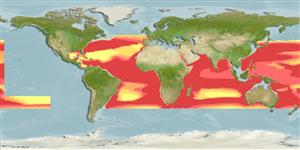
| Native range | All suitable habitat | Point map | Year 2050 |
|
| This map was computer-generated and has not yet been reviewed. |
| Squaliolus laticaudus AquaMaps Data sources: GBIF OBIS |
Tải lên của bạn hình ảnh Và Video
Các tranh (Ảnh) | Google image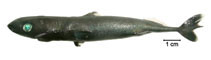 Squaliolus laticaudus
Hình ảnh của Fischer, L.G.
Các tranh (Ảnh) | Google image
Hình ảnh của Fischer, L.G.
Phân loại / Tên Tên thường gặp | Các synonym ( Các tên trùng) | Catalog of Fishes(Giống, Các loài) | ITIS | CoL | WoRMS | Cloffa
Lớp phụ Cá sụn (cá mập và cá đuối) (sharks and rays) > Squaliformes (Sleeper and dogfish sharks) > Dalatiidae (Sleeper sharks)
Etymology: Squaliolus: Diminutive of squalus (L.), a sea-fish, usually applied to sharks, referring to small size of S. laticaudus (See ETYFish); laticaudus: latus (L.), wide or broad; cauda (L.), tail, referring to its broad (but short) caudal fin (See ETYFish).
More on authors: Smith & Radcliffe.
Etymology: Squaliolus: Diminutive of squalus (L.), a sea-fish, usually applied to sharks, referring to small size of S. laticaudus (See ETYFish); laticaudus: latus (L.), wide or broad; cauda (L.), tail, referring to its broad (but short) caudal fin (See ETYFish).
More on authors: Smith & Radcliffe.
Môi trường: môi trường / vùng khí hậu / Mức độ sâu / phạm vi phân phối Sinh thái học
biển tầng nổi biển sâu; Ở đại duơng, biển (Ref. 51243); mức độ sâu 200 - 1200 m (Ref. 27000). Deep-water; 48°N - 40°S, 180°W - 180°E
Sự phân bố Lãnh thổ | Các khu vực của FAO | Các hệ sinh thái | Những lần xuất hiện | Bản đồ điểm | Những chỉ dẫn | Faunafri
Nearly circumtropical. Western Atlantic: off Bermuda, southern Brazil, and northern Argentina. Eastern Atlantic: off France and Madeira. Western Indian Ocean: off Somalia. Western Pacific: Japan, Taiwan and Philippines (Ref. 13748), as well as Australia (Ref. 7300).
Chiều dài lúc trưởng thành đầu tiên / Bộ gần gũi / Khối lượng (Trọng lượng) / Tuổi
Chín muồi sinh dục: Lm 18.5, range 17 - 20 cm
Max length : 22.0 cm TL con đực/không giới tính; (Ref. 247); 25.0 cm TL (female)
Max length : 22.0 cm TL con đực/không giới tính; (Ref. 247); 25.0 cm TL (female)
Mô tả ngắn gọn Khóa để định loại | Hình thái học | Sinh trắc học
Các tia vây lưng cứng (tổng cộng) : 1; Tia cứng vây hậu môn: 0. The spined pygmy shark Squaliolus laticaudus is a very small dogfish (about 25cm) with a large eye (diameter 73-86% of interorbital width), upper margin nearly straight; upper lip without papillae (Ref. 31367, 6871). Color: dark with conspicuously light-margined fins (Ref. 247) . Edge of fins with bright border (Ref. 43998).
S. laticaudus is the type species of the genus which has the following distinctive features: fin spine on its first dorsal fin but not on its second dorsal fin; second dorsal fin long-based and low, about twice the length of first dorsal fin base; first dorsal-fin base closer to pectoral fins than to pelvic fins; and caudal fin nearly symmetrical, paddle-shaped, with subterminal notch present; low lateral keels on caudal peduncle . Body cigar-shaped; snout very long, bulbously conical but slightly pointed; mouth ventral; lips thin; teeth strongly different in both jaws, uppers small, narrow and erect cusps, lowers larger, blade-like and semi erect. Tooth rows 22-23/16-21. (Ref. 247, 6871).
Body shape (shape guide): elongated.
Body shape (shape guide): elongated.
An oceanic, wide-ranging, tropical pelagic species occurring near continental and insular land masses, sometimes over the shelves, but usually over the slopes (Ref. 247). Displays vertical migrations on a diel cycle, seen at the bottom during the day and travels to 200 m at night (Ref. 247). Feeds on deepwater squid, lanternfish, gonostomatids and idiacanthids, and probably follows its prey on their diel migrations (Ref. 247). Ovoviviparous (Ref. 205). Has well-developed photophores densely covering the ventral part of the body and sparsely seen on the sides and hardly developed on the dorsal surface (Ref. 247).
Vòng đời và hành vi giao phối Chín muồi sinh dục | Sự tái sinh sản | Đẻ trứng | Các trứng | Sự sinh sản | Ấu trùng
Probably ovoviviparous. Twelve mature eggs have been found in a single ovary of a mature female but this does not imply that large litters are produced (Ref. 247). Distinct pairing with embrace (Ref. 205).
Tài liệu tham khảo chính
Tải lên tài liệu tham khảo của bạn | Các tài liệu tham khảo | Người điều phối : Compagno, Leonard J.V. | Người cộng tác
Compagno, L.J.V., 1984. FAO Species Catalogue. Vol. 4. Sharks of the world. An annotated and illustrated catalogue of shark species known to date. Part 1 - Hexanchiformes to Lamniformes. FAO Fish. Synop. 125(4/1):1-249. Rome, FAO. (Ref. 247)
Tình trạng Sách đỏ IUCN (Ref. 130435: Version 2025-2 (Global))
Least Concern (LC) ; Date assessed: 21 November 2019
CITES
Not Evaluated
Mối đe dọa đối với con người
Harmless
Sử dụng của con người
Các nghề cá: không ích lợi (thú vị)
FAO - Publication: search | FishSource |
Thêm thông tin
Sinh thái dinh dưỡng
Thức ăn (con mồi)
Thành phần thức ăn
Thành phần thức ăn
Khẩu phần ăn
Các động vật ăn mồi
Thức ăn (con mồi)
Thành phần thức ăn
Thành phần thức ăn
Khẩu phần ăn
Các động vật ăn mồi
Biến động dân số
Các thông số tăng trưởng
Độ tuổi / kích thước tối đa
Chiều dài-trọng lượng tương đối
Chiều dài-chiều dài tương đối.
Chiều dài-tần số
Chuyển đổi khối lượng
Bổ xung
Sự phong phú
Các thông số tăng trưởng
Độ tuổi / kích thước tối đa
Chiều dài-trọng lượng tương đối
Chiều dài-chiều dài tương đối.
Chiều dài-tần số
Chuyển đổi khối lượng
Bổ xung
Sự phong phú
Vòng đời
Sự tái sinh sản
Chín muồi sinh dục
Độ trưởng thành/Mang liên quan
Sự sinh sản
Đẻ trứng
Tập hợp sinh sản
Các trứng
Sự phát triển của trứng
Ấu trùng
Sự biến động ấu trùng
Sự tái sinh sản
Chín muồi sinh dục
Độ trưởng thành/Mang liên quan
Sự sinh sản
Đẻ trứng
Tập hợp sinh sản
Các trứng
Sự phát triển của trứng
Ấu trùng
Sự biến động ấu trùng
Sự phân bố
Lãnh thổ
Các khu vực của FAO
Các hệ sinh thái
Những lần xuất hiện
Những chỉ dẫn
BRUVS - Video
Lãnh thổ
Các khu vực của FAO
Các hệ sinh thái
Những lần xuất hiện
Những chỉ dẫn
BRUVS - Video
Sinh lý học
Thành phần cơ thể
Chất dinh dưỡng
Thành phần ô-xy
Kiểu bơi
Tốc độ bơi
Sắc tố thị giác
Tiếng cá
Bệnh tật & Ký sinh trùng
Độc tính (LC50)
Thành phần cơ thể
Chất dinh dưỡng
Thành phần ô-xy
Kiểu bơi
Tốc độ bơi
Sắc tố thị giác
Tiếng cá
Bệnh tật & Ký sinh trùng
Độc tính (LC50)
Di truyền
Bộ gen
Di truyền
Sự dị hợp tử
Di sản
Đa dạng di truyền
Bộ gen
Di truyền
Sự dị hợp tử
Di sản
Đa dạng di truyền
Liên quan đến con người
Hệ thống nuôi trồng thủy sản
Các tổng quan nuôi trồng thủy sản
Các giống
Các trường hợp ngộ độc Ciguatera
Tem, tiền xu, v.v.
Hệ thống nuôi trồng thủy sản
Các tổng quan nuôi trồng thủy sản
Các giống
Các trường hợp ngộ độc Ciguatera
Tem, tiền xu, v.v.
Các công cụ
Sách điện tử | Hướng dẫn hiện trường | Khóa để định loại | Tần suất chiều dài Wizard | Công cụ của vòng đời | Bản đồ điểm |
Bắt-MSY |
Báo cáo đặc biệt
Kiểm tra bảo trì bể cá | Kiểm tra các tờ thông tin về loài | Kiểm tra các tờ thông tin về nuôi trồng thủy sản
Tải xuống XML
Các nguồn internet
AFORO (otoliths) | Aquatic Commons | BHL | Cloffa | Websites from users | Check FishWatcher | CISTI | Catalog of Fishes: Giống, Các loài | DiscoverLife | ECOTOX | FAO - Publication: search | Faunafri | Fishipedia | Fishtrace | GloBI | Google Books | Google Scholar | Google | IGFA World Record | Các cơ sở dữ liệu quốc gia | OneZoom | Open Tree of Life | Otolith Atlas of Taiwan Fishes | PubMed | Reef Life Survey | Socotra Atlas | TreeBase | Cây Đời sống | Wikipedia: Go, tìm | World Records Freshwater Fishing | Zoobank | Tạp chí Zoological Record
Ước tính dựa trên mô hình
Nhiệt độ ưa thích (Tài liệu tham khảo 123201): 7.1 - 14.6, mean 10 °C (based on 649 cells).
Chỉ số đa dạng phát sinh loài (Tài liệu tham khảo 82804): PD50 = 0.7510 [Uniqueness, from 0.5 = low to 2.0 = high].
Bayesian length-weight: a=0.00263 (0.00132 - 0.00522), b=3.13 (2.94 - 3.32), in cm total length, based on LWR estimates for this species & (Sub)family-body (Ref. 93245).
Mức dinh dưỡng (Tài liệu tham khảo 69278): 4.2 ±0.73 se; based on food items.
Thích nghi nhanh (Tài liệu tham khảo 120179): thấp, thời gian nhân đôi của chủng quần tối thiểu là 4.5 - 14 năm (Fec assumed to be <10).
Chất dinh dưỡng (Ref. 124155): Calcium = 15.1 [2.2, 91.4] mg/100g; Iron = 0.273 [0.062, 1.162] mg/100g; Protein = 19.1 [17.0, 21.3] %; Omega3 = 0.179 [0.048, 0.671] g/100g; Selenium = 8.32 [1.83, 33.05] μg/100g; VitaminA = 95.1 [10.1, 921.0] μg/100g; Zinc = 0.651 [0.261, 1.877] mg/100g (wet weight);