



Heteropneustes nani Hossain, Sarker, Sharifuzzaman & Chowdhury, 2013
Carica il tuo foto e Video
Immagini | Google image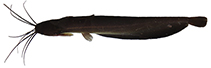 Heteropneustes nani
Male Immagine di Hossain, M.S.
Immagini | Google image
Male Immagine di Hossain, M.S.
Classificazione / Nomi Nomi Comuni | Sinonimi | Catalog of Fishes(Genere, Specie) | ITIS | CoL | WoRMS | Cloffa
> Siluriformes (Catfishes) > Heteropneustidae (Airsac catfishes)
Etymology: Heteropneustes: Greek, heteros = other + Greek, pneo = to breath (Ref. 45335); nani: Named for Professor Dr Nani Gopal Das.
Eponymy: Dr Nani Gopal Das (d: 1944) is a fisheries and aquaculture scientist. [...] (Ref. 128868), visit book page.
Etymology: Heteropneustes: Greek, heteros = other + Greek, pneo = to breath (Ref. 45335); nani: Named for Professor Dr Nani Gopal Das.
Eponymy: Dr Nani Gopal Das (d: 1944) is a fisheries and aquaculture scientist. [...] (Ref. 128868), visit book page.
Ambiente: milieu / zona climatica / distribuzione batimetrica / gamma di distribuzione Ecologia
; acqua dolce benthopelagico; distribuzione batimetrica 1 - 2 m (Ref. 94657). Tropical
Distribuzione Territories | Aree FAO | Ecosistemi | Presenze | Mappa dei ritrovamenti | Introduzioni | Faunafri
Asia: Bangladesh.
Dimensione / Peso / Età
Breve descrizione Chiavi di identificazione | Morfologia | Morfometria
This species is distinguished from its congeners by the following: smallest in size; head length greater than the depth of body; small terminal mouth bearing nearly equal jaws and fleshy lips; united anal-caudal fin; pectoral spines completely separated from rays with 9-10 antrorse serrae along inner edge and 13-15 in outer edge; body colour blackish with two indistinct lateral bands on flank, with the ventral surface lighter (Ref. 94657).
Body shape (shape guide): elongated; Cross section: compressed.
Body shape (shape guide): elongated; Cross section: compressed.
Facultative air-breathing (Ref. 126274); This species is found in ponds, ditches, canals, flooded rice fields, swamps, marshes, waterlogged areas and rivers. Its air-breathing apparatus enables it to survive in low water depth, even in turbid and oxygen deficit conditions. During the winter season the fish can live in semi-liquid mud and when the mud dries up they burrow to the bottom of fissures and crevices formed by the cracking mud. Recorded physicochemical parameters during the study period are the following: water temperature 18-28°C; pH 6.5-7.5; dissolved oxygen 4.5-5.0 mg/l; water transparency 45-60 cm at 1.0-1.8 m depth. This fish is able to deliver a stinging protein (known as poison) emanated from the venom glands around the pectoral spine, and is reported to be neurotoxic and hemolytic (i.e. destruction of red blood cells) in humans, causing local numbness, inflammation and severe painful physical conditions on the affected limb (warm water bath, application of lukewarm turmeric paste, ejection of blood, and traditional herbal medicine are commonly used for healing). Still, its flesh is of good table quality and nutritional value. rich in iron and low fat, and a valuable source of protein (Ref. 94657).
Ciclo vitale e comportamento di accoppiamento Maturità | Riproduzione | Deposizione | Uova | Fecondità | Larve
Riferimento principale
Caricare le referenze | Bibliografia | Coordinatore | Collaboratori
Hossain, M.S., S. Sarker, S.M. Sharifuzzaman and S.R. Chowdhury, 2013. New species of stinging catfish Heteropneustes nani (Siluriformes: Heteropneustidae) from Noakhali, Bangladesh. Vert. Zool. 63(3):259-267. (Ref. 94657)
CITES
Not Evaluated
Minaccia per l'uomo
Traumatogenic
Usi umani
Pesca: commerciale
FAO - Publication: search | FishSource |
Informazioni ulteriori
Ecologia trofica
Articoli alimentari (prede)
Alimentazione
Consumo di cibo
Razioni alimentari
Predatori
Articoli alimentari (prede)
Alimentazione
Consumo di cibo
Razioni alimentari
Predatori
Dinamica della popolazione
Parametri di crescita
Età massima / dimensioni massime
Rapporto lunghezza-peso.
Lunghezza-lunghezza rel.
Lunghezza-frequenze
Conversione di massa
Reclutamento
Abbondanza
Parametri di crescita
Età massima / dimensioni massime
Rapporto lunghezza-peso.
Lunghezza-lunghezza rel.
Lunghezza-frequenze
Conversione di massa
Reclutamento
Abbondanza
Ciclo di vita
Riproduzione
Maturità
Maturità/Gli occhielli sono relativi.
Fecondità
Deposizione
Aggregazioni riproduttive
Uova
Sviluppo delle uova
Larve
Dinamica popolazioni larvali
Riproduzione
Maturità
Maturità/Gli occhielli sono relativi.
Fecondità
Deposizione
Aggregazioni riproduttive
Uova
Sviluppo delle uova
Larve
Dinamica popolazioni larvali
Anatomia
Area branchiale
Cervello
Otolite
Area branchiale
Cervello
Otolite
Fisiologia
Composizione corporea
Nutrienti
Consumo di ossigeno
Tipo di nuoto
Velocità di nuoto
Pigmenti visivi
Suono del pesce
Malattie e parassiti
Tossicità (LC50)
Composizione corporea
Nutrienti
Consumo di ossigeno
Tipo di nuoto
Velocità di nuoto
Pigmenti visivi
Suono del pesce
Malattie e parassiti
Tossicità (LC50)
Genetica
Genome
Genetica
Eterozigosi
Ereditarietà
Diversità genetica
Genome
Genetica
Eterozigosi
Ereditarietà
Diversità genetica
Legato all'uomo
Sistemi di acquacoltura
Profili di acquacoltura
Varietà
Casi di Ciguatera
Francobolli, monete, materiale vario.
Sistemi di acquacoltura
Profili di acquacoltura
Varietà
Casi di Ciguatera
Francobolli, monete, materiale vario.
Strumenti
Libro elettronico | Giuda pratica | Generatore frequenze di lunghezza | Strumento Parametri Biologici | Mappa dei ritrovamenti |
Cattura-MSY |
Rapporti speciali
Controllo della manutenzione dell'acquario | Verificare la presenza di schede informative sulle specie | Verifica delle schede informative sull'acquacoltura
Scarica XML
Fonti Internet
AFORO (otoliths) | Aquatic Commons | BHL | Cloffa | Websites from users | Check FishWatcher | CISTI | Catalog of Fishes: Genere, Specie | DiscoverLife | ECOTOX | FAO - Publication: search | Faunafri | Fishipedia | Fishtrace | GloBI | Google Books | Google Scholar | Google | IGFA World Record | OneZoom | Open Tree of Life | Otolith Atlas of Taiwan Fishes | PubMed | Reef Life Survey | Socotra Atlas | TreeBase | Tree of Life | Wikipedia: Go, ricerca | World Records Freshwater Fishing | Zoobank | Record zoologico
Stime basate su modelli
Indice di diversità filogenetica (Fonte Biblio. 82804): PD50 = 0.5312 [Uniqueness, from 0.5 = low to 2.0 = high].
Bayesian length-weight: a=0.00437 (0.00193 - 0.00988), b=3.09 (2.88 - 3.30), in cm total length, based on LWR estimates for this (Sub)family-body shape (Ref. 93245).
Livello trofico (Fonte Biblio. 69278): 3.3 ±0.5 se; based on size and trophs of closest relatives
Resilienza (Fonte Biblio. 120179): Alto, tempo minimo di raddoppiamento della popolazione meno di 15 mesi (Preliminary K or Fecundity.).