



Heteropneustes nani Hossain, Sarker, Sharifuzzaman & Chowdhury, 2013
muatnaik fotos/gambar dan video
Gambar | imej Google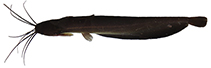 Heteropneustes nani
Male foto/gambar oleh Hossain, M.S.
Gambar | imej Google
Male foto/gambar oleh Hossain, M.S.
klasifikasi / Nama Nama-nama umum | Sinonim (persamaan) | Catalog of Fishes(Marga, Jenis) | ITIS | CoL | WoRMS | Cloffa
> Siluriformes (Catfishes) > Heteropneustidae (Airsac catfishes)
Etymology: Heteropneustes: Greek, heteros = other + Greek, pneo = to breath (Ref. 45335); nani: Named for Professor Dr Nani Gopal Das.
Eponymy: Dr Nani Gopal Das (d: 1944) is a fisheries and aquaculture scientist. [...] (Ref. 128868), visit book page.
Etymology: Heteropneustes: Greek, heteros = other + Greek, pneo = to breath (Ref. 45335); nani: Named for Professor Dr Nani Gopal Das.
Eponymy: Dr Nani Gopal Das (d: 1944) is a fisheries and aquaculture scientist. [...] (Ref. 128868), visit book page.
Lingkungan: lingkungan / zona iklim / kisaran kedalaman / jangkauan distribusi Ekologi
; air tawar bentopelagis; kisaran kedalaman 1 - 2 m (Ref. 94657). Tropical
Penyebaran Wilayah | Daerah-daerah FAO | Ekosistem | Kemunculan | peta titik | Introduksi | Faunafri
Asia: Bangladesh.
Ukuran / Berat / umur
deskripsi pendek Kunci identifiaksi (pengenalan) | Morfologi | Morfometrik
This species is distinguished from its congeners by the following: smallest in size; head length greater than the depth of body; small terminal mouth bearing nearly equal jaws and fleshy lips; united anal-caudal fin; pectoral spines completely separated from rays with 9-10 antrorse serrae along inner edge and 13-15 in outer edge; body colour blackish with two indistinct lateral bands on flank, with the ventral surface lighter (Ref. 94657).
Body shape (shape guide): elongated; Cross section: compressed.
Body shape (shape guide): elongated; Cross section: compressed.
Facultative air-breathing (Ref. 126274); This species is found in ponds, ditches, canals, flooded rice fields, swamps, marshes, waterlogged areas and rivers. Its air-breathing apparatus enables it to survive in low water depth, even in turbid and oxygen deficit conditions. During the winter season the fish can live in semi-liquid mud and when the mud dries up they burrow to the bottom of fissures and crevices formed by the cracking mud. Recorded physicochemical parameters during the study period are the following: water temperature 18-28°C; pH 6.5-7.5; dissolved oxygen 4.5-5.0 mg/l; water transparency 45-60 cm at 1.0-1.8 m depth. This fish is able to deliver a stinging protein (known as poison) emanated from the venom glands around the pectoral spine, and is reported to be neurotoxic and hemolytic (i.e. destruction of red blood cells) in humans, causing local numbness, inflammation and severe painful physical conditions on the affected limb (warm water bath, application of lukewarm turmeric paste, ejection of blood, and traditional herbal medicine are commonly used for healing). Still, its flesh is of good table quality and nutritional value. rich in iron and low fat, and a valuable source of protein (Ref. 94657).
Siklus hidup dan perilaku kawin Kematangan | Reproduksi, perkembang biakan | Pemijahan | telur-telur | Fekunditas | Larva
rujukan utama
Unggah referensi Anda | Acuan | Koordinator | mitra
Hossain, M.S., S. Sarker, S.M. Sharifuzzaman and S.R. Chowdhury, 2013. New species of stinging catfish Heteropneustes nani (Siluriformes: Heteropneustidae) from Noakhali, Bangladesh. Vert. Zool. 63(3):259-267. (Ref. 94657)
CITES
Not Evaluated
ancaman kepada manusia
Traumatogenic
penggunaan manusia
Perikanan: komersial
FAO - Publication: search | FishSource |
informasi lanjut
Ekologi trofik
Item makanan (mangsa)
Komposisi makanan
Konsumsi makanan
Ransum makanan
Pemangsa
Item makanan (mangsa)
Komposisi makanan
Konsumsi makanan
Ransum makanan
Pemangsa
Dinamika populasi
Parameter pertumbuhan
Maks. usia / ukuran
Panjang-berat rel.
Panjang-panjang rel.
ukuran frekuensi
Konversi massa
pemulihan
Kelimpahan
Parameter pertumbuhan
Maks. usia / ukuran
Panjang-berat rel.
Panjang-panjang rel.
ukuran frekuensi
Konversi massa
pemulihan
Kelimpahan
Siklus hidup
Reproduksi, perkembang biakan
Kematangan
Kedewasaan / insang rel.
Fekunditas
Pemijahan
Agregasi pemijahan
telur-telur
pekembangan telor
Larva
Dinamika larva
Reproduksi, perkembang biakan
Kematangan
Kedewasaan / insang rel.
Fekunditas
Pemijahan
Agregasi pemijahan
telur-telur
pekembangan telor
Larva
Dinamika larva
Anatomi
Area insang
Otak
Otolith
Area insang
Otak
Otolith
Fisiologi
Komposisi tubuh
Nutrisi
Konsumsi oksigen
Jenis renang
Kecepatan berenang
Pigmen visual
Suara ikan
Penyakit & Parasit
Toksisitas (LC50)
Komposisi tubuh
Nutrisi
Konsumsi oksigen
Jenis renang
Kecepatan berenang
Pigmen visual
Suara ikan
Penyakit & Parasit
Toksisitas (LC50)
Genetika
genom
Genetika
Heterozigositas
Diturunkan
Keanekaragaman Genetik
genom
Genetika
Heterozigositas
Diturunkan
Keanekaragaman Genetik
Yang berhubungan dengan manusia
Sistem akuakultur
profil budidaya air
Strain
Kasus Ciguatera
Perangko, koin, dll.
Sistem akuakultur
profil budidaya air
Strain
Kasus Ciguatera
Perangko, koin, dll.
Alat, peralatan
E-book | Penuntun lapangan | tanda freqkuenci panjang | peringkat sejarah hidup | peta titik |
Tangkap-MSY |
laporan khas
muat turun XML
Sumber internet
AFORO (otoliths) | Aquatic Commons | BHL | Cloffa | Websites from users | semak peneliti ikan | CISTI | Catalog of Fishes: Marga, Jenis | DiscoverLife | ECOTOX | FAO - Publication: search | Faunafri | Fishipedia | Fishtrace | GloBI | Google Books | Google Scholar | Google | IGFA World Record | OneZoom | Open Tree of Life | Otolith Atlas of Taiwan Fishes | PubMed | Reef Life Survey | Socotra Atlas | TreeBase | Tree of Life | Wikipedia: pergi, Cari | World Records Freshwater Fishing | Zoobank | Catatan Zoologi
Estimasi berdasarkan model
Indeks keanekaragaman filogenetik (Acuan 82804): PD50 = 0.5312 [Uniqueness, from 0.5 = low to 2.0 = high].
Bayesian length-weight: a=0.00437 (0.00193 - 0.00988), b=3.09 (2.88 - 3.30), in cm total length, based on LWR estimates for this (Sub)family-body shape (Ref. 93245).
Tingkat Trofik (Acuan 69278): 3.3 ±0.5 se; based on size and trophs of closest relatives
Daya lenting (Acuan 120179): Tinggi, Waktu penggandaan populasi minimum kurang dari 15 bulan (Preliminary K or Fecundity.).