



Chaetostoma formosae Ballen, 2011
Envoyez vos Photos et vidéos
Images | Images Google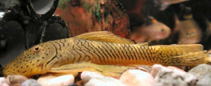 Chaetostoma formosae
Photo de Ng, H.H.
Images | Images Google
Photo de Ng, H.H.
Classification / Noms Noms communs | Synonymes | Catalog of Fishes(Genre, Espèce) | ITIS | CoL | WoRMS | Cloffa
> Siluriformes (Catfishes) > Loricariidae (Armored catfishes) > Hypostominae
Etymology: Chaetostoma: Greek, chaite = hair + Greek, stoma = mouth (Ref. 45335); formosae: This species is named formosae, an adjective in genitive case derived from the latin formosa. The name honours my sister, Laura María Ballen, in recognition of her unconditional love and support to me.
Etymology: Chaetostoma: Greek, chaite = hair + Greek, stoma = mouth (Ref. 45335); formosae: This species is named formosae, an adjective in genitive case derived from the latin formosa. The name honours my sister, Laura María Ballen, in recognition of her unconditional love and support to me.
Environnement : milieu / zone climatique / profondeur / gamme de distribution Écologie
; eau douce démersal. Tropical
Distribution Territoires | Zones FAO | Écosystèmes | Occurrences | Carte par point | Introductions | Faunafri
South America: Colombia. Known from western piedmont tributaries of the upper río Meta and Guaviare basins, in departments of Meta and Casanare, Eastern Colombia, Orinoco drainage (ref. 88853).
Taille / Poids / Âge
Description synthétique Clés d'identification | Morphologie | Morphométrie
Chaetostoma formosae differs from all the species currently in Chaetostoma with the exception of Chaetostoma anale and Chaetostoma jegui by the presence in mature males of an enlarged second unbranched anal-fin ray bearing two distinct posterior dermal folds, and reaching the base of the caudal fin when fully developed. Chaetostoma formosae differs from C. anale in having an angular distal pelvic-fin margin in mature males (vs. W-shaped distal margin in mature C. anale males and the leading pelvic-fin ray neither elongate nor filamentous, not reaching beyond the adjacent branched ray in mature males (vs. leading pelvic-fin ray both enlarged and filamentous, longer than the remaining rays in mature males of C. anale). Chaetostoma formosae differs from C. jegui in having dark spots restricted to the head and the dorsal region surrounding the dorsal-fin base, and with compound pterotic and lateral plates bordered by dark pigment (vs. dark background with light blotches in C. jegui); and by the shape of the distal margin of the pelvic fin strongly projected and angular in mature males, vs. distal margin straight and with leading-fin ray sometimes surpassing the distal margin of the fin as evident in photographs) (Ref. 88853).
Body shape (shape guide): elongated.
Body shape (shape guide): elongated.
Facultative air-breathing in the genus (Ref. 126274)
Cycle de vie et comportement reproducteur Maturité | Reproduction | Frai | Œufs | Fécondité | Larves
Référence principale
Téléchargez vos références | Références | Coordinateur : Fisch-Muller, Sonia | Collaborateurs
Ballen, G.A., 2011. A new species of Chaetostoma Tschudi (Siluriformes: Loricariidae) from Colombia with a definition of the C. anale species group. Papéis Avulsos de Zoologia 51(26):383-398. (Ref. 88853)
Statut dans la liste rouge de l'IUCN (Ref. 130435: Version 2025-2 (Global))
Vulnérable (VU) (B2ab(iii)); Date assessed: 02 November 2020
CITES
Not Evaluated
Menace pour l'homme
Harmless
Utilisations par l'homme
FAO - Publication: search | FishSource |
Plus d'informations
Écologie trophique
Aliments (proies)
Composition du régime alimentaire
Consommation alimentaire
Rations alimentaires
Prédateurs
Aliments (proies)
Composition du régime alimentaire
Consommation alimentaire
Rations alimentaires
Prédateurs
Écologie
Écologie
Écologie
Dynamique des populations
Paramètres de croissance
Âges / tailles maximales
Longueur-poids rel.
Rel. longueur-longueur.
Fréquences de longueurs
Conversion de masse
Recrutement
Abondance
Paramètres de croissance
Âges / tailles maximales
Longueur-poids rel.
Rel. longueur-longueur.
Fréquences de longueurs
Conversion de masse
Recrutement
Abondance
Cycle de vie
Reproduction
Maturité
Maturité/épines rel.
Fécondité
Frai
Agrégats de frai
Œufs
Développement de l'œuf
Larves
Dynamique des populations larvaires
Reproduction
Maturité
Maturité/épines rel.
Fécondité
Frai
Agrégats de frai
Œufs
Développement de l'œuf
Larves
Dynamique des populations larvaires
Anatomie
Surface branchiale
Cerveau
Otolithe
Surface branchiale
Cerveau
Otolithe
Physiologie
Composition corporelle
Nutriments
Consommation d'oxygène
Type de natation
Vitesse de nage
Pigments visuels
Son de poisson
Maladies et parasites
Toxicité (CL50)
Composition corporelle
Nutriments
Consommation d'oxygène
Type de natation
Vitesse de nage
Pigments visuels
Son de poisson
Maladies et parasites
Toxicité (CL50)
Génétique
génôme
Génétique
Hétérozygotie
Héritabilité
Diversité génétique
génôme
Génétique
Hétérozygotie
Héritabilité
Diversité génétique
Liées à l'homme
Systèmes d'aquaculture
Profils d'aquaculture
Souches
Cas de ciguatera
Timbres, pièces de monnaie, divers
Systèmes d'aquaculture
Profils d'aquaculture
Souches
Cas de ciguatera
Timbres, pièces de monnaie, divers
Outils
E-book | Guide de terrain | Générateur de fréquences de longueur | Outil de dynamique de population | Carte par point |
Capture-MSY |
Articles particuliers
Télécharger en XML
Sources Internet
AFORO (otoliths) | Aquatic Commons | BHL | Cloffa | Websites from users | FishWatcher | CISTI | Catalog of Fishes: Genre, Espèce | DiscoverLife | ECOTOX | FAO - Publication: search | Faunafri | Fishipedia | Fishtrace | GloBI | Google Books | Google Scholar | Google | IGFA World Record | OneZoom | Open Tree of Life | Otolith Atlas of Taiwan Fishes | PubMed | Reef Life Survey | Socotra Atlas | TreeBase | Arbre de Vie | Wikipedia: aller à, chercher | World Records Freshwater Fishing | Zoobank | Zoological Record