



Chaetostoma formosae Ballen, 2011
Uploaden van uw Foto's en video's
Afbeeldingen | Google afbeelding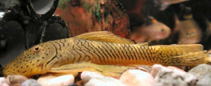 Chaetostoma formosae
Afbeelding van Ng, H.H.
Afbeeldingen | Google afbeelding
Afbeelding van Ng, H.H.
Classificatie / Namen Lokale namen | Synoniemen | Catalog of Fishes(Genus, Soort(en)) | ITIS | CoL | WoRMS | Cloffa
> Siluriformes (Catfishes) > Loricariidae (Armored catfishes) > Hypostominae
Etymology: Chaetostoma: Greek, chaite = hair + Greek, stoma = mouth (Ref. 45335); formosae: This species is named formosae, an adjective in genitive case derived from the latin formosa. The name honours my sister, Laura María Ballen, in recognition of her unconditional love and support to me.
Etymology: Chaetostoma: Greek, chaite = hair + Greek, stoma = mouth (Ref. 45335); formosae: This species is named formosae, an adjective in genitive case derived from the latin formosa. The name honours my sister, Laura María Ballen, in recognition of her unconditional love and support to me.
Milieu: milieu / Klimaatzone / Diepte / verspreidingsgebied Ecologie
; zoet water demersaal. Tropical
Verspreiding Gebieden | FAO regio's | Ecosystemen | Voorkomen | Verspreidingskaart | Introducties | Faunafri
South America: Colombia. Known from western piedmont tributaries of the upper río Meta and Guaviare basins, in departments of Meta and Casanare, Eastern Colombia, Orinoco drainage (ref. 88853).
Grootte / Gewicht / Leeftijd
Korte beschrijving Determinatiesleutels | Morfologie | Morfometrie
Chaetostoma formosae differs from all the species currently in Chaetostoma with the exception of Chaetostoma anale and Chaetostoma jegui by the presence in mature males of an enlarged second unbranched anal-fin ray bearing two distinct posterior dermal folds, and reaching the base of the caudal fin when fully developed. Chaetostoma formosae differs from C. anale in having an angular distal pelvic-fin margin in mature males (vs. W-shaped distal margin in mature C. anale males and the leading pelvic-fin ray neither elongate nor filamentous, not reaching beyond the adjacent branched ray in mature males (vs. leading pelvic-fin ray both enlarged and filamentous, longer than the remaining rays in mature males of C. anale). Chaetostoma formosae differs from C. jegui in having dark spots restricted to the head and the dorsal region surrounding the dorsal-fin base, and with compound pterotic and lateral plates bordered by dark pigment (vs. dark background with light blotches in C. jegui); and by the shape of the distal margin of the pelvic fin strongly projected and angular in mature males, vs. distal margin straight and with leading-fin ray sometimes surpassing the distal margin of the fin as evident in photographs) (Ref. 88853).
Body shape (shape guide): elongated.
Body shape (shape guide): elongated.
Facultative air-breathing in the genus (Ref. 126274)
Levenscyclus en paargedrag Maturiteit | Voortplanting | Paaien | Eieren | Fecunditeit | Larven
Hoofdreferentie
Upload uw referenties | Referenties | Coördinator : Fisch-Muller, Sonia | Medewerkers
Ballen, G.A., 2011. A new species of Chaetostoma Tschudi (Siluriformes: Loricariidae) from Colombia with a definition of the C. anale species group. Papéis Avulsos de Zoologia 51(26):383-398. (Ref. 88853)
Status op de Rode Lijst van het IUCN (Ref. 130435: Version 2025-2 (Global))
Kwetsbaar (VU) (B2ab(iii)); Date assessed: 02 November 2020
CITES
Not Evaluated
Gevaar voor de mens
Harmless
Gebruik door de mens
FAO - Publication: search | FishSource |
Meer informatie
Trofische ecologie
Voedsel (prooien)
Dieetsamenstelling
Voedselconsumptie
Voedselrantsoenen
Predatoren
Voedsel (prooien)
Dieetsamenstelling
Voedselconsumptie
Voedselrantsoenen
Predatoren
Ecologie
Ecologie
Ecologie
Populatiedynamica
Groeiparameters
Max. leeftijden / maten
Lengte-gewicht rel.
Lengte-lengte rel.
Lengtefrequenties
Massaconversie
Rekrutering
Abundantie
Groeiparameters
Max. leeftijden / maten
Lengte-gewicht rel.
Lengte-lengte rel.
Lengtefrequenties
Massaconversie
Rekrutering
Abundantie
Levenscyclus
Voortplanting
Maturiteit
Rijpheid/kieuwen rel.
Fecunditeit
Paaien
Paaibestanden
Eieren
Ontwikkeling van de eieren
Larven
Larvale populatiedynamiek
Voortplanting
Maturiteit
Rijpheid/kieuwen rel.
Fecunditeit
Paaien
Paaibestanden
Eieren
Ontwikkeling van de eieren
Larven
Larvale populatiedynamiek
Anatomie
Kieuwoppervlak
Hersenen
Otoliet
Kieuwoppervlak
Hersenen
Otoliet
Fysiologie
Lichaamssamenstelling
Voedingsstoffen
Zuurstofverbruik
Type zwemmen
Zwemsnelheid
Visuele pigmenten
Vis geluid
Ziekten en parasieten
Toxiciteit (LC50)
Lichaamssamenstelling
Voedingsstoffen
Zuurstofverbruik
Type zwemmen
Zwemsnelheid
Visuele pigmenten
Vis geluid
Ziekten en parasieten
Toxiciteit (LC50)
Genetica
genoom
Genetica
Heterozygositeit
Erfelijkheid
Genetische diversiteit
genoom
Genetica
Heterozygositeit
Erfelijkheid
Genetische diversiteit
Menselijk gerelateerd
Aquacultuursystemen
Aquacultuurprofielen
Kweeklijnen
Ciguatera gevallen
Postzegels, munten, diversen.
Aquacultuursystemen
Aquacultuurprofielen
Kweeklijnen
Ciguatera gevallen
Postzegels, munten, diversen.
Tools
Speciale rapporten
Bekijk gegevens voor het houden in een aquarium | Bekijk Fact Sheets voor de soort | Bekijk Aquacultuur Fact Sheets
Download XML
Internetbronnen
AFORO (otoliths) | Aquatic Commons | BHL | Cloffa | Websites from users | Bekijk FishWatcher | CISTI | Catalog of Fishes: Genus, Soort(en) | DiscoverLife | ECOTOX | FAO - Publication: search | Faunafri | Fishipedia | Fishtrace | GloBI | Google Books | Google Scholar | Google | IGFA World Record | OneZoom | Open Tree of Life | Otolith Atlas of Taiwan Fishes | PubMed | Reef Life Survey | Socotra Atlas | TreeBase | Tree of Life | Wikipedia: ga naar, zoek | World Records Freshwater Fishing | Zoobank | Zoological Record