



Chiloglanis igamba Friel & Vigliotta, 2011
ارفع صور و مقاطع فيديو
صور قوقل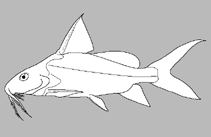 No image available for this species;
drawing shows typical species in Mochokidae.
صور قوقل
drawing shows typical species in Mochokidae.
التصنيف / الأسماء الأسماء الشائعة | مرادفات | Catalog of Fishes(جنس, الانواع) | ITIS | CoL | WoRMS | Cloffa
> Siluriformes (Catfishes) > Mochokidae (Squeakers or upside-down catfishes) > Chiloglanidinae
Etymology: Chiloglanis: Greek, cheilos = lip + Greek, glanis = a fish that can eat the bait without touching the hook; a cat fish (Ref. 45335); igamba: The specific name refers to the type locality of this species, Igamba Falls on the Malagarasi River; this is the first major series of waterfalls encountered while navigating upriver from Lake Tanganyika, and is a potential site for a hydroelectric dam; used as a noun in apposition (Ref. 87986).
Etymology: Chiloglanis: Greek, cheilos = lip + Greek, glanis = a fish that can eat the bait without touching the hook; a cat fish (Ref. 45335); igamba: The specific name refers to the type locality of this species, Igamba Falls on the Malagarasi River; this is the first major series of waterfalls encountered while navigating upriver from Lake Tanganyika, and is a potential site for a hydroelectric dam; used as a noun in apposition (Ref. 87986).
البيئة: الوسط / المنطقة المناخية / نطاق العمق / نطاق التوزيع البيئة
; المياه العذبة قاعية التغذية و المعيشة. Tropical; 5°S - 6°S, 29°E - 31°E
التوزيع الأقاليم | مناطق الفاو | النظام البيئي | الظهور | نقطة علي الخريطة | مقدمة | Faunafri
Africa: lower Malagarasi River, Tanzania (Ref. 87986).
الحجم / وزن / العمر
وصف مختصر مفاتيح التعريف | الوصف الخارجي | قياسات المظهر الخارجي
الأشواك الظهرية (المجموع) : 2; الأشعة الظهرية الناعمة (المجموع) : 5 - 6; شوكة شرجية: 0; أشعه شرجية لينه: 9 - 11; فقرات: 33. Diagnosis: Chiloglanis igamba is a sexually dimorphic species in which the caudal fin of adult males is relatively truncate, but with the middlemost rays moderately elongated; females and juvenile males of this species in contrast exhibit a gently forked caudal fin; sexual dimorphism of the caudal fin is also apparent in several other species of Chiloglanis, including the following from various tributaries flowing into Lake Tanganyika: C. trilobatus, C. kalambo, C. productus and C. asymetricaudalis, but the particular shape of the caudal fin in C. igamba is unique among all congeners (Ref. 87986). The most similar sexually dimorphic caudal fins are found in males of C. trilobatus and C. kalambo, where the middle most rays form a third lobe; the trilobate caudal-fin shape in these species can be distinguished from the shape in C. igamba by the areas between upper, middle and lower lobes, which are notably recessed; in C. igamba these recessed areas are absent and clearly trilobate shape is not evident; Chiloglanis igamba is further distinguished from C. trilobatus and C. kalambo by a shorter adipose-fin length, 10.3-16.3% of standard length vs. 16.4-22.3% in C. trilobatus and 16.5-23.4% in C. kalambo; a shorter depth at dorsal fin insertion, 14.5-18.4% of standard length vs. 20.0-24.0% in C. trilobatus and 18.2-23.5% in C. kalambo; a shorter caudal peduncle depth, 8.7-12.6% of standard length vs. 11.9-14.5% in C. trilobatus and 11.3-15.4% in C. kalambo; a longer snout length, 20.3-26.2% of standard length vs. mean of 19.9% in C. trilobatus and mean of 18.4% in C. kalambo; a shorter maxillary barbel, 5.0-7.5% of standard length vs. a mean of 10.6% in C. trilobatus and mean of 9.3% in C. kalambo; a wider oral disc, 20.4-26.8% of standard length vs. mean of 19.0% in C. trilobatus and mean of 19.7% in C. kalambo; a wider set of premaxillary tooth plates, 15.6-19.8% of standard length vs. mean of 14.0% in C. trilobatus and mean of 13.7% in C. kalambo; 27-45 primary teeth on each premaxilla, vs. 18-31 in C. trilobatus and 7-21 in C. kalambo; 6 soft rays in the dorsal fin, rarely 5, vs. 5 rays in C. trilobatus and C. kalambo (Ref. 87986). Caudal-fin shape in males of C. igamba is also fairly similar to the shape found in males of C. productus; but in C. productus all caudal-fin rays, especially the middle rays, are elongated and the fin is diamond shaped; Chiloglanis igamba is also easily distinguished from C. productus by its pigmentation, which consists of cream-coloured splotches on a light brown background; in contrast, the pigmentation of C. productus is medium to dark brown with a pale midlateral stripe along the lateral line; Chiloglanis igamba is further distinguished from C. productus by a shorter pectoral spine, 9.9-15.1% of standard length vs. 15.2-18.5%; a shorter pectoral-fin longest ray, 15.2-18.8% of standard length vs. 19.1-23.9%; and a shorter adipose-fin base, 10.3-16.3% of standard length vs. 22.5-26.2% (Ref. 87986). Finally, in Chiloglanis asymetricaudalis the caudal fin of adult males is forked, but with an elongate upper lobe; in addition to caudal fin shape, C. igamba is easily distinguished from C. asymetricaudalis by a shorter pectoral spine, 9.9-15.1% of standard length vs. 16.4-19.7%; a shorter dorsal spine, 8.2-12.7% of standard length vs. 13.0-15.7%; a shorter anal fin, 11.7-15.9% of standard length vs. 22.6-28.0%; a shorter caudal peduncle, 15.0-17.7% of standard length vs. 18.4-20.9%; and a markedly different pigment pattern (Ref. 87986).
Body shape (shape guide): elongated.
Body shape (shape guide): elongated.
This species is most abundant within the Igamba Falls area and associated large rapids, and is much less common in smaller rapids both above and below these falls (Ref. 87986).
دورة الحياة وسلوك التزاوج النضج | التكاثر | وضع البيض | بيض | الخصوبة | اليرقات
المرجع الرئيسي
قم بتحميل مراجعك | مراجع | المنظم | المتعاونين
Friel, J.P. and T.R. Vigliotta, 2011. Three new species of African suckermouth catfishes, genus Chiloglanis (Siluriformes: Mochokidae), from the lower Malagarasi and Luiche rivers of western Tanzania. Zootaxa 3063:1-21. (Ref. 87986)
حالة القائمة الحمراء للاتحاد الدولي لحفظ الطبيعة والموارد الطبيعية (Ref. 130435: Version 2025-2 (Global))
CITES
Not Evaluated
خطر للأنسان
Harmless
استخدامات بشرية
مصائد: غير ذات اهمية
FAO - Publication: search | FishSource |
مزيد من المعلومات
علم البيئة الغذائية
المواد الغذائية (الفرائس)
التركيبة الغذائية
استهلاك الأغذية
الحصص الغذائية
مفتريسات
المواد الغذائية (الفرائس)
التركيبة الغذائية
استهلاك الأغذية
الحصص الغذائية
مفتريسات
الديناميكيات السكانية
معاملات النمو
الحد الأقصى للأعمار/الأحجام
علاقة الطول بالوزن.
علاقة الطول بالطول.
الطول- الترددات
التحويل الجماعي
توظيف
الوفرة
معاملات النمو
الحد الأقصى للأعمار/الأحجام
علاقة الطول بالوزن.
علاقة الطول بالطول.
الطول- الترددات
التحويل الجماعي
توظيف
الوفرة
دورة الحياة
التكاثر
النضج
النضج/الخياشيم المتعلقة.
الخصوبة
وضع البيض
تجمعات التفريخ
بيض
تطور البيضة
اليرقات
حركة انتقال اليرقات
التكاثر
النضج
النضج/الخياشيم المتعلقة.
الخصوبة
وضع البيض
تجمعات التفريخ
بيض
تطور البيضة
اليرقات
حركة انتقال اليرقات
التشريح
منطقة الخياشيم
الدماغ
الأوتوليث
منطقة الخياشيم
الدماغ
الأوتوليث
علم وظائف الأعضاء
تكوين الجسم
المغذيات
استهلاك الأوكسجين
نوع السباحة
سرعة السباحة
الأصباغ البصرية
صوت السمك
الأمراض والطفيليات
السمية (LC50s)
تكوين الجسم
المغذيات
استهلاك الأوكسجين
نوع السباحة
سرعة السباحة
الأصباغ البصرية
صوت السمك
الأمراض والطفيليات
السمية (LC50s)
جيني
الوراثة
جيني
التغاير
التوريث
التنوع الوراثي
الوراثة
جيني
التغاير
التوريث
التنوع الوراثي
ذات الصلة بالبشر
أنظمة الاستزراع المائي
ملامح تربية الأحياء المائية
سلالات
حالات سيغواتيرا
طوابع بريدية وعملات معدنية ومتنوعة
أنظمة الاستزراع المائي
ملامح تربية الأحياء المائية
سلالات
حالات سيغواتيرا
طوابع بريدية وعملات معدنية ومتنوعة
أدوات
كتاب إلكتروني | دليل الميدان | معالج تردد الطول-التردد | أداة تاريخ الحياة | نقطة علي الخريطة |
Catch-MSY |
تقارير خاصة
البحث عن صيانت الأحواض المائيه | التحقق من وجود صفحات حقائق الأنواع | البحث عنا حقائق حول الأحواض المائيه
تنزيل XML
مصادر علي الأنترنت
AFORO (otoliths) | Aquatic Commons | BHL | Cloffa | Websites from users | البحث في مراقبي الأسماك | CISTI | Catalog of Fishes: جنس, الانواع | DiscoverLife | ECOTOX | FAO - Publication: search | Faunafri | Fishipedia | Fishtrace | GloBI | Google Books | Google Scholar | Google | IGFA World Record | OneZoom | Open Tree of Life | Otolith Atlas of Taiwan Fishes | PubMed | Reef Life Survey | Socotra Atlas | TreeBase | شجرة الحياة | Wikipedia: ذهب, بحث | World Records Freshwater Fishing | Zoobank | سجلات علم الحيوانات
تقديرات تستند إلى النماذج
مؤشر التنوع الشُعبي الوراثي (مرجع 82804): PD50 = 0.5000 [Uniqueness, from 0.5 = low to 2.0 = high].
Bayesian length-weight: a=0.00389 (0.00180 - 0.00842), b=3.12 (2.94 - 3.30), in cm total length, based on all LWR estimates for this body shape (Ref. 93245).
مستوى غذائي (مرجع 69278): 3.2 ±0.4 se; based on size and trophs of closest relatives