



Forsterygion malcolmi Hardy, 1987
Mottled triplefin
Добавить Ваши наблюдения в Fish Watcher
| Native range | All suitable habitat | Point map | Year 2050 |

|
| This map was computer-generated and has not yet been reviewed. |
| Forsterygion malcolmi AquaMaps Data sources: GBIF OBIS |
Загрузить свой Фото и Видео
изображения | Изображение на Google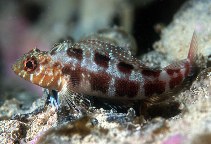 Forsterygion malcolmi
Изображение сделано Clements, K.
изображения | Изображение на Google
Изображение сделано Clements, K.
Классификация / Имена народные названия | синонимы | Catalog of Fishes(род, виды) | ITIS | CoL | WoRMS | Cloffa
> Blenniiformes (Blennies) > Tripterygiidae (Triplefin blennies) > Tripterygiinae
Etymology: malcolmi: The genus is named after J.R. Forster, naturalist on Cook's second voyage to New Zealand. malcolmi named after Malcolm Francis, collector of the holotype of this species.
Eponymy: Dr Malcolm Philip Francis (d: 1954) is a New Zealand fisheries scientist and marine ecologist who has spent over thirty-nine years studying the population biology of coastal and pelagic fishes. [...] (Ref. 128868), visit book page.
Etymology: malcolmi: The genus is named after J.R. Forster, naturalist on Cook's second voyage to New Zealand. malcolmi named after Malcolm Francis, collector of the holotype of this species.
Eponymy: Dr Malcolm Philip Francis (d: 1954) is a New Zealand fisheries scientist and marine ecologist who has spent over thirty-nine years studying the population biology of coastal and pelagic fishes. [...] (Ref. 128868), visit book page.
Окружающая среда: среда / климатическая зона / пределы глубины / диапазон распространения экология
морской демерсальный; пределы глубины 2 - 35 m (Ref. 13227), usually 10 - 25 m (Ref. 9003). Temperate
распространение Территории | регионы FAO | Экосистемы | места находок | карта точек | интродукции | Faunafri
Southwest Pacific: endemic to New Zealand.
Размер / Вес / Возраст
Краткое описание определительные ключи | морфология | морфометрия
колючие лучи спинного плавника (общее число) : 27 - 32; членистые (мягкие) лучи спинного плавника (общее число) : 12 - 16; колючие лучи анального плавника: 2; членистые (мягкие) лучи анального плавника: 26 - 30; позвонки: 43 - 47. Body elongated, laterally compressed posteriorly; mouth strongly angled upward; notched scales absent; short, distally complex gill rakers, body yellow with a broad, black stripe
extending along upper side of body. Dorsal fin formula V-0N-0-1-0-1. Six procurrent rays in upper lobe, 10 in lower lobe; in upper caudal lobe, one procurrent ray between upper lobe and posterior epural, 4 rays opposite epurals, 1 anterior first epural; in lower lobe, 1 procurrent ray between lower lobe and haemal spine of second preural vertebra, 4 opposite haemal spine of second preural vertebra, 5 anterior to haemal spine of second preural vertebra (Ref. 84085). Head and gill cover olive brown with pale stripes, body with 6 broad reddish vertical bands with irregular white bands between. Anterior bands extending to the dorsal fin (Ref. 9003).
Body shape (shape guide): fusiform / normal.
Body shape (shape guide): fusiform / normal.
Facultative air-breathing in the genus (Ref. 126274); Adults are abundant on rocky reefs from 10 to 25m, recorded from 2 to 33m (Ref. 84085). They occur in low tide pools and subtidal areas and prefer overhangs and holes containing sponges and bryozoans (Ref. 9003). Juveniles are found in shallow waters, while adults are more abundant in deeper waters. They feed mainly on crustaceans and small gastropods (Ref. 13227). Eggs are hemispherical and covered with numerous sticky threads that anchor them in the algae on the nesting sites (Ref. 240). Larvae are planktonic which occur primarily in shallow, nearshore waters (Ref. 94114).
Жизненный цикл и брачное поведение половая зрелость | размножение | нерест | икра | Плодовитость | личинки
Основная ссылка
Загрузите свои рекомендации | ссылки | координатор : Fricke, Ronald | соавторы
Fricke, R., 1994. Tripterygiid fishes of Australia, New Zealand and the southwest Pacific Ocean (Teleostei). Theses Zool. 24:1-585. (Ref. 13227)
Статус Красного Списка МСОП (Ref. 130435: Version 2025-2 (Global))
Не вызывающий беспокойства (LC) ; Date assessed: 04 May 2010
CITES
Not Evaluated
Угроза для людей
Harmless
Использование человеком
FAO - Publication: search | FishSource |
дополнительная информация
Трофическая экология
Пищевые предметы (добыча)
состав пищи
потребление пищи
Продовольственные пайки
хищники
Пищевые предметы (добыча)
состав пищи
потребление пищи
Продовольственные пайки
хищники
Динамика численности населения
Параметры роста
Макс. возраст / размер
Отношение длины к весу.
Отношение длины к длине.
Размерный состав
Преобразование массы
пополнение
численность
Параметры роста
Макс. возраст / размер
Отношение длины к весу.
Отношение длины к длине.
Размерный состав
Преобразование массы
пополнение
численность
Анатомия
жаберная область
Мозг
Отолит
жаберная область
Мозг
Отолит
Физиология
Состав тела
Питательные вещества
Потребление кислорода
Тип плавания
Скорость плавания
Зрительные пигменты
Звук рыбы
Болезни и паразиты
Токсичность (LC50s)
Состав тела
Питательные вещества
Потребление кислорода
Тип плавания
Скорость плавания
Зрительные пигменты
Звук рыбы
Болезни и паразиты
Токсичность (LC50s)
генетика
Геном
генетика
Гетерозиготность
наследуемость
Генетическое разнообразие
Геном
генетика
Гетерозиготность
наследуемость
Генетическое разнообразие
Связанные с человеком
Системы аквакультуры
особенности рыбоводства
степень растяжения
Случаи заболевания сигуатерой
Марки, монеты и прочее.
Системы аквакультуры
особенности рыбоводства
степень растяжения
Случаи заболевания сигуатерой
Марки, монеты и прочее.
инструменты
Органическая викторина | Электронная книга | полевой определитель | Длина-Частота | онтогенез | карта точек |
Catch-MSY |
Специальные отчеты
Проверить содержание в аквариумах | Проверить опубликованные видовые данные | Проверить опубликованные данные по аквакультуре
Скачать в формате XML
ресурсы в Интернет
AFORO (otoliths) | Aquatic Commons | BHL | Cloffa | Websites from users | Проверить FishWatcher | CISTI | Catalog of Fishes: род, виды | DiscoverLife | ECOTOX | FAO - Publication: search | Faunafri | Fishipedia | Fishtrace | GloBI | Google Books | Google Scholar | Google | IGFA World Record | OneZoom | Open Tree of Life | Otolith Atlas of Taiwan Fishes | PubMed | Reef Life Survey | Socotra Atlas | TreeBase | Tree of Life | Wikipedia: Вперёд, поиск | World Records Freshwater Fishing | Zoobank | Зоологическая летопись
Оценки, основанные на моделях
Предпочтительная температура (ссылка 123201): 15.5 - 18.1, mean 16.6 °C (based on 10 cells).
Индекс филогенетического разнообразия (ссылка 82804): PD50 = 0.5039 [Uniqueness, from 0.5 = low to 2.0 = high].
Bayesian length-weight: a=0.00646 (0.00330 - 0.01265), b=3.09 (2.91 - 3.27), in cm total length, based on LWR estimates for this species & (Sub)family-body (Ref. 93245).
Трофический уровень (ссылка 69278): 3.4 ±0.54 se; based on food items.
устойчивость к внешним воздействиям (ссылка 120179): высокий, минимальное время удвоения популяции до 15 месяцев (Preliminary K or Fecundity.).
Питательные вещества (Ref. 124155): Calcium = 112 [68, 258] mg/100g; Iron = 0.621 [0.373, 1.104] mg/100g; Protein = 18.5 [17.5, 19.5] %; Omega3 = 0.686 [0.368, 1.327] g/100g; Selenium = 9.97 [4.73, 21.02] μg/100g; VitaminA = 15.9 [4.3, 57.7] μg/100g; Zinc = 0.911 [0.619, 1.332] mg/100g (wet weight);