



Forsterygion malcolmi Hardy, 1987
Mottled triplefin
個人による観察記録の追加 Fish Watcher
| Native range | All suitable habitat | Point map | Year 2050 |

|
| This map was computer-generated and has not yet been reviewed. |
| Forsterygion malcolmi AquaMaps Data sources: GBIF OBIS |
アップロード 写真 そして ビデオ
画像 | グーグルの画像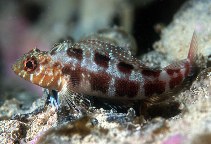 Forsterygion malcolmi
画像によって Clements, K.
画像 | グーグルの画像
画像によって Clements, K.
分類 / 名前 共通名の | 類義語 | Catalog of Fishes(部類, 種) | ITIS | CoL | WoRMS | Cloffa
> Blenniiformes (Blennies) > Tripterygiidae (Triplefin blennies) > Tripterygiinae
Etymology: malcolmi: The genus is named after J.R. Forster, naturalist on Cook's second voyage to New Zealand. malcolmi named after Malcolm Francis, collector of the holotype of this species.
Eponymy: Dr Malcolm Philip Francis (d: 1954) is a New Zealand fisheries scientist and marine ecologist who has spent over thirty-nine years studying the population biology of coastal and pelagic fishes. [...] (Ref. 128868), visit book page.
Etymology: malcolmi: The genus is named after J.R. Forster, naturalist on Cook's second voyage to New Zealand. malcolmi named after Malcolm Francis, collector of the holotype of this species.
Eponymy: Dr Malcolm Philip Francis (d: 1954) is a New Zealand fisheries scientist and marine ecologist who has spent over thirty-nine years studying the population biology of coastal and pelagic fishes. [...] (Ref. 128868), visit book page.
環境:環境 / 気候帯 / 深さの範囲 / 分布範囲 生態学
分布 領土 | 国連食糧農業機関の区域 | エコシステム | 事件 | 目的のマップ | 導入 | Faunafri
Southwest Pacific: endemic to New Zealand.
サイズ / 重さ / 年齢
簡単な記述 検索表 | 形態学 | 形態計測学
背面の脊椎 (合計) : 27 - 32; 背鰭 (合計) : 12 - 16; 肛門の骨: 2; 臀鰭: 26 - 30; 脊つい: 43 - 47. Body elongated, laterally compressed posteriorly; mouth strongly angled upward; notched scales absent; short, distally complex gill rakers, body yellow with a broad, black stripe
extending along upper side of body. Dorsal fin formula V-0N-0-1-0-1. Six procurrent rays in upper lobe, 10 in lower lobe; in upper caudal lobe, one procurrent ray between upper lobe and posterior epural, 4 rays opposite epurals, 1 anterior first epural; in lower lobe, 1 procurrent ray between lower lobe and haemal spine of second preural vertebra, 4 opposite haemal spine of second preural vertebra, 5 anterior to haemal spine of second preural vertebra (Ref. 84085). Head and gill cover olive brown with pale stripes, body with 6 broad reddish vertical bands with irregular white bands between. Anterior bands extending to the dorsal fin (Ref. 9003).
Body shape (shape guide): fusiform / normal.
Body shape (shape guide): fusiform / normal.
Facultative air-breathing in the genus (Ref. 126274); Adults are abundant on rocky reefs from 10 to 25m, recorded from 2 to 33m (Ref. 84085). They occur in low tide pools and subtidal areas and prefer overhangs and holes containing sponges and bryozoans (Ref. 9003). Juveniles are found in shallow waters, while adults are more abundant in deeper waters. They feed mainly on crustaceans and small gastropods (Ref. 13227). Eggs are hemispherical and covered with numerous sticky threads that anchor them in the algae on the nesting sites (Ref. 240). Larvae are planktonic which occur primarily in shallow, nearshore waters (Ref. 94114).
ライフサイクルと交尾行動 成熟 | 繁殖 | 放精 | 卵 | 生産力 | 幼生
主な参考文献
参考文献のアップロード | 参考文献 | コーディネーター : Fricke, Ronald | 協力者
Fricke, R., 1994. Tripterygiid fishes of Australia, New Zealand and the southwest Pacific Ocean (Teleostei). Theses Zool. 24:1-585. (Ref. 13227)
CITES
Not Evaluated
人間に対する脅威
Harmless
人間の用途
FAO - Publication: search | FishSource |
より多くの情報
解剖学
カマ
脳
オトリス
カマ
脳
オトリス
生理学
体組成
栄養素
酸素消費
水泳タイプ
泳ぐ速さ
視覚色素
フィッシュ・サウンド
病気と寄生虫
毒性(LC50)
体組成
栄養素
酸素消費
水泳タイプ
泳ぐ速さ
視覚色素
フィッシュ・サウンド
病気と寄生虫
毒性(LC50)
遺伝子の
ゲノム
遺伝子の
ヘテロ接合性
遺伝
遺伝的多様性
ゲノム
遺伝子の
ヘテロ接合性
遺伝
遺伝的多様性
用具
オーガニック・クイズ | 電子書籍 | 野外観察図鑑 | 長さ-周波数ウィザード | 生活史の基盤ツール | 目的のマップ |
キャッチ-MSY |
特記事項
XMLをダウンロードして下さい
インターネットの情報源
AFORO (otoliths) | Aquatic Commons | BHL | Cloffa | Websites from users | Check FishWatcher | CISTI | Catalog of Fishes: 部類, 種 | DiscoverLife | ECOTOX | FAO - Publication: search | Faunafri | Fishipedia | Fishtrace | GloBI | Google Books | Google Scholar | Google | IGFA World Record | OneZoom | Open Tree of Life | Otolith Atlas of Taiwan Fishes | PubMed | Reef Life Survey | Socotra Atlas | TreeBase | 生命の木 | Wikipedia: 行く, 検索する | World Records Freshwater Fishing | Zoobank | 動物に関する記録
モデルに基づく推定値
好ましい温度 (参照 123201): 15.5 - 18.1, mean 16.6 °C (based on 10 cells).
系統多様性指数 (参照 82804): PD50 = 0.5039 [Uniqueness, from 0.5 = low to 2.0 = high].
Bayesian length-weight: a=0.00646 (0.00330 - 0.01265), b=3.09 (2.91 - 3.27), in cm total length, based on LWR estimates for this species & (Sub)family-body (Ref. 93245).
栄養段階 (参照 69278): 3.4 ±0.54 se; based on food items.
回復力 (参照 120179): 高い, 15か月以下の倍増期間の最小個体群 (Preliminary K or Fecundity.).
栄養素 (Ref. 124155): Calcium = 112 [68, 258] mg/100g; Iron = 0.621 [0.373, 1.104] mg/100g; Protein = 18.5 [17.5, 19.5] %; Omega3 = 0.686 [0.368, 1.327] g/100g; Selenium = 9.97 [4.73, 21.02] μg/100g; VitaminA = 15.9 [4.3, 57.7] μg/100g; Zinc = 0.911 [0.619, 1.332] mg/100g (wet weight);