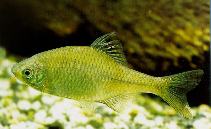
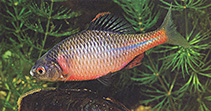
Rhodeus amarus, European bitterling : aquarium, bait

Rhodeus amarus (Bloch, 1782)

European bitterling
อัพโหลดของคุณ ภาพถ่าย และ วิดีโอ
รูปภาพหลายรูป | วิดีโอ | แสตมป์ เหรียญ อื่นๆ | Google image

การจำแนกประเภท / ชื่อ ชื่อสามัญ | ชื่อพ้อง | Catalog of Fishes(สกุล, ชนิด) | ITIS | CoL | WoRMS | Cloffa

> Cypriniformes (Carps) > Acheilognathidae (Bitterlings)
Etymology: Rhodeus: Greek, rhodeos, a,-on = rose (Ref. 45335).
More on author: Bloch.

สิ่งแวดล้อม : สิ่งแวดล้อม / เขตภูมิอากาศ / ระดับความลึก / ระยะการกระจายสินค้า นิเวศวิทยา

; น้ำจืด กลุ่มสัตว์หน้าดิน,กลุ่มสัตว์พื้นท้องน้ำ; ระดับความลึก 0 - ? m. Temperate; 60°N - 40°N

การแพร่กระจาย อาณาเขต | พื้นที่จำแนกตาม FAO | ระบบนิเวศหลายระบบ | การปรากฏขึ้น,การเกิดขึ้น,พบ | ตำแหน่งบนแผนที่ | การแนะนำ | Faunafri

Europe: central and eastern Europe and northern Asia Minor (Ref. 57778). Basins of North, southern Baltic, Black, western and southern Caspian and Aegean Seas (from Maritza to Struma drainages); Mediterranean basin, only in northern Rhône (France) and Drin drainages (Alabania, Montenegro, Macedonia). Abundant and expanding in most of its range, but locally threatened by water pollution, weed clearing, and stocking of predatory fish (Ref. 59043).

ความยาวเมื่อครบกำหนดครั้งแรก / ขนาด / น้ำหนัก / อายุ

วัยเจริญพันธุ์: Lm 4.4, range 3 - 6 cm
Max length : 11.2 cm TL เพศผู้/กระเทย; (Ref. 88166); common length : 5.0 cm TL เพศผู้/กระเทย; (Ref. 556); อายุสูงสุดที่ได้รายงาน: 5 ปี (Ref. 9696)

คำอธิบายสั้นๆ เครื่องมือที่ใช้ในการแยกชนิดสัตว์,สิ่งมีชีวิตออกจากกัน | สัณฐานวิทยา | ความยาวต่างๆ

เงี่ยงครีบหลัง (รวม) : 3; ก้านครีบอ่อนที่หาง (รวม) : 8 - 10; เงี่ยงครีบก้น: 3; ก้านครีบอ่อนที่ก้น: 8 - 10; สัตว์มีกระดูกสันหลัง: 34 - 36. Caudal fin with 19 to 20 soft rays. Differs from Rhodeus meridionalis by having sub-inferior mouth (vs. terminal), rostral cap covering all or at least more than half of upper lip (vs. only upper part of upper lip) (Ref. 59043).
Body shape (shape guide): fusiform / normal.

ชีววิทยา     ภาคผนวก (เช่น epibenthic)

Occurs most abundantly in still or slow-flowing water with dense aquatic vegetation and sand-silt bottom as lowland ponds, canals, slow-flowing rivers, backwaters and oxbows, where mussels are present (Ref. 59043). Found among plants over sand and muddy bottoms in shallow waters. Remarkable for its habit of deposing its eggs in the cavity of bivalves (Unio). Feeds mainly on plants and to a lesser degree on worms, crustaceans, and insect larvae. Formerly used for pregnancy tests: females injected with urine from pregnant women protruded their ovipositors (Ref. 6258). Live span is exceptionally up to 5 years but most individuals do not survive the year of their first reproduction and population sizes fluctuate greatly over the years (Ref. 59043).

วงจรชีวิตและพฤติกรรมการผสมพันธุ์ วัยเจริญพันธุ์ | การสืบพันธุ์ | การวางไข่ | เซลสืบพันธ์ของเพศเมีย(ไข่) | ความดกของไข่ | ตัวอ่อน

Spawns in clear, slow-running or still water, often with a muddy bottom. The presence of nearby freshwater mussels is of vital importance. Female deposits eggs within the valves of the mussel. Male sheds sperm into the inhalent current of the respiring mussel and thereby, fertilizes the eggs. Fry remain in the mussel until protection is not anymore required.

อ้างอิงหลัก อัพโหลดข้อมูลอ้างอิงของคุณ | อ้างอิง | ผู้ประสานงาน | ผู้ร่วมมือ

Kottelat, M. and J. Freyhof, 2007. Handbook of European freshwater fishes. Publications Kottelat, Cornol and Freyhof, Berlin. 646 pp. (Ref. 59043)

สถานะบัญชีแดงของ IUCN (Ref. 130435: Version 2025-2 (Global))

  Least Concern (LC) ; Date assessed: 01 June 2022

CITES

Not Evaluated

CMS (Ref. 116361)

Not Evaluated

ภัยคุกคามต่อมนุษย์

  Harmless


การใช้ของมนุษย์

การประมง: ไม่มีผลประโยชน์; สถานที่แสดงสัตว์และพืชน้ำ: การค้า; เหยื่อ: occasionally
FAO - Publication: search | FishSource |

ข้อมูลเพิ่มเติม

นิเวศวิทยาเขตร้อน
รายการอาหาร (เหยื่อ)
องค์ประอบของอาหาร
การบริโภคอาหาร
การจัดสรรอาหาร
ผู้ล่า
นิเวศวิทยา
นิเวศวิทยา
พลวัตของประชากร
พารามิเตอร์การเจริญเติบโต
อายุสูงสุด / ขนาด
ความยาว-น้ำหนักสัมพันธ์
ความยาว-ความยาวสัมพันธ์
ความยาว-ความถี่
การแปลงมวล
การทดแทนที่
อุดมสมบรูณ์
วงจรชีวิต
การสืบพันธุ์
วัยเจริญพันธุ์
ความสมบูรณ์พันธุ์/เหงือกที่เกี่ยวข้อง
ความดกของไข่
การวางไข่
การรวมตัวของสปอน
เซลสืบพันธ์ของเพศเมีย(ไข่)
การพัฒนาไข่
ตัวอ่อน
พลวัตของสัตว์น้ำวัยอ่อน
กายวิภาคศาสตร์
พื้นที่เหงือก
สมอง
หินโสต
สรีรวิทยา
องค์ประกอบของร่างกาย
สารอาหาร
การใช้ออกซิเจน
ประเภทการว่ายน้ำ
ระดับความเร็วในการว่ายน้ำ
เม็ดสีที่มองเห็นได้
เสียงปลา
โรคและปรสิต
ความเป็นพิษ (LC50s)
พันธุศาสตร์
จีโนม
พันธุศาสตร์
ความไม่สมดุลทางเชื้อชาติ
อัตราพันธุกรรม
ความหลากหลายทางพันธุกรรม
เกี่ยวข้องกับมนุษย์
ระบบการเพาะเลี้ยงสัตว์น้ำ
ประวัติการเพาะเลี้ยงสัตว์น้ำ
สายพันธุ์
กรณีซิเกวเทอรา
แสตมป์ เหรียญ อื่นๆ
การเข้าถึง
ผู้ร่วมมือ
อ้างอิง
อ้างอิง

เครื่องมือ

รายงานพิเศษ

ดาวน์โหลด XML

แหล่งที่มาจากอินเตอร์เน็ต

การประมาณค่าตามแบบจำลอง

ดัชนีความหลากหลายทางวิวัฒนาการ (อ้างอิง 82804):  PD50 = 0.5000   [Uniqueness, from 0.5 = low to 2.0 = high].
Bayesian length-weight: a=0.01047 (0.00797 - 0.01375), b=3.10 (3.05 - 3.15), in cm total length, based on LWR estimates for this species (Ref. 93245).
ระดับชั้นอาหาร (อ้างอิง 69278):  3.0   ±0.34 se; based on food items.
Generation time: 4.4 ( na - na) years. Estimated as median ln(3)/K based on 1 growth studies.
ความสามารถในการกลับคืนสู่ปกติ (อ้างอิง 120179):  ต่ำ, เวลาต่ำสุดที่จะทำให้ประชากรเพิ่มขึ้นเป็น 2 เท่าใช้เวลา 4.5 - 14 ปี (tm=2; tmax=5; Fec=40).
ความเสี่ยงต่อการตกปลา (Ref. 59153):  Moderate vulnerability (37 of 100). 🛈