



muatnaik fotos/gambar dan video
Gambar | Perangko, koin, dll. | imej Google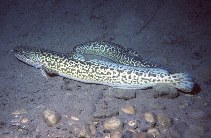 Lota lota
foto/gambar oleh Keeley, E.R.
Gambar | Perangko, koin, dll. | imej Google
foto/gambar oleh Keeley, E.R.
klasifikasi / Nama Nama-nama umum | Sinonim (persamaan) | Catalog of Fishes(Marga, Jenis) | ITIS | CoL | WoRMS | Cloffa
> Gadiformes (Cods) > Lotidae (Hakes and burbots)
Etymology: Lota: French name for the cod (Ref. 45335); lota: From the French word "la Lotte" meaning codfish (Ref. 10294).
More on author: Linnaeus.
Etymology: Lota: French name for the cod (Ref. 45335); lota: From the French word "la Lotte" meaning codfish (Ref. 10294).
More on author: Linnaeus.
Lingkungan: lingkungan / zona iklim / kisaran kedalaman / jangkauan distribusi Ekologi
; air tawar; payau dasar (demersal); pH range: 7.5 - ? ; dH range: 18 - ?; potamodromous (Ref. 59043); kisaran kedalaman 1 - 700 m (Ref. 1998). Temperate; 4°C - 18°C (Ref. 2059); 78°N - 40°N, 180°W - 180°E
Penyebaran Wilayah | Daerah-daerah FAO | Ekosistem | Kemunculan | peta titik | Introduksi | Faunafri
Circumarctic in freshwater (Ref. 1371). Europe: Loire drainage, France eastward to White, Barents and Arctic Sea basins; upper Volga drainage; western Caspian basin; rivers draining to Black Sea; Rhône drainage (France); in Italy native only in Po drainage; eastrward England (now extirpated). In Siberia eastward to River Lena. Reported that populations from eastern Siberia and North America belong to a different species, Lota maculosa (Ref. 59043). North America: Throughout Canada, Alaska and northern USA (south to Pennysylvannia, Kentucky, Missouri, Wyoming and Washington (Ref. 86798).
Panjang pada saat jatuh tempo pertama / Ukuran / Berat / umur
Kematangan: Lm 37.5, range 35 - 40 cm
Max length : 152 cm TL jantan/; (Ref. 27547); common length : 40.0 cm TL jantan/; (Ref. 1371); Berat maksimum terpublikasi: 34.0 kg (Ref. 27547); Umur maksimum dilaporkan: 20 Tahun (Ref. 556)
Max length : 152 cm TL jantan/; (Ref. 27547); common length : 40.0 cm TL jantan/; (Ref. 1371); Berat maksimum terpublikasi: 34.0 kg (Ref. 27547); Umur maksimum dilaporkan: 20 Tahun (Ref. 556)
deskripsi pendek Kunci identifiaksi (pengenalan) | Morfologi | Morfometrik
Duri punggung (Keseluruhan (total)) : 0; duri punggung lunak (Keseluruhan (total)) : 67 - 96; Duri dubur: 0; Sirip dubur lunak: 58 - 84; vertebrata, bertulang belakang: 50 - 67. Diagnosed from all other freshwater fishes in Europe by its pelvic fin origin anterior to pectoral fin origin and by having one central barbel on lower jaw (Ref. 59043). Distinguished by the long second dorsal fin, at least 6 times as long as the first, and a single barbel on the chin (Ref. 27547). Gill rakers short (Ref. 27547). First dorsal short; second dorsal and anal fins joined to caudal; pectorals short and rounded; caudal rounded (Ref. 27547), with 40 rays (Ref. 2196). Color is yellow, light tan to brown with a pattern of dark brown or black on the body, head and fins (Ref. 1371). Pelvic fins pale, others dark and mottled (Ref. 27547).
Body shape (shape guide): elongated; Cross section: circular.
Body shape (shape guide): elongated; Cross section: circular.
The only member of Lotidae family which lives in freshwater. Crepuscular and nocturnal (Ref. 11941). Adults are found in well oxygenated flowing waters and large, deep lakes as well as large rivers with slow-moving current (Ref. 5723, 10294). They occur from estuaries of large lowland rivers as well as from small mountain streams, preferring deep waters in summer (Ref. 59043). They seek shelter under rocks, in crevices on the river banks, among roots of trees and dense vegetation (Ref. 30578, 10294). Those in rivers tend to congregate in deep holes throughout the year, except at spawning (Ref. 27547). Movements into shallower water during summer nights are related to feeding (Ref. 1998). Smaller individuals feed on insect larvae, crayfish, mollusks and other invertebrates with a changing preference for fishes in larger individuals (Ref. 1998, 10294). In Central Europe, males mature at 2 years while females at 3 years (Ref. 59043). Spawning occurs from November to March, at temperatures below 6°C in groups of up to 20 interlaced individuals forming a ball about 60 cm in diameter which constantly move and roll on the bottom while releasing eggs and sperms (Ref. 59043). May undertake short spawning migrations (Ref. 59043). Eggs are semipelagic, 1.2-1.8 mm in diameter and slightly sticky hatching after 40-70 days (Ref. 59043). Larvae are positively phototactic, floating below the surface in March and April (Ref. 59043). Larvae feed on drifting invertebrates or zooplankton (Ref. 59043). Source of oil. Sold mainly salted. Liver is sold smoked or canned in Europe (Ref. 1998). Processed into fishmeal (Ref. 1998). Because of its nocturnal habits and its slow movements, this fish is not very much appreciated by sport fishermen. Flesh is tasty but a little dry (Ref. 30578). Locally threatened due to river regulation (Ref. 59043).
Siklus hidup dan perilaku kawin Kematangan | Reproduksi, perkembang biakan | Pemijahan | telur-telur | Fekunditas | Larva
There appears to be individual movements into spawning areas with the males arriving first at spawning areas (Ref. 27547). It occurs at night, with spawners forming a great globular mass, each pushing toward the center (Ref. 28694), or at least milling around close together (Ref. 28697), releasing eggs or sperm. Observed to make postspawning runs upriver, apparently for feeding (Ref. 28697). Eggs hatch after 40-70 days. After about 2 months, juveniles are benthic, grow rapidly, reach about 8 cm SL within first year. (Ref. 59043).
rujukan utama
Unggah referensi Anda | Acuan | Koordinator | mitra
Cohen, D.M., T. Inada, T. Iwamoto and N. Scialabba, 1990. FAO species catalogue. Vol. 10. Gadiform fishes of the world (Order Gadiformes). An annotated and illustrated catalogue of cods, hakes, grenadiers and other gadiform fishes known to date. FAO Fish. Synop. 125(10). Rome: FAO. 442 p. (Ref. 1371)
Status IUCN Red List (Ref. 130435: Version 2025-2 (Global))
kurang bimbang (LC) ; Date assessed: 28 May 2022
CITES
Not Evaluated
ancaman kepada manusia
Harmless
penggunaan manusia
Perikanan: komersial; Budidaya air: percobaan; Ikan buruan: ya; Akuarium: Akuarium publik
FAO - Perikanan: pendaratan, profail spesis; Publication: search | FishSource | Laut di Sekitar Kita
informasi lanjut
Dinamika populasi
Parameter pertumbuhan
Maks. usia / ukuran
Panjang-berat rel.
Panjang-panjang rel.
ukuran frekuensi
Konversi massa
pemulihan
Kelimpahan
Parameter pertumbuhan
Maks. usia / ukuran
Panjang-berat rel.
Panjang-panjang rel.
ukuran frekuensi
Konversi massa
pemulihan
Kelimpahan
Siklus hidup
Reproduksi, perkembang biakan
Kematangan
Kedewasaan / insang rel.
Fekunditas
Pemijahan
Agregasi pemijahan
telur-telur
pekembangan telor
Larva
Dinamika larva
Reproduksi, perkembang biakan
Kematangan
Kedewasaan / insang rel.
Fekunditas
Pemijahan
Agregasi pemijahan
telur-telur
pekembangan telor
Larva
Dinamika larva
Fisiologi
Komposisi tubuh
Nutrisi
Konsumsi oksigen
Jenis renang
Kecepatan berenang
Pigmen visual
Suara ikan
Penyakit & Parasit
Toksisitas (LC50)
Komposisi tubuh
Nutrisi
Konsumsi oksigen
Jenis renang
Kecepatan berenang
Pigmen visual
Suara ikan
Penyakit & Parasit
Toksisitas (LC50)
Yang berhubungan dengan manusia
Sistem akuakultur
profil budidaya air
Strain
Kasus Ciguatera
Perangko, koin, dll.
Sistem akuakultur
profil budidaya air
Strain
Kasus Ciguatera
Perangko, koin, dll.
Alat, peralatan
Kuis organik | E-book | Penuntun lapangan | Kunci identifiaksi (pengenalan) | tanda freqkuenci panjang | peringkat sejarah hidup | peta titik |
Tangkap-MSY |
laporan khas
muat turun XML
Sumber internet
AFORO (otoliths) | Alien/Invasive Species database | Aquatic Commons | BHL | Cloffa | Websites from users | semak peneliti ikan | CISTI | Catalog of Fishes: Marga, Jenis | DiscoverLife | DORIS | ECOTOX | FAO - Perikanan: pendaratan, profail spesis; Publication: search | Faunafri | Fishipedia | Fishtrace | GloBI | Google Books | Google Scholar | Google | IGFA World Record | Pangkalan data nasional | OneZoom | Open Tree of Life | Otolith Atlas of Taiwan Fishes | Akuarium publik | PubMed | Reef Life Survey | Socotra Atlas | TreeBase | Tree of Life | Wikipedia: pergi, Cari | World Records Freshwater Fishing | Catatan Zoologi
Estimasi berdasarkan model
Indeks keanekaragaman filogenetik (Acuan 82804): PD50 = 1.0312 [Uniqueness, from 0.5 = low to 2.0 = high].
Bayesian length-weight: a=0.00537 (0.00441 - 0.00654), b=3.04 (2.98 - 3.10), in cm total length, based on LWR estimates for this species (Ref. 93245).
Tingkat Trofik (Acuan 69278): 3.8 ±0.2 se; based on diet studies.
Daya lenting (Acuan 120179): Rendah, Waktu penggandaan populasi minimum 4.5 - 14 tahun (K=0.05; tm=2-7; tmax=20).
Nutrisi (Ref. 124155): Calcium = 12.9 [7.2, 34.7] mg/100g; Iron = 0.259 [0.142, 0.500] mg/100g; Protein = 17.5 [16.2, 19.0] %; Omega3 = 0.382 [0.200, 0.694] g/100g; Selenium = 24.4 [8.5, 62.9] μg/100g; VitaminA = 4.33 [1.21, 18.17] μg/100g; Zinc = 0.671 [0.485, 0.920] mg/100g (wet weight); based on nutrient studies.