



را بارگذاری کني تصاوير و فيلم ها
عکس ها | تمبر، سکه، متفرقه. | تصوير گوگل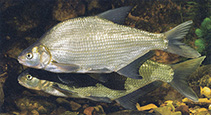 Abramis brama
عکس از Hartl, A.
عکس ها | تمبر، سکه، متفرقه. | تصوير گوگل
عکس از Hartl, A.
رده بندی / نامها اسامي عام | مترادف | Catalog of Fishes(جنس, گونه ها) | ITIS | CoL | WoRMS | Cloffa
> Cypriniformes (Carps) > Leuciscidae (Minnows) > Leuciscinae
Etymology: Abramis: Greek, abramis, -idos = a fish, grey mullet (Ref. 45335).
More on author: Linnaeus.
Etymology: Abramis: Greek, abramis, -idos = a fish, grey mullet (Ref. 45335).
More on author: Linnaeus.
محیط زیست: محیط زیست / منطقه آب و هوایی / تغييرات عمق / محدوده توزیع بوم شناسي
; آب شيرين; لب شور موجوداتی که در محدوده وسیعی از آبهای آزاد از نزدیک بستر و یا روی کف بستر، در قسمت های میان آبی تا سطح آب و در برخی گونه ها با قابلیت پرواز، زندگی و تغذیه می کنند.; pH range: 7.0 - 7.5; dH range: 15 - ?; رود رو (Ref. 51243); تغييرات عمق 1 - ? m (Ref. 9696). Temperate; 10°C - 24°C (Ref. 2059); 75°N - 40°N, 11°W - 73°E
پراكنش سرزمینها | مناطق سازمان خوار و بار جهاني (FAO) | اکوسیستمها | ظهور | نقشه نقطه ای | معرفي | Faunafri
Europe and Asia: most European drainages from Adour (France) to Pechora (White Sea basin); Aegean Sea basin, in Lake Volvi and Struma and Maritza drainages. Naturally absent from Iberian Peninsula, Adriatic basin, Italy, Scotland, Scandinavia north of Bergen (Norway) and 67°N (Finland). Locally introduced in Ireland, Spain and northeastern Italy. In Asia, from Marmara basin (Turkey) and eastward to Aral basin. Introduced in Lake Baikal and upper Ob and Yenisei drainages.
طول در اولین بلوغ / اندازه / وزن / سن
بلوغ: Lm ? range ? - ? cm
Max length : 82.0 cm TL جنس نر / بدون خواص جنسي; (Ref. 6114); common length : 25.0 cm TL جنس نر / بدون خواص جنسي; (Ref. 3561); بيشينه وزن گزارش شده: 6.0 kg (Ref. 4699); بيشينه سن گزارش شده: 23 سال ها (Ref. 796)
Max length : 82.0 cm TL جنس نر / بدون خواص جنسي; (Ref. 6114); common length : 25.0 cm TL جنس نر / بدون خواص جنسي; (Ref. 3561); بيشينه وزن گزارش شده: 6.0 kg (Ref. 4699); بيشينه سن گزارش شده: 23 سال ها (Ref. 796)
توصيف مختصر كليدهاي شناسايي | ريخت شناسي | ريخت ستجي بوسيله انداره گيري
خارهاي باله پشتي (کل) : 3; شعاع نرم باله پشتي (کل) : 9 - 10; خارهاي باله مخرجي: 3; شعاع نرم باله مخرجي: 23 - 30; مهره ها: 43 - 45. The only species of the genus which can be diagnosed from other species of Ballerus, Blicca and Vimba by the following characters: mouth sub-inferior, which can be extended as a tube; lateral line with 51-60 scales; anal fin with 30½ branched rays; eye diameter about 2/3 of snout length in individuals larger than 10 cm SL; pharyngeal teeth 5-5; and base of paired fins hyaline or grey (Ref. 59043). Caudal fin with 19 rays (Ref. 2196). Tall, laterally compressed body. Fins darker in adults. Anal fin base twice as long as the dorsal fin (Ref. 35388).
Body shape (shape guide): fusiform / normal.
Body shape (shape guide): fusiform / normal.
Adults inhabit a wide variety of lakes and large to medium sized rivers. Most abundant in backwaters, lower parts of slow-flowing rivers, brackish estuaries and warm and shallow lakes (Ref. 59043). Adults occur usually in still and slow-running waters where they travel in large shoals (Ref. 9696). Larvae and juveniles live in still water bodies, feeding on plankton. One to two years old juveniles move from backwaters to river to feed. In the absence of opportunity to leave backwaters, juveniles may adapt but have a slower growth and attain maturity at a smaller size. They also drift to brackishwater estuaries to forage when water level of flooded areas drops in lower reaches of large rivers. Foraging juveniles in brackish waters stay in lower parts of rivers to overwinter in freshwater (Ref. 59043). Feed on insects, particularly chironomids, small crustaceans, mollusks and plants. Larger specimens may feed on small fish. Juveniles feed on zooplankton (Ref. 30578). Able to shift to particle feeding or even filter feeding at high zooplankton abundance. Usually spawn in backwaters, floodplains or lakes shores with dense vegetation (Ref. 59043). Can survive out of the water for extended periods (Ref. 9988). The flesh is bony, insipid and soft (Ref. 30578). Marketed fresh or frozen. Eaten steamed, broiled, fried and baked (Ref. 9988).
چرخه زندگی و رفتار جفتگیری بلوغ | تولید مثل | تخم ریزی | تخم ها | باروری | توزاد ( لارو)
Undergo upriver migration (100 km in Dniepr) to spawn. Many populations start spawning migration in autumn ( especially semi-anadromours forms), slow down during winter and continue in spring. Males often defend spawning territories along shorelines. Eggs are sticky and eggs size increases with age of female. Frequently forms fertile hybrids with Rutilus rutilus (Ref. 59043).
مآخذ اصلی
مراجع خود را بارگذاری کنید | مراجع | هماهنگ كننده | همكاران
Kottelat, M. and J. Freyhof, 2007. Handbook of European freshwater fishes. Publications Kottelat, Cornol and Freyhof, Berlin. 646 pp. (Ref. 59043)
وضعيت در فهرست قرمز IUCN (Ref. 130435: Version 2025-2 (Global))
حداقل نگرانی (LC) ; Date assessed: 05 December 2023
CITES
Not Evaluated
خطر برای انسان ها
Harmless
استفاده انسانی
ماهي گيري – شيلات: با ارزش تجاري بالا; آبزي پروري: تجاري; ماهي ها ي سرگرم كننده: بله; طعمه: usually
FAO - سیستمهای آبزیپروری: تولید; ماهي گيري – شيلات: فرودها, نمايه گونه; Publication: search | FishSource |
اطلاعات بيشتر
پویایی جمعیت
پارامترهای رشد
حداکثر سن/اندازه
نسبت طول-وزن.
طول-طول نسبی.
نوسانات طولی
تبدیل انبوه
بازسازی
فراواني
پارامترهای رشد
حداکثر سن/اندازه
نسبت طول-وزن.
طول-طول نسبی.
نوسانات طولی
تبدیل انبوه
بازسازی
فراواني
چرخه زندگی
تولید مثل
بلوغ
بلوغ/آبششها
باروری
تخم ریزی
تجمعات تخمریزی
تخم ها
نمو تخم
توزاد ( لارو)
پويايي لاروي
تولید مثل
بلوغ
بلوغ/آبششها
باروری
تخم ریزی
تجمعات تخمریزی
تخم ها
نمو تخم
توزاد ( لارو)
پويايي لاروي
آناتومی
منطقه آبششي
مغز
اتولیت
منطقه آبششي
مغز
اتولیت
فیزیولوژی
ترکیب بدن
مواد مغذی
مصرف اکسیژن
نوع شنا
سرعت شنا
رنگدانههای بصری
صدای ماهی
بیماریها و انگلها
سمیت (LC50s)
ترکیب بدن
مواد مغذی
مصرف اکسیژن
نوع شنا
سرعت شنا
رنگدانههای بصری
صدای ماهی
بیماریها و انگلها
سمیت (LC50s)
ابزارها
آزمون زیستشناسی | کتاب الکترونیکی | راهنماي صحرايي | كليدهاي شناسايي | امكان نرم افزاري بسامد طولي | ابزار تاريخ زيستي | نقشه نقطه ای |
گرفتن-MSY |
گزارش های ويژه
راجع به نگهداری آکواريم ملاحظه کنيد | برگه اطلاعات و مشخصات گونه ها را ملاحظه کنيد | برگه اطلاعات و مشخصات آبزی پروری را ببينيد
بارگيری XML
منابع اينترنتي
AFORO (otoliths) | Alien/Invasive Species database | Aquatic Commons | BHL | Cloffa | Websites from users | فيش واچر را ببينيد | CISTI | Catalog of Fishes: جنس, گونه ها | DiscoverLife | DORIS | ECOTOX | FAO - سیستمهای آبزیپروری: تولید; ماهي گيري – شيلات: فرودها, نمايه گونه; Publication: search | Faunafri | Fishipedia | Fishtrace | GloBI | Google Books | Google Scholar | Google | IGFA World Record | پايگاه هاي داده ها | OneZoom | Open Tree of Life | Otolith Atlas of Taiwan Fishes | آکواریوم عمومی | PubMed | Reef Life Survey | Socotra Atlas | TreeBase | Tree of Life | Wikipedia: برو, جستجو | World Records Freshwater Fishing | سوابق جانورشناسی
تخمینها بر اساس مدلها
شاخص تنوع فیلوژنتیکی (مرجع 82804): PD50 = 1.0000 [Uniqueness, from 0.5 = low to 2.0 = high].
Bayesian length-weight: a=0.00776 (0.00709 - 0.00850), b=3.14 (3.11 - 3.17), in cm total length, based on LWR estimates for this species (Ref. 93245).
سطح تروفیک (مرجع 69278): 3.1 ±0.1 se; based on diet studies.
Generation time: 9.0 (7.2 - 10.8) years. Estimated as median ln(3)/K based on 50 growth studies.
جهندگی (مرجع 120179): پايين ، كم, كمينه زمان لازم براي دو برابر شدن جمعيت 5/4 – 14 سال (K=0.06-0.17; tm=3-5; tmax=17; Fec=90,000-340,000).
مواد مغذی (Ref. 124155): Calcium = 19.3 [11.8, 39.1] mg/100g; Iron = 0.257 [0.166, 0.467] mg/100g; Protein = 18.6 [17.2, 19.9] %; Omega3 = 0.628 [0.335, 1.215] g/100g; Selenium = 12.2 [6.5, 22.9] μg/100g; VitaminA = 18.5 [7.7, 48.4] μg/100g; Zinc = 0.412 [0.333, 0.737] mg/100g (wet weight); based on nutrient studies.