



Lethrinus xanthochilus Klunzinger, 1870
Yellowlip emperor
Добавить Ваши наблюдения в Fish Watcher
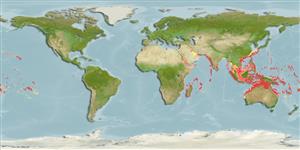
| Native range | All suitable habitat | Point map | Year 2050 |
|
| This map was computer-generated and has not yet been reviewed. |
| Lethrinus xanthochilus AquaMaps Data sources: GBIF OBIS |
Загрузить свой Фото и Видео
изображения | Видео | Изображение на Google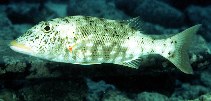 Lethrinus xanthochilus
Изображение сделано Randall, J.E.
изображения | Видео | Изображение на Google
Изображение сделано Randall, J.E.
Классификация / Имена народные названия | синонимы | Catalog of Fishes(род, виды) | ITIS | CoL | WoRMS | Cloffa
> Eupercaria/misc (Various families in series Eupercaria) > Lethrinidae (Emperors or scavengers) > Lethrininae
Etymology: Lethrinus: Greek, lethrinia, a fish pertaining to genus Pagellus.
More on author: Klunzinger.
Etymology: Lethrinus: Greek, lethrinia, a fish pertaining to genus Pagellus.
More on author: Klunzinger.
Окружающая среда: среда / климатическая зона / пределы глубины / диапазон распространения экология
морской ассоциированный с рифами; немигрирующий; пределы глубины 0 - 150 m (Ref. 2295). Tropical; 31°N - 28°S, 30°E - 134°W
распространение Территории | регионы FAO | Экосистемы | места находок | карта точек | интродукции | Faunafri
Indo-Pacific: Red Sea, East Africa and the central Indian Ocean to the Marquesas Islands, north to the Ryukyu Islands.
Размер / Вес / Возраст
половая зрелость: Lm ? range ? - ? cm
Max length : 70.0 cm FL самец/пол неопределен; (Ref. 40637); common length : 59.0 cm SL самец/пол неопределен; (Ref. 37816); наибольший вес (опубликованные данные): 5.4 kg (Ref. 40637)
Max length : 70.0 cm FL самец/пол неопределен; (Ref. 40637); common length : 59.0 cm SL самец/пол неопределен; (Ref. 37816); наибольший вес (опубликованные данные): 5.4 kg (Ref. 40637)
Краткое описание определительные ключи | морфология | морфометрия
колючие лучи спинного плавника (общее число) : 10; членистые (мягкие) лучи спинного плавника (общее число) : 9; колючие лучи анального плавника: 3; членистые (мягкие) лучи анального плавника: 8. This species is distinguished by the following characters: body moderately elongate, its depth 2.8-3.5 times in standard length; head length 1-1.2 times in body depth, 2.6-3 times in SL, dorsal profile near eye convex; snout length about 1.7-2.5 times in HL, measured without the lip the snout is 0.8-0.9 times in cheek height, its dorsal profile nearly straight, snout angle relative to upper jaw between 45° and 60°; interorbital space distinctly concave; posterior nostril a longitudinal or vertical oblong opening, closer to orbit than anterior nostril; eye situated close to dorsal profile, its length 2.8-5.1 times in HL; cheek height 2.3-3.4 times in HL; lateral teeth in jaws conical; outer surface of maxilla smooth; D X, 9 with the third dorsal-fin spine the longest, its length 2-2.8 times in body depth; A III, 8 with the first soft ray usually the longest, its length approximately equal to or shorter than length of base of soft-rayed portion of anal fin and 1.3-1.7 times in length of entire anal-fin base; pectoral-fin rays 13; pelvic-fin membranes between rays closest to body with dense melanophores; cheek without scales; 47-48 lateral-line scales; 4 ½ scale rows between lateral line and base of middle dorsal-fin spines; 15-16 scale rows in transverse series between origin of anal fin and lateral line; usually 15 rows in lower series of scales around caudal peduncle; 5-8 scales in supratemporal patch; inner surface of pectoral fins without scales; posterior angle of operculum fully scaly. Colour of body yellowish grey with scattered irregular dark spots; lips yellowish, upper lip more intense; a red spot at upper base of pectoral fins; fins bluish grey and mottled, bases of fins lighter and edges of dorsal and caudal fins reddish (Ref. 114226).
Body shape (shape guide): fusiform / normal; Cross section: oval.
Body shape (shape guide): fusiform / normal; Cross section: oval.
Occurs in small groups over seagrass beds, sand and rubble areas of coral reefs, deep channels, and lagoons. Usually found in shallow water to depths of 150 m. Usually seen solitary but sometimes swims in small groups. Juveniles in seagrass beds (Ref. 48635). Feeds mainly on crustaceans, fishes, and echinoderms. Caught mostly with handline, traps,
and trawl (Ref. 114226). Minimum depth reported taken from Ref. 128797.
Жизненный цикл и брачное поведение половая зрелость | размножение | нерест | икра | Плодовитость | личинки
Основная ссылка
Загрузите свои рекомендации | ссылки | координатор | соавторы
Carpenter, K.E. and G.R. Allen, 1989. FAO Species Catalogue. Vol. 9. Emperor fishes and large-eye breams of the world (family Lethrinidae). An annotated and illustrated catalogue of lethrinid species known to date. FAO Fish. Synop. 125(9):118 p. Rome: FAO. (Ref. 2295)
Статус Красного Списка МСОП (Ref. 130435: Version 2025-2 (Global))
Не вызывающий беспокойства (LC) ; Date assessed: 09 March 2015
CITES
Not Evaluated
Угроза для людей
Reports of ciguatera poisoning (Ref. 130160)
Использование человеком
рыболовство: коммерческий; объект спортивного рыболовства: да
FAO - рыболовство: посадки; Publication: search | FishSource | Море вокруг нас
дополнительная информация
Трофическая экология
Пищевые предметы (добыча)
состав пищи
потребление пищи
Продовольственные пайки
хищники
Пищевые предметы (добыча)
состав пищи
потребление пищи
Продовольственные пайки
хищники
Динамика численности населения
Параметры роста
Макс. возраст / размер
Отношение длины к весу.
Отношение длины к длине.
Размерный состав
Преобразование массы
пополнение
численность
Параметры роста
Макс. возраст / размер
Отношение длины к весу.
Отношение длины к длине.
Размерный состав
Преобразование массы
пополнение
численность
Жизненный цикл
размножение
половая зрелость
Зрелость/Жиры относительно.
Плодовитость
нерест
Нерестовые скопления
икра
Развитие икры
личинки
динамика численности личинок
размножение
половая зрелость
Зрелость/Жиры относительно.
Плодовитость
нерест
Нерестовые скопления
икра
Развитие икры
личинки
динамика численности личинок
Физиология
Состав тела
Питательные вещества
Потребление кислорода
Тип плавания
Скорость плавания
Зрительные пигменты
Звук рыбы
Болезни и паразиты
Токсичность (LC50s)
Состав тела
Питательные вещества
Потребление кислорода
Тип плавания
Скорость плавания
Зрительные пигменты
Звук рыбы
Болезни и паразиты
Токсичность (LC50s)
генетика
Геном
генетика
Гетерозиготность
наследуемость
Генетическое разнообразие
Геном
генетика
Гетерозиготность
наследуемость
Генетическое разнообразие
Связанные с человеком
Системы аквакультуры
особенности рыбоводства
степень растяжения
Случаи заболевания сигуатерой
Марки, монеты и прочее.
Системы аквакультуры
особенности рыбоводства
степень растяжения
Случаи заболевания сигуатерой
Марки, монеты и прочее.
инструменты
Органическая викторина | Электронная книга | полевой определитель | определительные ключи | Длина-Частота | онтогенез | карта точек |
Catch-MSY |
Специальные отчеты
Проверить содержание в аквариумах | Проверить опубликованные видовые данные | Проверить опубликованные данные по аквакультуре
Скачать в формате XML
ресурсы в Интернет
AFORO (otoliths) | Aquatic Commons | BHL | Cloffa | Websites from users | Проверить FishWatcher | CISTI | Catalog of Fishes: род, виды | DiscoverLife | ECOTOX | FAO - рыболовство: посадки; Publication: search | Faunafri | Fishipedia | Fishtrace | GloBI | Google Books | Google Scholar | Google | IGFA World Record | национальные базы данных | OneZoom | Open Tree of Life | Otolith Atlas of Taiwan Fishes | PubMed | Reef Life Survey | Socotra Atlas | TreeBase | Tree of Life | Wikipedia: Вперёд, поиск | World Records Freshwater Fishing | Zoobank | Зоологическая летопись
Оценки, основанные на моделях
Предпочтительная температура (ссылка 123201): 24.5 - 29, mean 27.9 °C (based on 1520 cells).
Индекс филогенетического разнообразия (ссылка 82804): PD50 = 0.5000 [Uniqueness, from 0.5 = low to 2.0 = high].
Bayesian length-weight: a=0.01514 (0.01006 - 0.02277), b=2.96 (2.84 - 3.08), in cm total length, based on LWR estimates for this species & Genus-body shape (Ref. 93245).
Трофический уровень (ссылка 69278): 3.8 ±0.0 se; based on diet studies.
устойчивость к внешним воздействиям (ссылка 120179): низкий, минимальное время удвоения популяции 4.5-14 лет (K=0.14-0.30).
Prior r = 0.33, 95% CL = 0.22 - 0.49, Based on 2 data-limited stock assessments.
Питательные вещества (Ref. 124155): Calcium = 30.6 [21.9, 41.4] mg/100g; Iron = 0.718 [0.493, 0.992] mg/100g; Protein = 20.2 [17.5, 22.3] %; Omega3 = 0.133 [0.100, 0.174] g/100g; Selenium = 55.2 [30.8, 81.2] μg/100g; VitaminA = 28.6 [6.3, 148.6] μg/100g; Zinc = 1.88 [1.47, 2.31] mg/100g (wet weight); based on nutrient studies.