



Sarotherodon melanotheron Rüppell, 1852
Blackchin tilapia
ارفع صور و مقاطع فيديو
صور | صور قوقل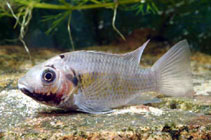 Sarotherodon melanotheron
صورة بواسطة Hippocampus-Bildarchiv
صور | صور قوقل
صورة بواسطة Hippocampus-Bildarchiv
التصنيف / الأسماء الأسماء الشائعة | مرادفات | Catalog of Fishes(جنس, الانواع) | ITIS | CoL | WoRMS | Cloffa
> Cichliformes (Cichlids, convict blennies) > Cichlidae (Cichlids) > Pseudocrenilabrinae
Etymology: Sarotherodon: Greek, saros, -ou = sawdust + Greek, ther = animal * Greek, odous = teeth (Ref. 45335).
More on author: Rüppell.
Etymology: Sarotherodon: Greek, saros, -ou = sawdust + Greek, ther = animal * Greek, odous = teeth (Ref. 45335).
More on author: Rüppell.
البيئة: الوسط / المنطقة المناخية / نطاق العمق / نطاق التوزيع البيئة
بحري; المياه العذبة; مياه مخلوطة القاع; pH range: 7.0 - 8.0; dH range: 9 - 19; غير مهاجرة (Ref. 126106); نطاق العمق 0 - 3 m (Ref. 5723). Tropical; 27°N - 14°S, 18°W - 31°E
التوزيع الأقاليم | مناطق الفاو | النظام البيئي | الظهور | نقطة علي الخريطة | مقدمة | Faunafri
Africa: Lagoons and estuaries from Mauritania to Cameroon. Introduced to several countries in Asia, USA and Europe (Ref. 21). At least one country reports adverse ecological impact after introduction. Previously, three subspecies were recognized: Sarotherodon melanotheron heudelotii, Sarotherodon melanotheron leonensis and Sarotherodon melanotheron melanotheron.
الطول عند النضج الأول / الحجم / وزن / العمر
النضج: Lm 12.1, range 13 - ? cm
Max length : 28.0 cm SL ذكر/ مختلط الجنس; (Ref. 31256); common length : 17.5 cm TL ذكر/ مختلط الجنس; (Ref. 12193)
Max length : 28.0 cm SL ذكر/ مختلط الجنس; (Ref. 31256); common length : 17.5 cm TL ذكر/ مختلط الجنس; (Ref. 12193)
وصف مختصر مفاتيح التعريف | الوصف الخارجي | قياسات المظهر الخارجي
الأشواك الظهرية (المجموع) : 15 - 17; الأشعة الظهرية الناعمة (المجموع) : 10 - 12; شوكة شرجية: 3; أشعه شرجية لينه: 8 - 10; فقرات: 26 - 28. Diagnosis: length of caudal peduncle 0.6-0.9 times in its depth (Ref. 53405). Melanic areas in adult usually present on lower parts of head, on cleithrum and on apices of caudal and soft dorsal fins; occasional irregular and asymmetrical spots on flanks probably representing vertical bars; median spot or transverse bar on nape rather constant (Ref. 2).
Body shape (shape guide): short and / or deep.
Body shape (shape guide): short and / or deep.
This species can tolerate high salinity (Ref. 5723). Adults occur abundantly in mangrove areas and ventures in to both fresh, like lower reaches of streams (Ref. 5723) and salt waters in native and non-native ranges (Ref. 46816, 53405). In West Africa, they are confined to brackish lagoons and estuaries, and is abundant in the mangrove zone (Ref. 2). They form schools; is mainly nocturnal with intermittent daytime feeding. They feed on aufwuchs and detritus (Ref. 2), as well as on bivalves and zooplankton (Ref. 28587). Feeding behaviour: picking up and swallowing "bites" (no gill rakers) (Ref. 55661).
دورة الحياة وسلوك التزاوج النضج | التكاثر | وضع البيض | بيض | الخصوبة | اليرقات
Spawns in shallow water close inshore. Initiative in courtship, pit digging and mating activities are taken by the female. Eventually a male is stimulated to react in a mainly passive manner and a pair-bond is established; sexual dimorphism minimal; no T-stand by the partners during fertilization. Exhibits mouth-brooding habit (Ref. 6298). Males exclusively incubate the eggs (Ref. 2, 6309).
المرجع الرئيسي
قم بتحميل مراجعك | مراجع | المنظم : Kullander, Sven O. | المتعاونين
Trewavas, E. and G.G. Teugels, 1991. Sarotherodon. p. 425-437. In J. Daget, J.-P. Gosse, G.G. Teugels and D.F.E. Thys van den Audenaerde (eds.) Check-list of the freshwater fishes of Africa (CLOFFA). ISNB, Brussels; MRAC, Tervuren; and ORSTOM, Paris. Vol. 4. (Ref. 4999)
حالة القائمة الحمراء للاتحاد الدولي لحفظ الطبيعة والموارد الطبيعية (Ref. 130435: Version 2025-2 (Global))
Least Concern (LC) ; Date assessed: 22 April 2019
CITES
Not Evaluated
خطر للأنسان
Potential pest
استخدامات بشرية
مصائد: تجاري; الأستزراع المائي: تجاري; حوض مائي: تجاري
FAO - أنظمة الاستزراع المائي: الأنتاج; ; Publication: search | FishSource |
مزيد من المعلومات
علم البيئة الغذائية
المواد الغذائية (الفرائس)
التركيبة الغذائية
استهلاك الأغذية
الحصص الغذائية
مفتريسات
المواد الغذائية (الفرائس)
التركيبة الغذائية
استهلاك الأغذية
الحصص الغذائية
مفتريسات
الديناميكيات السكانية
معاملات النمو
الحد الأقصى للأعمار/الأحجام
علاقة الطول بالوزن.
علاقة الطول بالطول.
الطول- الترددات
التحويل الجماعي
توظيف
الوفرة
معاملات النمو
الحد الأقصى للأعمار/الأحجام
علاقة الطول بالوزن.
علاقة الطول بالطول.
الطول- الترددات
التحويل الجماعي
توظيف
الوفرة
التشريح
منطقة الخياشيم
الدماغ
الأوتوليث
منطقة الخياشيم
الدماغ
الأوتوليث
علم وظائف الأعضاء
تكوين الجسم
المغذيات
استهلاك الأوكسجين
نوع السباحة
سرعة السباحة
الأصباغ البصرية
صوت السمك
الأمراض والطفيليات
السمية (LC50s)
تكوين الجسم
المغذيات
استهلاك الأوكسجين
نوع السباحة
سرعة السباحة
الأصباغ البصرية
صوت السمك
الأمراض والطفيليات
السمية (LC50s)
ذات الصلة بالبشر
أنظمة الاستزراع المائي
ملامح تربية الأحياء المائية
سلالات
حالات سيغواتيرا
طوابع بريدية وعملات معدنية ومتنوعة
أنظمة الاستزراع المائي
ملامح تربية الأحياء المائية
سلالات
حالات سيغواتيرا
طوابع بريدية وعملات معدنية ومتنوعة
أدوات
اختبار عضوي | كتاب إلكتروني | دليل الميدان | مفاتيح التعريف | معالج تردد الطول-التردد | أداة تاريخ الحياة | نقطة علي الخريطة |
Catch-MSY |
تقارير خاصة
البحث عن صيانت الأحواض المائيه | التحقق من وجود صفحات حقائق الأنواع | البحث عنا حقائق حول الأحواض المائيه
تنزيل XML
مصادر علي الأنترنت
AFORO (otoliths) | Alien/Invasive Species database | Aquatic Commons | BHL | Cloffa | Websites from users | البحث في مراقبي الأسماك | CISTI | Catalog of Fishes: جنس, الانواع | DiscoverLife | ECOTOX | FAO - أنظمة الاستزراع المائي: الأنتاج; ; Publication: search | Faunafri | Fishipedia | Fishtrace | GloBI | Google Books | Google Scholar | Google | IGFA World Record | OneZoom | Open Tree of Life | Otolith Atlas of Taiwan Fishes | PubMed | Reef Life Survey | Socotra Atlas | TreeBase | شجرة الحياة | Wikipedia: ذهب, بحث | World Records Freshwater Fishing | Zoobank | سجلات علم الحيوانات
تقديرات تستند إلى النماذج
مؤشر التنوع الشُعبي الوراثي (مرجع 82804): PD50 = 0.5001 [Uniqueness, from 0.5 = low to 2.0 = high].
Bayesian length-weight: a=0.01778 (0.01381 - 0.02290), b=3.00 (2.93 - 3.07), in cm total length, based on LWR estimates for this species (Ref. 93245).
مستوى غذائي (مرجع 69278): 2.2 ±0.14 se; based on food items.
Generation time: 0.8 (0.5 - 2.8) years. Estimated as median ln(3)/K based on 13 growth studies.
المرونه (مرجع 120179): وسيط, الحد الزمني الأدني لتضاعف عدد أفراد المجتمع 1.4-4.4 سنة (K=0.16).
المغذيات (Ref. 124155): Calcium = 318 [152, 673] mg/100g; Iron = 1.97 [0.87, 4.12] mg/100g; Protein = 18.4 [16.8, 20.0] %; Omega3 = 0.152 [0.073, 0.347] g/100g; Selenium = 39.5 [19.2, 87.8] μg/100g; VitaminA = 6.27 [1.55, 20.48] μg/100g; Zinc = 1.94 [1.22, 3.12] mg/100g (wet weight);