



Προσθέστε την παρατήρησή σας στο Fish Watcher
| Native range | All suitable habitat | Point map | Year 2050 |

|
| This map was computer-generated and has not yet been reviewed. |
| Scomber scombrus AquaMaps Data sources: GBIF OBIS |
Ανεβάστε το φωτογραφίες και Βίντεο
Φωτογραφίες | Γραμματόσημα, νομίσματα, διάφορα. | Google image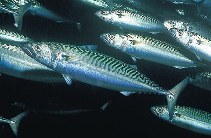 Scomber scombrus
Εικόνα από Svensen, E.
Φωτογραφίες | Γραμματόσημα, νομίσματα, διάφορα. | Google image
Εικόνα από Svensen, E.
Ταξινόμηση / Ονόματα Κοινά ονόματα | Συνώνυμα | Catalog of Fishes(Γένος, Είδη) | ITIS | CoL | WoRMS | Cloffa
> Scombriformes (Mackerels) > Scombridae (Mackerels, tunas, bonitos) > Scombrinae
Etymology: Scomber: Greek, skombros = tunny or mackerel, 1623 (Ref. 45335).
More on author: Linnaeus.
Etymology: Scomber: Greek, skombros = tunny or mackerel, 1623 (Ref. 45335).
More on author: Linnaeus.
Περιβάλλον: περιβάλλον / κλιματική ζώνη / εύρος βάθους / εύρος διανομής Οικολογία
Θαλασσινό(ά); Υφάλμυρο pelagic-neritic; ωκεανόδρομο(ς) (Ref. 51243); εύρος βάθους 0 - 1000 m (Ref. 54254), usually 0 - 200 m (Ref. 54254). Temperate; 75°N - 30°N, 77°W - 42°E
Κατανομή Εδάφη | Περιοχές FAO | Οικοσυστήματα | Παρουσίες | Σημειακός χάρτης | Εισαγωγές | Faunafri
North Atlantic: including the Mediterranean.
Μήκος κατά την πρώτη ωρίμανση / Μέγεθος / Βάρος / Ηλικία
Γεννητική Ωρίμανση: Lm 28.7, range 34 - ? cm
Max length : 60.0 cm FL αρσενικό/απροσδιόριστο; (Ref. 35388); common length : 30.0 cm FL αρσενικό/απροσδιόριστο; (Ref. 168); μεγ. δημοσιευμένο βάρος: 3.4 kg (Ref. 9988); μεγ. αναφερόμενη ηλικία: 17 έτη (Ref. 207)
Max length : 60.0 cm FL αρσενικό/απροσδιόριστο; (Ref. 35388); common length : 30.0 cm FL αρσενικό/απροσδιόριστο; (Ref. 168); μεγ. δημοσιευμένο βάρος: 3.4 kg (Ref. 9988); μεγ. αναφερόμενη ηλικία: 17 έτη (Ref. 207)
Σύντομη περιγραφή Κλείδες προσδιορισμού | Μορφολογία | Μορφομετρία
Ραχιαίες άκανθες (συνολικά) : 8 - 14; Μαλακές ραχιαίες ακτίνες (συνολικά) : 11 - 13; Εδρικές άκανθες: 1; Μαλακές εδρικές ακτίνες: 12 - 13; Σπόνδυλοι: 31. This species has the following characters: no well developed corselet; interpelvic process small and single; anal fin spine conspicuous, joined to the fin by a membrane but clearly independent of it; anal fin origin opposite that of second dorsal fin; no swim bladder; first haemal spine anterior to first interneural process; 21-28 interneural bones under first dorsal fin; markings on back oblique to near vertical, with relatively little undulating; belly unmarked (Ref. 168).
Body shape (shape guide): fusiform / normal; Cross section: oval.
Body shape (shape guide): fusiform / normal; Cross section: oval.
Abundant in cold and temperate shelf areas, forms large schools near the surface. They overwinter in deeper waters but move closer to shore in spring when water temperatures range between 11° and 14°C. Mainly diurnal, it feeds on zooplankton and small fish. Eggs and larvae are pelagic (Ref. 6769). Batch spawner (Ref. 51846). The species is traded fresh, frozen, smoked and canned. Eaten fried, broiled and baked (Ref. 9988). Two stocks in north-east Atlantic: North Sea (east) and British Isles (west). North Sea stock decreased dramatically in the 1960's because of direct overfishing. Recruitment has been poor and unstable. After spawning, the adult feed very actively moving around in small shoals (Ref. 35388).
Κύκλος ζωής και συμπεριφορά ζευγαρώματος Γεννητική Ωρίμανση | Αναπαραγωγή | Γεννοβολία | Αβγά | Γονιμότητα | Προνύμφες
Κύρια αναφορά
Ανεβάστε τις αναφορές σας | Αναφορές | Συντονιστής : Collette, Bruce B. | Συνεργάτες
Collette, B.B. and C.E. Nauen, 1983. FAO Species Catalogue. Vol. 2. Scombrids of the world. An annotated and illustrated catalogue of tunas, mackerels, bonitos and related species known to date. Rome: FAO. FAO Fish. Synop. 125(2):137 p. (Ref. 168)
Κατάσταση Κόκκινου Καταλόγου IUCN (Ref. 130435: Version 2025-2 (Global))
Least Concern (LC) ; Date assessed: 01 June 2022
CITES
Not Evaluated
Απειλή για τον άνθρωπο
Harmless
Ανθρώπινες χρήσεις
αλιεία: πολύ εμπορικό; αλιεία αναψυχής: ναί
FAO - αλιεία: εκφορτώσεις, προφίλ του είδους; Publication: search | FIRMS - Stock assessments | FishSource | Η θάλασσα γύρω μας
Περισσότερες πληροφορίες
Κύκλος ζωής
Αναπαραγωγή
Γεννητική Ωρίμανση
Ωριμότητα / Gills rel.
Γονιμότητα
Γεννοβολία
Συγκεντρώσεις αναπαραγωγής
Αβγά
Ανάπτυξη αυγών
Προνύμφες
Δυναμική προνυμφών
Αναπαραγωγή
Γεννητική Ωρίμανση
Ωριμότητα / Gills rel.
Γονιμότητα
Γεννοβολία
Συγκεντρώσεις αναπαραγωγής
Αβγά
Ανάπτυξη αυγών
Προνύμφες
Δυναμική προνυμφών
Φυσιολογία
Σύνθεση σώματος
Θρεπτικά συστατικά
Κατανάλωση οξυγόνου
Τύπος κολύμβησης
Ταχύτητα κολύμβησης
Οπτικές χρωστικές ουσίες
Ήχος ψαριών
Ασθένειες & παράσιτα
Τοξικότητα (LC50)
Σύνθεση σώματος
Θρεπτικά συστατικά
Κατανάλωση οξυγόνου
Τύπος κολύμβησης
Ταχύτητα κολύμβησης
Οπτικές χρωστικές ουσίες
Ήχος ψαριών
Ασθένειες & παράσιτα
Τοξικότητα (LC50)
Ανθρώπινη σχέση
Συστήματα υδατοκαλλιέργειας
Προφίλ υδατοκαλλιεργειών
Στελέχοι
Περιπτώσεις Ciguatera
Γραμματόσημα, νομίσματα, διάφορα.
Συστήματα υδατοκαλλιέργειας
Προφίλ υδατοκαλλιεργειών
Στελέχοι
Περιπτώσεις Ciguatera
Γραμματόσημα, νομίσματα, διάφορα.
Εργαλεία
Βιολογικό κουίζ | Ηλεκτρονικό βιβλίο | Οδηγός πεδίου | Κλείδες προσδιορισμού | Ανάλυση κατά μήκος συνθέσεων | Εργαλείο ιστορίας ζωής | Σημειακός χάρτης |
Catch-MSY |
Ειδικές εκθέσεις
Έλεγχος για συντήρηση ενυδρείου | Ελέγξτε για ενημερωτικά δελτία ειδών | Ελέγξτε για ενημερωτικά δελτία υδατοκαλλιέργειας
Λήψη XML
Διαδικτυακές πηγές
AFORO (otoliths) | Aquatic Commons | BHL | Cloffa | Websites from users | Check FishWatcher | CISTI | Catalog of Fishes: Γένος, Είδη | DiscoverLife | ECOTOX | FAO - αλιεία: εκφορτώσεις, προφίλ του είδους; Publication: search | Faunafri | Fishipedia | Fishtrace | GloBI | Google Books | Google Scholar | Google | IGFA World Record | Εθνικές βάσεις δεδομένων | OceanAdapt | OneZoom | Open Tree of Life | Otolith Atlas of Taiwan Fishes | Δημόσια ενυδρεία | PubMed | Reef Life Survey | Socotra Atlas | TreeBase | Δέντρο Ζωής | Wikipedia: Go, αναζήτηση | World Records Freshwater Fishing | Zoobank | Zoological Record
Εκτιμήσεις βάσει μοντέλων
Προτιμώμενη θερμοκρασία (Αναφ. 123201): 7 - 17.5, mean 10.2 °C (based on 2460 cells).
Δείκτης φυλογενετικής ποικιλότητας (Αναφ. 82804): PD50 = 0.5625 [Uniqueness, from 0.5 = low to 2.0 = high].
Bayesian length-weight: a=0.00631 (0.00573 - 0.00695), b=3.07 (3.04 - 3.10), in cm total length, based on LWR estimates for this species (Ref. 93245).
Τροφικό Επίπεδο (Αναφ. 69278): 3.6 ±0.2 se; based on diet studies.
Generation time: 3.1 (2.3 - 4.1) years. Estimated as median ln(3)/K based on 17 growth studies.
Ελαστικότητα (Αναφ. 120179): Μεσαίο(α), ελάχιστος χρόνος για διπλασιασμό πληθυσμού 1,4 - 4,4 έτη (rm=0.33-0.56; K=0.23-0.27; tm=2-3; tmax=17; Fec=200,000).
Prior r = 0.43, 95% CL = 0.28 - 0.64, Based on 10 full stock assessments.
Θρεπτικά συστατικά (Ref. 124155): Calcium = 20.1 [7.8, 49.4] mg/100g; Iron = 0.705 [0.260, 1.627] mg/100g; Protein = 20.5 [19.4, 21.8] %; Omega3 = 0.761 [0.515, 1.159] g/100g; Selenium = 52 [28, 97] μg/100g; VitaminA = 16.8 [5.0, 65.8] μg/100g; Zinc = 0.695 [0.445, 1.022] mg/100g (wet weight); based on nutrient studies.