



Xenoclarias eupogon (Norman, 1928)
Lake Victoria deepwater catfish
Envoyez vos Photos et vidéos
Images | Images Google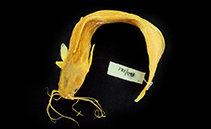 Xenoclarias eupogon
Photo de NMK
Images | Images Google
Photo de NMK
Classification / Noms Noms communs | Synonymes | Catalog of Fishes(Genre, Espèce) | ITIS | CoL | WoRMS | Cloffa
> Siluriformes (Catfishes) > Clariidae (Airbreathing catfishes)
Etymology: Xenoclarias: Greek, xenos = strange + Latin, clarias, -a, -um = shining (Ref. 45335).
More on author: Norman.
Etymology: Xenoclarias: Greek, xenos = strange + Latin, clarias, -a, -um = shining (Ref. 45335).
More on author: Norman.
Taxonomic Remarks
Xenoclarias holobranchus Greenwood, 1958 is considered valid in Eschmeyer (CofF ver. Jul. 2011: Ref. 87661) following Ferraris (2007: Ref. 58032). It is treated here a synonym of Xenoclarias eupogon (Norman, 1928) following Gee (1975: Ref. 104726) and Teugels (1986: Ref. 3820).
Environnement : milieu / zone climatique / profondeur / gamme de distribution Écologie
; eau douce démersal; profondeur 10 - 79 m (Ref. 104726). Tropical; 1°N - 3°S
Distribution Territoires | Zones FAO | Écosystèmes | Occurrences | Carte par point | Introductions | Faunafri
Taille / Poids / Âge
Absence of suprabranchial respiratory organs and reduction of suprabranchial chamber as adaptation to deep-water habitat (Ref. 104723, 104726). Inhabits deeper areas of Lake Victoria (10 to 79 m); mostly found over muddy bottoms, not far from steep, rocky zones where it is believed to breed; sexual maturity is reached at ca. 11 cm SL (Ref. 104726). Entirely insectivorous, with preference of Chironomidae over Chaoboridae larvae (Ref. 1047726), but fish remains have also been found (Ref. 78218).
Xenoclarias eupogon is an endemic species of Lake Victoria which is threatened with extinction or has already disappeared due to predation by Nile perch and other recent ecological impacts (Ref. 35948).
Cycle de vie et comportement reproducteur Maturité | Reproduction | Frai | Œufs | Fécondité | Larves
Référence principale
Téléchargez vos références | Références | Coordinateur | Collaborateurs
Gee, J.M., 1975. The genus Xenoclarias (Pisces, Siluriformes) in Lake Victoria, with a redescription of Xenoclarias eupogon and notes on the biology of the species. J. Zool., Lond., 175:201-217. (Ref. 104726)
Statut dans la liste rouge de l'IUCN (Ref. 130435: Version 2025-2 (Global))
Niveau de menace critique (CR) (A2acde); Date assessed: 30 September 2015
CITES
Not Evaluated
Menace pour l'homme
Harmless
Utilisations par l'homme
Pêcheries: sans intérêt
FAO - Publication: search | FishSource |
Plus d'informations
Écologie trophique
Aliments (proies)
Composition du régime alimentaire
Consommation alimentaire
Rations alimentaires
Prédateurs
Aliments (proies)
Composition du régime alimentaire
Consommation alimentaire
Rations alimentaires
Prédateurs
Écologie
Écologie
Écologie
Dynamique des populations
Paramètres de croissance
Âges / tailles maximales
Longueur-poids rel.
Rel. longueur-longueur.
Fréquences de longueurs
Conversion de masse
Recrutement
Abondance
Paramètres de croissance
Âges / tailles maximales
Longueur-poids rel.
Rel. longueur-longueur.
Fréquences de longueurs
Conversion de masse
Recrutement
Abondance
Cycle de vie
Reproduction
Maturité
Maturité/épines rel.
Fécondité
Frai
Agrégats de frai
Œufs
Développement de l'œuf
Larves
Dynamique des populations larvaires
Reproduction
Maturité
Maturité/épines rel.
Fécondité
Frai
Agrégats de frai
Œufs
Développement de l'œuf
Larves
Dynamique des populations larvaires
Anatomie
Surface branchiale
Cerveau
Otolithe
Surface branchiale
Cerveau
Otolithe
Physiologie
Composition corporelle
Nutriments
Consommation d'oxygène
Type de natation
Vitesse de nage
Pigments visuels
Son de poisson
Maladies et parasites
Toxicité (CL50)
Composition corporelle
Nutriments
Consommation d'oxygène
Type de natation
Vitesse de nage
Pigments visuels
Son de poisson
Maladies et parasites
Toxicité (CL50)
Génétique
génôme
Génétique
Hétérozygotie
Héritabilité
Diversité génétique
génôme
Génétique
Hétérozygotie
Héritabilité
Diversité génétique
Liées à l'homme
Systèmes d'aquaculture
Profils d'aquaculture
Souches
Cas de ciguatera
Timbres, pièces de monnaie, divers
Systèmes d'aquaculture
Profils d'aquaculture
Souches
Cas de ciguatera
Timbres, pièces de monnaie, divers
Outils
E-book | Guide de terrain | Générateur de fréquences de longueur | Outil de dynamique de population | Carte par point |
Capture-MSY |
Articles particuliers
Télécharger en XML
Sources Internet
AFORO (otoliths) | Aquatic Commons | BHL | Cloffa | Websites from users | FishWatcher | CISTI | Catalog of Fishes: Genre, Espèce | DiscoverLife | ECOTOX | FAO - Publication: search | Faunafri | Fishipedia | Fishtrace | GloBI | Google Books | Google Scholar | Google | IGFA World Record | OneZoom | Open Tree of Life | Otolith Atlas of Taiwan Fishes | PubMed | Reef Life Survey | Socotra Atlas | TreeBase | Arbre de Vie | Wikipedia: aller à, chercher | World Records Freshwater Fishing | Zoological Record
Estimations basées sur des modèles
Indice de diversité phylogénétique (Réf. 82804): PD50 = 1.0000 [Uniqueness, from 0.5 = low to 2.0 = high].
Bayesian length-weight: a=0.00741 (0.00344 - 0.01597), b=2.97 (2.79 - 3.15), in cm total length, based on LWR estimates for this (Sub)family-body shape (Ref. 93245).
Niveau trophique (Réf. 69278): 3.4 ±0.6 se; based on size and trophs of closest relatives
Résilience (Réf. 120179): Haut, temps minimum de doublement de population inférieur à 15 mois (Preliminary K or Fecundity.).