



Carcharhinus sorrah (Valenciennes, 1839)
Spot-tail shark
Ajouter votre observation dans Fish Watcher
| Native range | All suitable habitat | Point map | Year 2050 |

|
| This map was computer-generated and has not yet been reviewed. |
| Carcharhinus sorrah AquaMaps Data sources: GBIF OBIS |
Envoyez vos Photos et vidéos
Images | Images Google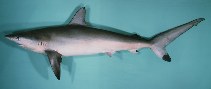 Carcharhinus sorrah
Photo de Randall, J.E.
Images | Images Google
Photo de Randall, J.E.
Classification / Noms Noms communs | Synonymes | Catalog of Fishes(Genre, Espèce) | ITIS | CoL | WoRMS | Cloffa
Élasmobranches (requins et raies) (sharks and rays) > Carcharhiniformes (Ground sharks) > Carcharhinidae (Requiem sharks)
Etymology: Carcharhinus: karcharos (Gr.), sharp or jagged; rhinus, an ancient name for sharks, from rhine (Gr.), rasp, both words alluding to a shark's jagged, rasp-like skin (See ETYFish); sorrah: Tamil (Indian subcontinent) word for shark [authorship often attributed to Müller & Henle, who published Valenciennes’ description] (See ETYFish).
Etymology: Carcharhinus: karcharos (Gr.), sharp or jagged; rhinus, an ancient name for sharks, from rhine (Gr.), rasp, both words alluding to a shark's jagged, rasp-like skin (See ETYFish); sorrah: Tamil (Indian subcontinent) word for shark [authorship often attributed to Müller & Henle, who published Valenciennes’ description] (See ETYFish).
Environnement : milieu / zone climatique / profondeur / gamme de distribution Écologie
marin; saumâtre récifal; profondeur 0 - 140 m (Ref. 30573), usually 1 - 73 m (Ref. 90102). Tropical; 31°N - 31°S
Distribution Territoires | Zones FAO | Écosystèmes | Occurrences | Carte par point | Introductions | Faunafri
Indo-West Pacific: Persian Gulf (Ref. 68964), Red Sea and East Africa (including Madagascar, Mauritius and Seychelles) to the Philippines, north to China, south to Australia. Also from Vanikolo Island (Santa Cruz Islands) and the Solomon Islands. Possibly occurring in the Gulf of Aden, Gulf of Oman and Sri Lanka (Ref. 9997).
Longueur à la première maturité / Taille / Poids / Âge
Maturité: Lm 130.0 range ? - ? cm
Max length : 160 cm TL mâle / non sexé; (Ref. 2334); poids max. publié: 28.0 kg (Ref. 6390); âge max. reporté: 8 années (Ref. 6390)
Max length : 160 cm TL mâle / non sexé; (Ref. 2334); poids max. publié: 28.0 kg (Ref. 6390); âge max. reporté: 8 années (Ref. 6390)
Description synthétique Clés d'identification | Morphologie | Morphométrie
Épines dorsales (Total) : 0; Épines anales: 0. A small, spindle-shaped shark with a long, rounded snout, large circular eyes, and oblique-cusped serrated teeth; 2nd dorsal fin very low; interdorsal ridge present (Ref. 5578). 2nd dorsal, pectorals and lower caudal lobe with dark tips; 1st dorsal with thin but conspicuous dark tip; pelvic fins and upper caudal lobe plain (Ref. 5485). Grey or grey-brown above, white below with a golden-brown sheen on the area between eyes and gill slits (in fresh specimens); pectorals, second dorsal, and lower caudal fin lobe with conspicuous black tips, first dorsal and upper caudal fin lobe with black edging (Ref. 9997). A dark band on flank extending rearwards to pelvic fins (Ref. 9997).
Body shape (shape guide): fusiform / normal.
Body shape (shape guide): fusiform / normal.
Found on the continental and insular shelves, primarily near reefs (Ref. 244). Sometimes in offshore waters (Ref. 30573). Live near the seabed during the day and near the surface at night (Ref. 6390). Feeds on bony fishes (Ref. 68964). Shark movements often short (50 km) but may be more than 1,000 km (Ref. 6390). Prefers teleost fishes but also feeds on cephalopods and crustaceans (Ref. 6871). Viviparous (Ref. 50449). Regularly caught by local artisanal and small-scale commercial fisheries where it occurs (Ref. 244). Utilized as a food fish; fins used in the oriental shark fin trade, liver for vitamin oil, and offal for fishmeal (Ref. 9997).
Cycle de vie et comportement reproducteur Maturité | Reproduction | Frai | Œufs | Fécondité | Larves
Viviparous, with a yolk-sac placenta (Ref. 244). Pups, average 3, range 1-8, are produced in January after a 10-month gestation period. Average length at birth is 50 cm TL. Length increases by about 25 cm during the first year. These sharks breed once each year (Ref. 13440). Distinct pairing with embrace (Ref. 205).
Référence principale
Téléchargez vos références | Références | Coordinateur : Compagno, Leonard J.V. | Collaborateurs
Compagno, L.J.V., 1984. FAO Species Catalogue. Vol. 4. Sharks of the world. An annotated and illustrated catalogue of shark species known to date. Part 2 - Carcharhiniformes. FAO Fish. Synop. 125(4/2):251-655. Rome: FAO. (Ref. 244)
Statut dans la liste rouge de l'IUCN (Ref. 130435: Version 2025-2 (Global))
Quasi-menacé (NT) (A2d); Date assessed: 29 October 2020
Menace pour l'homme
Harmless (Ref. 2334)
Utilisations par l'homme
Pêcheries: intérêt commercial mineur
FAO - pêcheries: débarquements; Publication: search | FishSource | Sea Around Us
Plus d'informations
Écologie trophique
Aliments (proies)
Composition du régime alimentaire
Consommation alimentaire
Rations alimentaires
Prédateurs
Aliments (proies)
Composition du régime alimentaire
Consommation alimentaire
Rations alimentaires
Prédateurs
Dynamique des populations
Paramètres de croissance
Âges / tailles maximales
Longueur-poids rel.
Rel. longueur-longueur.
Fréquences de longueurs
Conversion de masse
Recrutement
Abondance
Paramètres de croissance
Âges / tailles maximales
Longueur-poids rel.
Rel. longueur-longueur.
Fréquences de longueurs
Conversion de masse
Recrutement
Abondance
Cycle de vie
Reproduction
Maturité
Maturité/épines rel.
Fécondité
Frai
Agrégats de frai
Œufs
Développement de l'œuf
Larves
Dynamique des populations larvaires
Reproduction
Maturité
Maturité/épines rel.
Fécondité
Frai
Agrégats de frai
Œufs
Développement de l'œuf
Larves
Dynamique des populations larvaires
Anatomie
Surface branchiale
Cerveau
Otolithe
Surface branchiale
Cerveau
Otolithe
Physiologie
Composition corporelle
Nutriments
Consommation d'oxygène
Type de natation
Vitesse de nage
Pigments visuels
Son de poisson
Maladies et parasites
Toxicité (CL50)
Composition corporelle
Nutriments
Consommation d'oxygène
Type de natation
Vitesse de nage
Pigments visuels
Son de poisson
Maladies et parasites
Toxicité (CL50)
Liées à l'homme
Systèmes d'aquaculture
Profils d'aquaculture
Souches
Cas de ciguatera
Timbres, pièces de monnaie, divers
Systèmes d'aquaculture
Profils d'aquaculture
Souches
Cas de ciguatera
Timbres, pièces de monnaie, divers
Outils
E-book | Guide de terrain | Clés d'identification | Générateur de fréquences de longueur | Outil de dynamique de population | Carte par point |
Capture-MSY |
Articles particuliers
Télécharger en XML
Sources Internet
AFORO (otoliths) | Aquatic Commons | BHL | Cloffa | Websites from users | FishWatcher | CISTI | Catalog of Fishes: Genre, Espèce | DiscoverLife | ECOTOX | FAO - pêcheries: débarquements; Publication: search | Faunafri | Fishipedia | Fishtrace | GloBI | Google Books | Google Scholar | Google | IGFA World Record | Bases de données nationales | OneZoom | Open Tree of Life | Otolith Atlas of Taiwan Fishes | PubMed | Reef Life Survey | Socotra Atlas | TreeBase | Arbre de Vie | Wikipedia: aller à, chercher | World Records Freshwater Fishing | Zoological Record
Estimations basées sur des modèles
Température préférée (Réf. 123201): 24.5 - 29, mean 27.8 °C (based on 2844 cells).
Indice de diversité phylogénétique (Réf. 82804): PD50 = 0.5000 [Uniqueness, from 0.5 = low to 2.0 = high].
Bayesian length-weight: a=0.00355 (0.00205 - 0.00615), b=3.16 (3.02 - 3.30), in cm total length, based on LWR estimates for this species & Genus-body shape (Ref. 93245).
Niveau trophique (Réf. 69278): 4.2 ±0.5 se; based on diet studies.
Generation time: 3.2 ( na - na) years. Estimated as median ln(3)/K based on 2 growth studies.
Résilience (Réf. 120179): Faible, temps minimum de doublement de population : 4,5 à 14 années (K=0.34; tm=2-3; tmax=8; Fec=3).
Prior r = 0.28, 95% CL = 0.19 - 0.42, Based on 1 data-limited stock assessment.
Nutriments (Ref. 124155): Calcium = 8.62 [1.61, 44.76] mg/100g; Iron = 0.433 [0.105, 1.215] mg/100g; Protein = 22.5 [19.7, 24.7] %; Omega3 = 0.127 [0.051, 0.297] g/100g; Selenium = 32.8 [8.5, 90.3] μg/100g; VitaminA = 44.4 [14.6, 133.4] μg/100g; Zinc = 0.637 [0.305, 1.261] mg/100g (wet weight);