



Hochladen Photos und videos
Bilder | Google Bild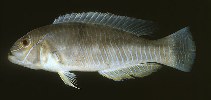 Choerodon typus
Male Photo von Randall, J.E.
Bilder | Google Bild
Male Photo von Randall, J.E.
Klassifizierung / Names Namen | Synonyme | Catalog of Fishes(Gattung, Arten) | ITIS | CoL | WoRMS | Cloffa
> Eupercaria/misc (Various families in series Eupercaria) > Labridae (Wrasses) > Hypsigenyinae
Etymology: Choerodon: Greek, choiros = a pig + odous = teeth (Ref. 45335); referrring to the prominent anterior canines of the species in this genus (Ref. 116605).
More on author: Bleeker.
Etymology: Choerodon: Greek, choiros = a pig + odous = teeth (Ref. 45335); referrring to the prominent anterior canines of the species in this genus (Ref. 116605).
More on author: Bleeker.
Umwelt: Milieu / Klimazone / Tiefenbereich / Verbreitungsgebiet Ökologie
seewasser; brackwasser riff-verbunden; tiefenbereich 15 - 85 m (Ref. 9823). Tropical
Verbreitung Territorien | FAO Gebiete | Ökosysteme | Vorkommen | Punkt Karte | Einführungen | Faunafri
Western Pacific: extending into the Indian Ocean only in an area to the west of the Malay Peninsula (Ref. 9823). Recorded from North West Shelf, Australia; Indo-Australian Archipelago (Ref. 3132).
Größe / Gewicht / Alter
Kurzbeschreibung Bestimmungsschlüssel | Morphologie | Morphometrie
Rückenflossenstacheln (insgesamt) : 12; Rückenflossenweichstrahlen (insgesamt) : 8; Afterflossenstacheln: 3; Afterflossenweichstrahlen: 10.
Body shape (shape guide): fusiform / normal.
Body shape (shape guide): fusiform / normal.
Lives on flat sandy bottoms or rubble (Ref. 3132). Often taken by trawlers but still occassionally seen near reefs. Found solitary or in small groups (Ref. 90102). Minimum depth reported from Ref. 90102.
Lebenszyklus und Paarungsverhalten Geschlechtsreife | Fortpflanzung | Ablaichen | Eier | Fruchtbarkeit | Larven
Oviparous, distinct pairing during breeding (Ref. 205).
Hauptreferenz
Laden Sie Ihre Referenzen hoch | Referenzen | Koordinator : Westneat, Mark | Partner
Westneat, M.W., 2001. Labridae. Wrasses, hogfishes, razorfishes, corises, tuskfishes. p. 3381-3467. In K.E. Carpenter and V. Niem (eds.) FAO species identification guide for fishery purposes. The living marine resources of the Western Central Pacific. Vol. 6. Bony fishes part 4 (Labridae to Latimeriidae), estuarine crocodiles. FAO, Rome. (Ref. 9823)
IUCN Rote Liste Status (Ref. 130435: Version 2025-2 (Global))
nicht bedroht (LC) ; Date assessed: 12 July 2008
CITES
Not Evaluated
Bedrohung für Menschen
Harmless
Nutzung durch Menschen
Fischereien: weniger kommerziell
FAO - Publication: search | FishSource |
Mehr Information
Trophische Ökologie
Lebensmittel (Beutetiere)
Nahrungszusammensetzung
Nahrungsaufnahme
Lebensmittelrationen
Räuber
Lebensmittel (Beutetiere)
Nahrungszusammensetzung
Nahrungsaufnahme
Lebensmittelrationen
Räuber
Populationsdynamik
Wachstumsparameter
Max. Alter/Größen
Länge-Gewicht-Rel.
Länge-Länge-Verhältnis.
Längenhäufigkeiten
Massenkonvertierung
Rekrutierung
Dichte
Wachstumsparameter
Max. Alter/Größen
Länge-Gewicht-Rel.
Länge-Länge-Verhältnis.
Längenhäufigkeiten
Massenkonvertierung
Rekrutierung
Dichte
Lebenszyklus
Fortpflanzung
Geschlechtsreife
Reifung/Kiemen rel.
Fruchtbarkeit
Ablaichen
Laichaggregationen
Eier
Eientwicklung
Larven
Larven Pop.Dyn.
Fortpflanzung
Geschlechtsreife
Reifung/Kiemen rel.
Fruchtbarkeit
Ablaichen
Laichaggregationen
Eier
Eientwicklung
Larven
Larven Pop.Dyn.
Anatomie
Kiemenoberfläche
Gehirn
Otolith
Kiemenoberfläche
Gehirn
Otolith
Physiologie
Körperliche Zusammensetzung
Nährstoffe
Sauerstoffverbrauch
Schwimmart
Schwimmgeschwindigkeit
Visuelle Pigmente
Fischgeräusche
Krankheiten und Parasiten
Toxizität (LC50s)
Körperliche Zusammensetzung
Nährstoffe
Sauerstoffverbrauch
Schwimmart
Schwimmgeschwindigkeit
Visuelle Pigmente
Fischgeräusche
Krankheiten und Parasiten
Toxizität (LC50s)
Genetik
Genom
Genetik
Heterozygotie
Vererbbarkeit
Genetische Vielfalt
Genom
Genetik
Heterozygotie
Vererbbarkeit
Genetische Vielfalt
Menschenbezogen
Aquakultur-Systeme
Aquakultur Profile
Zuchtlinien
Ciguatera-Fälle
Briefmarken, Münzen, Verschiedenes.
Aquakultur-Systeme
Aquakultur Profile
Zuchtlinien
Ciguatera-Fälle
Briefmarken, Münzen, Verschiedenes.
Tools
E-Book | Feldführer | Bestimmungsschlüssel | Längenhäufigkeits Tool | Lebensdaten Tool | Punkt Karte |
Catch-MSY |
Zusatzinformationen
Download XML
Zusammenfassung | Punktdaten | Namen | Photos
Internet Quellen
AFORO (otoliths) | Aquatic Commons | BHL | Cloffa | Websites from users | FishWatcher Einträge suchen | CISTI | Catalog of Fishes: Gattung, Arten | DiscoverLife | ECOTOX | FAO - Publication: search | Faunafri | Fishipedia | Fishtrace | GloBI | Google Books | Google Scholar | Google | IGFA World Record | Nationale Datenbanken | OneZoom | Open Tree of Life | Otolith Atlas of Taiwan Fishes | PubMed | Reef Life Survey | Socotra Atlas | TreeBase | Tree of Life | Wikipedia: Gehe zu, Suchen | World Records Freshwater Fishing | Zoologischer Rekord
Schätzungen auf der Grundlage von Modellen
Bevorzugte Temperatur (Ref. 123201): 24.3 - 28.6, mean 27.7 °C (based on 538 cells).
Phylogenetischer Diversitätsindex (Ref. 82804): PD50 = 0.5000 [Uniqueness, from 0.5 = low to 2.0 = high].
Bayesian length-weight: a=0.00955 (0.00426 - 0.02142), b=3.10 (2.91 - 3.29), in cm total length, based on LWR estimates for this (Sub)family-body shape (Ref. 93245).
Trophische Ebene (Ref. 69278): 3.3 ±0.4 se; based on size and trophs of closest relatives
Generation time: 1.4 ( na - na) years. Estimated as median ln(3)/K based on 1 growth studies.
Widerstandsfähigkeit (Ref. 120179): hoch, Verdopplung der Population dauert weniger als 15 Monate. (K=0.7).
Nährstoffe (Ref. 124155): Calcium = 97 [57, 184] mg/100g; Iron = 0.794 [0.453, 1.459] mg/100g; Protein = 18.7 [15.8, 20.9] %; Omega3 = 0.202 [0.119, 0.337] g/100g; Selenium = 27.5 [14.6, 56.0] μg/100g; VitaminA = 131 [35, 557] μg/100g; Zinc = 2.03 [1.37, 3.27] mg/100g (wet weight);