



Isistius brasiliensis (Quoy & Gaimard, 1824)
Cookie cutter shark
Добавить Ваши наблюдения в Fish Watcher
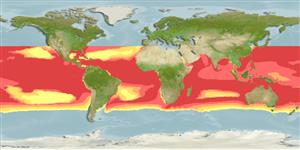
| Native range | All suitable habitat | Point map | Year 2050 |
|
| This map was computer-generated and has not yet been reviewed. |
| Isistius brasiliensis AquaMaps Data sources: GBIF OBIS |
Загрузить свой Фото и Видео
изображения | Видео | Изображение на Google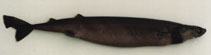 Isistius brasiliensis
Female Изображение сделано Harris, M.
изображения | Видео | Изображение на Google
Female Изображение сделано Harris, M.
Классификация / Имена народные названия | синонимы | Catalog of Fishes(род, виды) | ITIS | CoL | WoRMS | Cloffa
Пластиножаберные (акулы и скаты) (sharks and rays) > Squaliformes (Sleeper and dogfish sharks) > Dalatiidae (Sleeper sharks)
Etymology: Isistius: Etymology not explained, probably iso-, from isos (Gr.), equal; istius, from histion (Gr.), sail (i.e., dorsal fin), referring to its two similarly shaped and sized (and posterior) dorsal fins, a character Gill used to diagnose genus. José I. Castro, The Sharks of North America (Oxford University Press, 2011), suggests name may allude to the Egyptian goddess Isis, represented in statuary with her head veiled, or to the dark collar encircling throat of I. brasiliensis, “which could also suggest a veil over the head” (p. 145). This interpretation is rejected by the fact that Gill often used “istius” in the names of several genera distinguished (at least in part) by their dorsal fins (Acanthistius, Brachyistius, Caristius, Dichistius, Goniistius, Iniistius, Micromesistius, Nematistius) (See ETYFish); brasiliensis: -ensis, Latin suffix denoting place: off the coast of Brazil, type locality (See ETYFish).
More on authors: Quoy & Gaimard.
Etymology: Isistius: Etymology not explained, probably iso-, from isos (Gr.), equal; istius, from histion (Gr.), sail (i.e., dorsal fin), referring to its two similarly shaped and sized (and posterior) dorsal fins, a character Gill used to diagnose genus. José I. Castro, The Sharks of North America (Oxford University Press, 2011), suggests name may allude to the Egyptian goddess Isis, represented in statuary with her head veiled, or to the dark collar encircling throat of I. brasiliensis, “which could also suggest a veil over the head” (p. 145). This interpretation is rejected by the fact that Gill often used “istius” in the names of several genera distinguished (at least in part) by their dorsal fins (Acanthistius, Brachyistius, Caristius, Dichistius, Goniistius, Iniistius, Micromesistius, Nematistius) (See ETYFish); brasiliensis: -ensis, Latin suffix denoting place: off the coast of Brazil, type locality (See ETYFish).
More on authors: Quoy & Gaimard.
Окружающая среда: среда / климатическая зона / пределы глубины / диапазон распространения экология
морской батипелагический; мигрирует в океане (Ref. 51243); пределы глубины 0 - 3700 m (Ref. 55584), usually 0 - 1000 m (Ref. 89423). Deep-water; 35°N - 47°S, 180°W - 180°E
распространение Территории | регионы FAO | Экосистемы | места находок | карта точек | интродукции | Faunafri
Western Atlantic: Bahamas and southern Brazil. Eastern Atlantic: Cape Verde, Guinea to Sierra Leone, southern Angola and South Africa, including Ascension Island. Indo-Pacific: Mauritius to New Guinea, Lord Howe Island, and New Zealand (Ref. 26346), north to Japan and east to the Hawaiian Islands. Eastern Pacific: Easter Island (Ref. 9068) and the Galapagos.
Длина при первой зрелости / Размер / Вес / Возраст
половая зрелость: Lm 41.0, range 38 - 44 cm
Max length : 42.0 cm TL самец/пол неопределен; (Ref. 48844); 56.0 cm TL (female)
Max length : 42.0 cm TL самец/пол неопределен; (Ref. 48844); 56.0 cm TL (female)
Краткое описание определительные ключи | морфология | морфометрия
колючие лучи спинного плавника (общее число) : 0; колючие лучи анального плавника: 0; позвонки: 81 - 89. The cookiecutter shark Isistius brasiliensis is distinctive for the prominent dark collar marking around its throat, large nearly symmetrical caudal fin with a long ventral lobe over 2/3 length of dorsal caudal margin, and moderately large lower teeth in 25-32 rows. Eyes set anterior of head but sufficiently far back to lack an extensive anterior binocular field. Pectoral fins subquadrate; pelvic fins larger than dorsal fins (Ref.247). Tooth count: 30-37/25-31. Vertebral count: 81-89. Spiral valve count: 8-10 (Ref. 48844). Dark brown dorsally, paler ventrally except for blackish band across throat; tips of caudal lobe blackish (Ref. 6577). As with the other member of the genus Isistius , it has a characteristic small cigar-shaped body with two small close-set spineless dorsal fins far posterior on back, no anal fin, huge, triangular-cusped teeth without blades, short, bulbous snout and a unique suctorial lips (Ref. 247).
Body shape (shape guide): elongated.
Body shape (shape guide): elongated.
Oceanic species (Ref. 247). Epi- to bathypelagic at 1-3500 m (Ref. 58302). Makes diurnal vertical migrations from below 1,000 m in the day to or near the surface at night (Ref. 6871, 58302). Travels long vertical distances in excess of 2,000 to 3,000 m on a diel cycle (Ref. 247). Feeds free-living deepwater prey such as large squid, gonostomatids, crustaceans but is also a facultative ectoparasite on larger pelagic animals such as wahoo, tuna, billfishes, and cetaceans (Ref. 247). Ovoviviparous (Ref. 205), with 6-12 young per litter (Ref. 48844). The cookiecutter shark has specialized suctorial lips and a strongly modified pharynx that allow it to attach to the sides of it prey (Ref. 247). It then drives its saw-like lower dentition into the skin and flesh of its victim, twists about to cut out a conical plug of flesh, then pull free with the plug cradled by its scoop-like lower jaw and held by the hook-like upper teeth (Ref. 247). Teeth are shed as a complete unit; the lower teeth are swallowed, perhaps to maintain sufficient calcium levels in its body (Ref. 247). Interconnection at the bases of individual tooth allows a whole row of teeth to move if one tooth is touched. This shark is reported to radiate light for as long as three hours after its death. Not dangerous to people because of its small size and habitat preferences (Ref. 247).
Жизненный цикл и брачное поведение половая зрелость | размножение | нерест | икра | Плодовитость | личинки
Presumably ovoviviparous; 6 or 7 large eggs have been found in ovaries (Ref. 247). Distinct pairing with embrace (Ref. 205). Viviparous, without a yolk sac placenta, 6-12 young per litter. Males mature at about 36 cm, with a maximum length of 42 cm; females mature at 39 cm, with a maximum length of 56 cm. Size at birth is unknown. (Ref. 48844).
Основная ссылка
Загрузите свои рекомендации | ссылки | координатор : Compagno, Leonard J.V. | соавторы
Compagno, L.J.V., 1984. FAO Species Catalogue. Vol. 4. Sharks of the world. An annotated and illustrated catalogue of shark species known to date. Part 1 - Hexanchiformes to Lamniformes. FAO Fish. Synop. 125(4/1):1-249. Rome, FAO. (Ref. 247)
Статус Красного Списка МСОП (Ref. 130435: Version 2025-2 (Global))
Не вызывающий беспокойства (LC) ; Date assessed: 04 July 2017
CITES
Not Evaluated
Угроза для людей
Harmless (Ref. 247)
Использование человеком
рыболовство: не имеет хозяйственного значения
FAO - Publication: search | FishSource |
дополнительная информация
Трофическая экология
Пищевые предметы (добыча)
состав пищи
потребление пищи
Продовольственные пайки
хищники
Пищевые предметы (добыча)
состав пищи
потребление пищи
Продовольственные пайки
хищники
Динамика численности населения
Параметры роста
Макс. возраст / размер
Отношение длины к весу.
Отношение длины к длине.
Размерный состав
Преобразование массы
пополнение
численность
Параметры роста
Макс. возраст / размер
Отношение длины к весу.
Отношение длины к длине.
Размерный состав
Преобразование массы
пополнение
численность
Жизненный цикл
размножение
половая зрелость
Зрелость/Жиры относительно.
Плодовитость
нерест
Нерестовые скопления
икра
Развитие икры
личинки
динамика численности личинок
размножение
половая зрелость
Зрелость/Жиры относительно.
Плодовитость
нерест
Нерестовые скопления
икра
Развитие икры
личинки
динамика численности личинок
Физиология
Состав тела
Питательные вещества
Потребление кислорода
Тип плавания
Скорость плавания
Зрительные пигменты
Звук рыбы
Болезни и паразиты
Токсичность (LC50s)
Состав тела
Питательные вещества
Потребление кислорода
Тип плавания
Скорость плавания
Зрительные пигменты
Звук рыбы
Болезни и паразиты
Токсичность (LC50s)
генетика
Геном
генетика
Гетерозиготность
наследуемость
Генетическое разнообразие
Геном
генетика
Гетерозиготность
наследуемость
Генетическое разнообразие
Связанные с человеком
Системы аквакультуры
особенности рыбоводства
степень растяжения
Случаи заболевания сигуатерой
Марки, монеты и прочее.
Системы аквакультуры
особенности рыбоводства
степень растяжения
Случаи заболевания сигуатерой
Марки, монеты и прочее.
инструменты
Электронная книга | полевой определитель | определительные ключи | Длина-Частота | онтогенез | карта точек |
Catch-MSY |
Специальные отчеты
Проверить содержание в аквариумах | Проверить опубликованные видовые данные | Проверить опубликованные данные по аквакультуре
Скачать в формате XML
ресурсы в Интернет
AFORO (otoliths) | Aquatic Commons | BHL | Cloffa | Websites from users | Проверить FishWatcher | CISTI | Catalog of Fishes: род, виды | DiscoverLife | ECOTOX | FAO - Publication: search | Faunafri | Fishipedia | Fishtrace | GloBI | Google Books | Google Scholar | Google | IGFA World Record | национальные базы данных | OneZoom | Open Tree of Life | Otolith Atlas of Taiwan Fishes | PubMed | Reef Life Survey | Socotra Atlas | TreeBase | Tree of Life | Wikipedia: Вперёд, поиск | World Records Freshwater Fishing | Зоологическая летопись
Оценки, основанные на моделях
Предпочтительная температура (ссылка 123201): 3.1 - 9.7, mean 4.8 °C (based on 2327 cells).
Индекс филогенетического разнообразия (ссылка 82804): PD50 = 0.7510 [Uniqueness, from 0.5 = low to 2.0 = high].
Bayesian length-weight: a=0.00309 (0.00143 - 0.00669), b=3.14 (2.94 - 3.34), in cm total length, based on LWR estimates for this (Sub)family-body shape (Ref. 93245).
Трофический уровень (ссылка 69278): 4.3 ±0.3 se; based on diet studies.
устойчивость к внешним воздействиям (ссылка 120179): очень низкий, минимальное время удвоения популяции более 14 лет (Fec = 6).