



Isistius brasiliensis (Quoy & Gaimard, 1824)
Cookie cutter shark
مشاهدات خود را اضافه کنيد در Fish Watcher
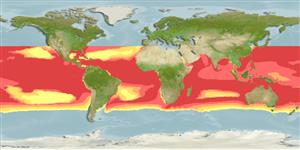
| Native range | All suitable habitat | Point map | Year 2050 |
|
| This map was computer-generated and has not yet been reviewed. |
| Isistius brasiliensis AquaMaps Data sources: GBIF OBIS |
را بارگذاری کني تصاوير و فيلم ها
عکس ها | فيلم ها | تصوير گوگل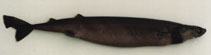 Isistius brasiliensis
Female عکس از Harris, M.
عکس ها | فيلم ها | تصوير گوگل
Female عکس از Harris, M.
رده بندی / نامها اسامي عام | مترادف | Catalog of Fishes(جنس, گونه ها) | ITIS | CoL | WoRMS | Cloffa
(كوسه ها و سپرماهيان) (sharks and rays) > Squaliformes (Sleeper and dogfish sharks) > Dalatiidae (Sleeper sharks)
Etymology: Isistius: Etymology not explained, probably iso-, from isos (Gr.), equal; istius, from histion (Gr.), sail (i.e., dorsal fin), referring to its two similarly shaped and sized (and posterior) dorsal fins, a character Gill used to diagnose genus. José I. Castro, The Sharks of North America (Oxford University Press, 2011), suggests name may allude to the Egyptian goddess Isis, represented in statuary with her head veiled, or to the dark collar encircling throat of I. brasiliensis, “which could also suggest a veil over the head” (p. 145). This interpretation is rejected by the fact that Gill often used “istius” in the names of several genera distinguished (at least in part) by their dorsal fins (Acanthistius, Brachyistius, Caristius, Dichistius, Goniistius, Iniistius, Micromesistius, Nematistius) (See ETYFish); brasiliensis: -ensis, Latin suffix denoting place: off the coast of Brazil, type locality (See ETYFish).
More on authors: Quoy & Gaimard.
Etymology: Isistius: Etymology not explained, probably iso-, from isos (Gr.), equal; istius, from histion (Gr.), sail (i.e., dorsal fin), referring to its two similarly shaped and sized (and posterior) dorsal fins, a character Gill used to diagnose genus. José I. Castro, The Sharks of North America (Oxford University Press, 2011), suggests name may allude to the Egyptian goddess Isis, represented in statuary with her head veiled, or to the dark collar encircling throat of I. brasiliensis, “which could also suggest a veil over the head” (p. 145). This interpretation is rejected by the fact that Gill often used “istius” in the names of several genera distinguished (at least in part) by their dorsal fins (Acanthistius, Brachyistius, Caristius, Dichistius, Goniistius, Iniistius, Micromesistius, Nematistius) (See ETYFish); brasiliensis: -ensis, Latin suffix denoting place: off the coast of Brazil, type locality (See ETYFish).
More on authors: Quoy & Gaimard.
محیط زیست: محیط زیست / منطقه آب و هوایی / تغييرات عمق / محدوده توزیع بوم شناسي
دريايي ناحیه ای از منطقه اقیانوسی با عمق بین 1000 تا 4000 متر. موجوداتی که در آبهای آزاد بین اعماق 1000 تا 4000 متر زندگی و تغذیه می کنند; اقیانوس رو (Ref. 51243); تغييرات عمق 0 - 3700 m (Ref. 55584), usually 0 - 1000 m (Ref. 89423). Deep-water; 35°N - 47°S, 180°W - 180°E
پراكنش سرزمینها | مناطق سازمان خوار و بار جهاني (FAO) | اکوسیستمها | ظهور | نقشه نقطه ای | معرفي | Faunafri
Western Atlantic: Bahamas and southern Brazil. Eastern Atlantic: Cape Verde, Guinea to Sierra Leone, southern Angola and South Africa, including Ascension Island. Indo-Pacific: Mauritius to New Guinea, Lord Howe Island, and New Zealand (Ref. 26346), north to Japan and east to the Hawaiian Islands. Eastern Pacific: Easter Island (Ref. 9068) and the Galapagos.
طول در اولین بلوغ / اندازه / وزن / سن
بلوغ: Lm 41.0, range 38 - 44 cm
Max length : 42.0 cm TL جنس نر / بدون خواص جنسي; (Ref. 48844); 56.0 cm TL (female)
Max length : 42.0 cm TL جنس نر / بدون خواص جنسي; (Ref. 48844); 56.0 cm TL (female)
توصيف مختصر كليدهاي شناسايي | ريخت شناسي | ريخت ستجي بوسيله انداره گيري
خارهاي باله پشتي (کل) : 0; خارهاي باله مخرجي: 0; مهره ها: 81 - 89. The cookiecutter shark Isistius brasiliensis is distinctive for the prominent dark collar marking around its throat, large nearly symmetrical caudal fin with a long ventral lobe over 2/3 length of dorsal caudal margin, and moderately large lower teeth in 25-32 rows. Eyes set anterior of head but sufficiently far back to lack an extensive anterior binocular field. Pectoral fins subquadrate; pelvic fins larger than dorsal fins (Ref.247). Tooth count: 30-37/25-31. Vertebral count: 81-89. Spiral valve count: 8-10 (Ref. 48844). Dark brown dorsally, paler ventrally except for blackish band across throat; tips of caudal lobe blackish (Ref. 6577). As with the other member of the genus Isistius , it has a characteristic small cigar-shaped body with two small close-set spineless dorsal fins far posterior on back, no anal fin, huge, triangular-cusped teeth without blades, short, bulbous snout and a unique suctorial lips (Ref. 247).
Body shape (shape guide): elongated.
Body shape (shape guide): elongated.
Oceanic species (Ref. 247). Epi- to bathypelagic at 1-3500 m (Ref. 58302). Makes diurnal vertical migrations from below 1,000 m in the day to or near the surface at night (Ref. 6871, 58302). Travels long vertical distances in excess of 2,000 to 3,000 m on a diel cycle (Ref. 247). Feeds free-living deepwater prey such as large squid, gonostomatids, crustaceans but is also a facultative ectoparasite on larger pelagic animals such as wahoo, tuna, billfishes, and cetaceans (Ref. 247). Ovoviviparous (Ref. 205), with 6-12 young per litter (Ref. 48844). The cookiecutter shark has specialized suctorial lips and a strongly modified pharynx that allow it to attach to the sides of it prey (Ref. 247). It then drives its saw-like lower dentition into the skin and flesh of its victim, twists about to cut out a conical plug of flesh, then pull free with the plug cradled by its scoop-like lower jaw and held by the hook-like upper teeth (Ref. 247). Teeth are shed as a complete unit; the lower teeth are swallowed, perhaps to maintain sufficient calcium levels in its body (Ref. 247). Interconnection at the bases of individual tooth allows a whole row of teeth to move if one tooth is touched. This shark is reported to radiate light for as long as three hours after its death. Not dangerous to people because of its small size and habitat preferences (Ref. 247).
چرخه زندگی و رفتار جفتگیری بلوغ | تولید مثل | تخم ریزی | تخم ها | باروری | توزاد ( لارو)
Presumably ovoviviparous; 6 or 7 large eggs have been found in ovaries (Ref. 247). Distinct pairing with embrace (Ref. 205). Viviparous, without a yolk sac placenta, 6-12 young per litter. Males mature at about 36 cm, with a maximum length of 42 cm; females mature at 39 cm, with a maximum length of 56 cm. Size at birth is unknown. (Ref. 48844).
مآخذ اصلی
مراجع خود را بارگذاری کنید | مراجع | هماهنگ كننده : Compagno, Leonard J.V. | همكاران
Compagno, L.J.V., 1984. FAO Species Catalogue. Vol. 4. Sharks of the world. An annotated and illustrated catalogue of shark species known to date. Part 1 - Hexanchiformes to Lamniformes. FAO Fish. Synop. 125(4/1):1-249. Rome, FAO. (Ref. 247)
وضعيت در فهرست قرمز IUCN (Ref. 130435: Version 2025-2 (Global))
حداقل نگرانی (LC) ; Date assessed: 04 July 2017
CITES
Not Evaluated
خطر برای انسان ها
Harmless (Ref. 247)
استفاده انسانی
ماهي گيري – شيلات: ارزش تحاري اندك
FAO - Publication: search | FishSource |
اطلاعات بيشتر
پویایی جمعیت
پارامترهای رشد
حداکثر سن/اندازه
نسبت طول-وزن.
طول-طول نسبی.
نوسانات طولی
تبدیل انبوه
بازسازی
فراواني
پارامترهای رشد
حداکثر سن/اندازه
نسبت طول-وزن.
طول-طول نسبی.
نوسانات طولی
تبدیل انبوه
بازسازی
فراواني
فیزیولوژی
ترکیب بدن
مواد مغذی
مصرف اکسیژن
نوع شنا
سرعت شنا
رنگدانههای بصری
صدای ماهی
بیماریها و انگلها
سمیت (LC50s)
ترکیب بدن
مواد مغذی
مصرف اکسیژن
نوع شنا
سرعت شنا
رنگدانههای بصری
صدای ماهی
بیماریها و انگلها
سمیت (LC50s)
ژنتيك
ژنوم
ژنتيك
هتروزیگوسیتی
وارث
تنوع ژنتیکی
ژنوم
ژنتيك
هتروزیگوسیتی
وارث
تنوع ژنتیکی
مرتبط با انسان
سیستمهای آبزیپروری
نمايه هاي آبزي پروري
نژادها
موارد سیگواترا
تمبر، سکه، متفرقه.
سیستمهای آبزیپروری
نمايه هاي آبزي پروري
نژادها
موارد سیگواترا
تمبر، سکه، متفرقه.
ابزارها
کتاب الکترونیکی | راهنماي صحرايي | كليدهاي شناسايي | امكان نرم افزاري بسامد طولي | ابزار تاريخ زيستي | نقشه نقطه ای |
گرفتن-MSY |
گزارش های ويژه
راجع به نگهداری آکواريم ملاحظه کنيد | برگه اطلاعات و مشخصات گونه ها را ملاحظه کنيد | برگه اطلاعات و مشخصات آبزی پروری را ببينيد
بارگيری XML
منابع اينترنتي
AFORO (otoliths) | Aquatic Commons | BHL | Cloffa | Websites from users | فيش واچر را ببينيد | CISTI | Catalog of Fishes: جنس, گونه ها | DiscoverLife | ECOTOX | FAO - Publication: search | Faunafri | Fishipedia | Fishtrace | GloBI | Google Books | Google Scholar | Google | IGFA World Record | پايگاه هاي داده ها | OneZoom | Open Tree of Life | Otolith Atlas of Taiwan Fishes | PubMed | Reef Life Survey | Socotra Atlas | TreeBase | Tree of Life | Wikipedia: برو, جستجو | World Records Freshwater Fishing | سوابق جانورشناسی
تخمینها بر اساس مدلها
دمای ترجیحی (مرجع 123201): 3.1 - 9.7, mean 4.8 °C (based on 2327 cells).
شاخص تنوع فیلوژنتیکی (مرجع 82804): PD50 = 0.7510 [Uniqueness, from 0.5 = low to 2.0 = high].
Bayesian length-weight: a=0.00309 (0.00143 - 0.00669), b=3.14 (2.94 - 3.34), in cm total length, based on LWR estimates for this (Sub)family-body shape (Ref. 93245).
سطح تروفیک (مرجع 69278): 4.3 ±0.3 se; based on diet studies.
جهندگی (مرجع 120179): خیلی آهسته, كمينه زمان لازم براي دو برابر شدن جمعيت بيش از 14 سال (Fec = 6).