



را بارگذاری کني تصاوير و فيلم ها
عکس ها | تصوير گوگل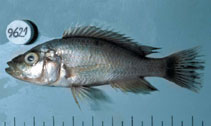 Haplochromis squamipinnis
Female عکس از Schraml, E.
عکس ها | تصوير گوگل
Female عکس از Schraml, E.
رده بندی / نامها اسامي عام | مترادف | Catalog of Fishes(جنس, گونه ها) | ITIS | CoL | WoRMS | Cloffa
> Cichliformes (Cichlids, convict blennies) > Cichlidae (Cichlids) > Pseudocrenilabrinae
Etymology: Haplochromis: Greek, Haploos = single + Greek, chromis = a fish, perhaps a perch (Ref. 45335); squamipinnis: Specific name not explained in original description, from the Latin 'squamus' for 'scale', and 'pinnis' for 'fin'; probably referring to minute scales on basal parts of dorsal and anal fins (Ref. 126312).
More on author: Regan.
Etymology: Haplochromis: Greek, Haploos = single + Greek, chromis = a fish, perhaps a perch (Ref. 45335); squamipinnis: Specific name not explained in original description, from the Latin 'squamus' for 'scale', and 'pinnis' for 'fin'; probably referring to minute scales on basal parts of dorsal and anal fins (Ref. 126312).
More on author: Regan.
محیط زیست: محیط زیست / منطقه آب و هوایی / تغييرات عمق / محدوده توزیع بوم شناسي
; آب شيرين موجوداتی که در محدوده وسیعی از آبهای آزاد از نزدیک بستر و یا روی کف بستر، در قسمت های میان آبی تا سطح آب و در برخی گونه ها با قابلیت پرواز، زندگی و تغذیه می کنند.; غير مهاجر. Tropical; 1°N - 1°S
پراكنش سرزمینها | مناطق سازمان خوار و بار جهاني (FAO) | اکوسیستمها | ظهور | نقشه نقطه ای | معرفي | Faunafri
Africa: Lake Edward system, including Lake Edward, Kazinga Channel and Lake George (Ref. 126312). Introduced into Lake Kachira, Lake Victoria drainage, Uganda (Ref. 126312).
اندازه / وزن / سن
توصيف مختصر كليدهاي شناسايي | ريخت شناسي | ريخت ستجي بوسيله انداره گيري
خارهاي باله پشتي (کل) : 15 - 16; شعاع نرم باله پشتي (کل) : 8 - 10; خارهاي باله مخرجي: 3; شعاع نرم باله مخرجي: 9 - 11; مهره ها: 29 - 30. Diagnosis: Species with a piscivorous morphology; body rather deep, body depth 32.4-39.3% of standard length; oral jaws very long, lower jaw length 47.8-58.6% of head length, narrow, lower jaw width 32.6-44.7% of lower jaw length, and steep, gape inclination 30-45°; outer oral teeth many and small, 39-79; dominant males slate blue (Ref. 126312). Amongst piscivorous species from the Lake Edward system, Haplochromis squamipinnis differs from all by presence vs. absence of minute scales on proximal part of dorsal fin, rarely few scales present in H. quasimodo (Ref. 126312). It further differs from H. latifrons and H. mentatus by the combination of small vs. large outer oral teeth, a larger number of outer uppr jaw teeth, 39-79 vs. 22-47; a steeper gape, 30-45° vs. 15-30°; and a deeper body, body depth 32.4-39.3% of standard length vs. 27.2-32.3%; from H. mentatus by dominant males uniformly slate blue vs. yellow-green with a red anterior part of flank (Ref. 126312). It further differs from H. rex, H. simba, H. glaucus and H. aquila by the combination of small vs. large outer oral teeth, a larger number of outer upper jaw teeth, 39-79 vs. 22-47; and dominant males uniformly slate blue vs. cream-coloured with an orange operculum, yellow with an orange anterior part of flank, light blue with a dusky to black head, or light grey with a black head, respectively; further from H. rex, H. simba and H. glaucus by a steeper gape, 30-45° vs. 15-30°; further from H. aquila by a smaller eye, eye diameter 23.1-29.7% of head length vs. 30.0-31.5% (Ref. 126312). It further differs from H. kimondo by a concave to straight vs. convex dorsal outline of head, a gentler snout inclination, 30-40° vs. 40-50°, and dominant males slate blue vs. grey dorsally and yellow ventrally; further from H. falcatus by a shorter head, head length 35.1-36.9% of standard length vs. 36.6-39.6%, and dominant males slate blue vs. olve-green with an orange-red anterior part of flank; further from H. curvidens and H. pardus by a deeper cheek, cheek depth 24.9-36.0% of head length vs. 20.8-24.9%; further from H. pardus by a larger adult size, maximum size 211 mm standard length vs. 96 mm, and colour pattern of small specimens less than 100 mm standard length light coloured vs. speckled to uniformly black (Ref. 126312). It differs from H. quasimodo by the combination of a broader interorbital area, interorbital width 48.6-55.6% of head width vs. 40.5-48.7%; a longer lower jaw, lower jaw length 47.8-58.6% of head length vs. 44.2-49.6%; a steeper gape inclination, 30-45° vs. 20-35°; and dominant males slate blue vs. light grey dorsally and blue-black ventrally (Ref. 126312).
Found in offshore benthic areas in mostly shallow and deep waters over muddy substrates (Ref. 4983, 126312). With a piscivorous diet (Ref. 558, 126312); insects contribute substantially to the diet of small Haplochromis squamipinnis (Ref. 558).
چرخه زندگی و رفتار جفتگیری بلوغ | تولید مثل | تخم ریزی | تخم ها | باروری | توزاد ( لارو)
Mouthbrooding by females.
مآخذ اصلی
مراجع خود را بارگذاری کنید | مراجع | هماهنگ كننده : Kullander, Sven O. | همكاران
van Oijen, M.J.P., J. Snoeks, P.H. Skelton, C. Maréchal and G.G. Teugels, 1991. Haplochromis. p. 100-184. In J. Daget, J.-P. Gosse, G.G. Teugels and D.F.E. Thys van den Audenaerde (eds.) Check-list of the freshwater fishes of Africa (CLOFFA). ISNB, Brussels; MRAC, Tervuren; and ORSTOM, Paris. Vol. 4. (Ref. 4983)
وضعيت در فهرست قرمز IUCN (Ref. 130435: Version 2025-2 (Global))
حداقل نگرانی (LC) ; Date assessed: 31 January 2006
CITES
Not Evaluated
خطر برای انسان ها
Harmless
استفاده انسانی
ماهي گيري – شيلات: از بی علاقه گی
FAO - Publication: search | FishSource |
اطلاعات بيشتر
پویایی جمعیت
پارامترهای رشد
حداکثر سن/اندازه
نسبت طول-وزن.
طول-طول نسبی.
نوسانات طولی
تبدیل انبوه
بازسازی
فراواني
پارامترهای رشد
حداکثر سن/اندازه
نسبت طول-وزن.
طول-طول نسبی.
نوسانات طولی
تبدیل انبوه
بازسازی
فراواني
چرخه زندگی
تولید مثل
بلوغ
بلوغ/آبششها
باروری
تخم ریزی
تجمعات تخمریزی
تخم ها
نمو تخم
توزاد ( لارو)
پويايي لاروي
تولید مثل
بلوغ
بلوغ/آبششها
باروری
تخم ریزی
تجمعات تخمریزی
تخم ها
نمو تخم
توزاد ( لارو)
پويايي لاروي
آناتومی
منطقه آبششي
مغز
اتولیت
منطقه آبششي
مغز
اتولیت
فیزیولوژی
ترکیب بدن
مواد مغذی
مصرف اکسیژن
نوع شنا
سرعت شنا
رنگدانههای بصری
صدای ماهی
بیماریها و انگلها
سمیت (LC50s)
ترکیب بدن
مواد مغذی
مصرف اکسیژن
نوع شنا
سرعت شنا
رنگدانههای بصری
صدای ماهی
بیماریها و انگلها
سمیت (LC50s)
مرتبط با انسان
سیستمهای آبزیپروری
نمايه هاي آبزي پروري
نژادها
موارد سیگواترا
تمبر، سکه، متفرقه.
سیستمهای آبزیپروری
نمايه هاي آبزي پروري
نژادها
موارد سیگواترا
تمبر، سکه، متفرقه.
ابزارها
کتاب الکترونیکی | راهنماي صحرايي | امكان نرم افزاري بسامد طولي | ابزار تاريخ زيستي | نقشه نقطه ای |
گرفتن-MSY |
گزارش های ويژه
راجع به نگهداری آکواريم ملاحظه کنيد | برگه اطلاعات و مشخصات گونه ها را ملاحظه کنيد | برگه اطلاعات و مشخصات آبزی پروری را ببينيد
بارگيری XML
منابع اينترنتي
AFORO (otoliths) | Aquatic Commons | BHL | Cloffa | Websites from users | فيش واچر را ببينيد | CISTI | Catalog of Fishes: جنس, گونه ها | DiscoverLife | ECOTOX | FAO - Publication: search | Faunafri | Fishipedia | Fishtrace | GloBI | Google Books | Google Scholar | Google | IGFA World Record | OneZoom | Open Tree of Life | Otolith Atlas of Taiwan Fishes | PubMed | Reef Life Survey | Socotra Atlas | TreeBase | Tree of Life | Wikipedia: برو, جستجو | World Records Freshwater Fishing | Zoobank | سوابق جانورشناسی
تخمینها بر اساس مدلها
شاخص تنوع فیلوژنتیکی (مرجع 82804): PD50 = 0.5000 [Uniqueness, from 0.5 = low to 2.0 = high].
Bayesian length-weight: a=0.01445 (0.00671 - 0.03113), b=2.99 (2.82 - 3.16), in cm total length, based on LWR estimates for this (Sub)family-body shape (Ref. 93245).
سطح تروفیک (مرجع 69278): 3.2 ±0.40 se; based on food items.
جهندگی (مرجع 120179): زياد, كمينه زمان لازم براي دو برابر شدن جمعيت ، كمتر از 15 ماه (Preliminary K or Fecundity.).