



Curculionichthys sabaji Roxo, Silva, Ochoa & Oliveira, 2015
আপনার আপলোড করুন ছবি এবং ভিডিও
Google image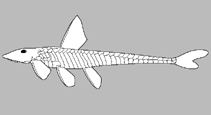 No image available for this species;
drawing shows typical species in Loricariidae.
Google image
drawing shows typical species in Loricariidae.
শ্রেণীবিভাগ / নাম প্রচলিত নাম সমূহ | প্রতিনাম সমূহ | Catalog of Fishes(গণ , প্রজাতি ) | ITIS | CoL | WoRMS | Cloffa
> Siluriformes (Catfishes) > Loricariidae (Armored catfishes) > Hypoptopomatinae
Etymology: Curculionichthys: Derived from the from the Latin 'curculionem' (elongated snout) and from the Greek 'ichthys' (fishes), in reference to the relatively elongated snouts of the fish species included in this genus; sabaji: Named for Dr. Mark Henry Sabaj Pérez, Collection Manager of Ichthyology, Academy of Natural Sciences of Philadelphia, in recognition of his dedication and contributions to study of Neotropical fishes especially from Rio Xingu basin (iXingu Project).
Eponymy: Dr Mark Henry Sabaj Pérez (d: 1969) is an ichthyologist and collection manager of fishes at the Academy of Natural Sciences of Philadelphia (2000–present). [...] (Ref. 128868), visit book page.
Etymology: Curculionichthys: Derived from the from the Latin 'curculionem' (elongated snout) and from the Greek 'ichthys' (fishes), in reference to the relatively elongated snouts of the fish species included in this genus; sabaji: Named for Dr. Mark Henry Sabaj Pérez, Collection Manager of Ichthyology, Academy of Natural Sciences of Philadelphia, in recognition of his dedication and contributions to study of Neotropical fishes especially from Rio Xingu basin (iXingu Project).
Eponymy: Dr Mark Henry Sabaj Pérez (d: 1969) is an ichthyologist and collection manager of fishes at the Academy of Natural Sciences of Philadelphia (2000–present). [...] (Ref. 128868), visit book page.
পরিবেশ: পরিবেশ / জলবায়ু অঞ্চল / গভীরতার পরিসীমা / বিতরণ পরিসীমা বাস্তুসংস্থান
; স্বাদু পানি তলদেশ বিহারী. Tropical
বিতরণ অঞ্চল | এফ এ ও এলাকাসমূহ | বাস্তুতন্ত্র | দৃষ্টিগোচর | মানচিত্র নির্দেশ করুন | প্রচলন | Faunafri
South America: Rio Xingu basin in Brazil.
আকৃতি / ওজন / বয়স
সংক্ষিপ্ত বিবরণ সনাক্তকারী নির্দেশক | বহিঃ অঙ্গ সংস্থান | মরফোমেট্রিক্স
পৃষ্ঠীয় নরম পাখনা দন্ড (মোট ) : 9; পায়ূর নরম পাখনা্তুন্ড: 5; কশেরুকা : 28. Curculionichthys sabaji is distinguished from all congeners by possessing several dark-brown spots distributed on the body (vs. a variety of pigment patterns, but none of which includes dark-brown spots). It also differs from all con¬geners, except C. coxipone and C. paresi by having the cleithrum with an area free of odontodes (vs. cleithrum completely covered with odontodes). Other characters useful to further diagnosed this species from other congengers include the following: some papillae of the lower lip arranged in a medial longitudinal series extending posterior to dentaries through the middle portion of the lower lip (vs. lower lip with all papillae randomly distributed in from C. piracanjuba, C. sagarana, and C. oliveirai); anterior profile of the head pointed (vs. rounded in C. coxipone and C. oliveirai); odontodes forming longitudinally aligned rows on head and trunk (vs. odontodes not forming longitudinally aligned rows on head and trunk in C. piracanjuba); small, inconspicuous odontodes forming rows on the head and trunk (vs. large, conspicuous odontodes forming rows on the head and the trunk in C. insperatus); caudal fin hyaline, with one dark strip extending from caudal peduncle base to the median caudal fin rays, and dark chromatophores irregular distributed almost forming two bands (vs. caudal fin hyaline, with dark blotch limited to caudal peduncle base in C. insperatus and C. sagarana); absence of one unpaired platelet on the dorsal portion of caudal peduncle (vs. one unpaired platelet on the dorsal portion of the caudal peduncle in C. sagarana); 6?9 lateral abdomen plates (vs. 4?5 lateral abdomen plates in C. oliveirai); absence of contrasting dark geometric spots on the anterodorsal region of body (vs. pres¬ence of geometric spots in C. paresi); not having hypertrophied odontodes on the snout tip (vs. hypertrophied odontodes on the snout tip in C. piracanjuba). In addition, Curculionichthys sabaji can be distinguished by having a shorter dorsal fin spine (18.5?22.7% of SL, vs. 25.2?27.0% of SL in C. paresi; 23.2?26.9% of SL in C. insperatus); a shorter pectoral-fin spine (18.9?23.4% of SL, vs. 27.0?30.1% of SL in C. paresi); a deeper caudal peduncle (7.0?10.0% of SL, vs. 10.8?12.5% of SL in C. oliveirai; 10.2?11.3% of SL in C. paresi); a deeper head (40.9?49.1% of HL, vs. 51.6?59.2% of HL in C. oliveirai); a longer head (34.3?38.6% of SL, vs. 27.9?32.2% of SL in C. piracanjuba; 28.8?33.3% of SL in C. luteofrenatus); a shorter snout (45.5?56.9% of HL, vs. 67.7?72.7% of HL in C. piracanjuba; 67.0?75.3% of HL in C. luteofrenatus) and a shorter interorbital width (30.3?35.7% of HL, vs. 36.7?40.9% of HL in C. piracanjuba; 67.0?75.3% of HL in C. luteofrenatus) (Ref. 113800).
Body shape (shape guide): elongated.
Body shape (shape guide): elongated.
জীবনচক্র এবং প্রজনন আচরণ পরিপক্কতা | প্রজনন | ডিম ছাড়া | ডিমসমূহ | ডিম্বধারন ক্ষমতা | শুককীট
প্রধান তথ্যসূত্র
আপনার রেফারেন্স আপলোড করুন | সূত্র সংখ্যা | সমম্বয়কারী : Fisch-Muller, Sonia | সহযোগী
Roxo, F.F., G.S.C. Silva, L.E. Ochoa and C. Oliveira, 2015. Description of a new genus and three new species of Otothyrinae (Siluriformes, Loricariidae). Zookeys 534:103-134. (Ref. 113800)
CITES
Not Evaluated
মানুষের জন্য হুমকি
Harmless
মানুষের ব্যবহার
মৎস্য: আকর্ষণবিহীণ
FAO - Publication: search | FishSource |
আরো তথ্য
ট্রফিক বাস্তুতন্ত্র
খাদ্যদ্রব্য (শিকার)
পথ্য উপাদান
খাদ্য গ্রহণ
খাদ্য রেশন
শিকারী প্রাণী সমূহ
খাদ্যদ্রব্য (শিকার)
পথ্য উপাদান
খাদ্য গ্রহণ
খাদ্য রেশন
শিকারী প্রাণী সমূহ
জনসংখ্যার গতিশীলতা
বৃদ্ধির পরামিতি
সর্বোচ্চ বয়স / আকার
দৈর্ঘ্য-ওজন সম্পর্ক।
দৈর্ঘ্য-দৈর্ঘ্য rel.
দৈর্ঘ্য-ফ্রিকোয়েন্সি
গণ রূপান্তর
নির্বাচন
প্রাচুর্য
বৃদ্ধির পরামিতি
সর্বোচ্চ বয়স / আকার
দৈর্ঘ্য-ওজন সম্পর্ক।
দৈর্ঘ্য-দৈর্ঘ্য rel.
দৈর্ঘ্য-ফ্রিকোয়েন্সি
গণ রূপান্তর
নির্বাচন
প্রাচুর্য
জীবনচক্র
প্রজনন
পরিপক্কতা
পরিপক্কতা/গিলস সম্পর্কিত।
ডিম্বধারন ক্ষমতা
ডিম ছাড়া
ডিম পাড়ার সমষ্টি
ডিমসমূহ
ডিমের বিকাশ
শুককীট
শুককীটের সত্রিুয়তা
প্রজনন
পরিপক্কতা
পরিপক্কতা/গিলস সম্পর্কিত।
ডিম্বধারন ক্ষমতা
ডিম ছাড়া
ডিম পাড়ার সমষ্টি
ডিমসমূহ
ডিমের বিকাশ
শুককীট
শুককীটের সত্রিুয়তা
অ্যানাটমি
ফুলকা এলাকা
মস্তিষ্ক
ওটোলিথ
ফুলকা এলাকা
মস্তিষ্ক
ওটোলিথ
শারীরবিদ্যা
শরীরের গঠন
পৌষ্টিক উপাদান
অম্লজান ব্যবহার
সাঁতারের ধরণ
সাতাঁরের গতি
ভিজ্যুয়াল রঙ্গক
মাছের শব্দ
রোগ এবং পরজীবী
বিষাক্ততা (LC50s)
শরীরের গঠন
পৌষ্টিক উপাদান
অম্লজান ব্যবহার
সাঁতারের ধরণ
সাতাঁরের গতি
ভিজ্যুয়াল রঙ্গক
মাছের শব্দ
রোগ এবং পরজীবী
বিষাক্ততা (LC50s)
বংশানুগতিবিদ্যা
জিনোম
বংশানুগতিবিদ্যা
হেটেরোজাইগোসিটি
উতরাধিকার সুত্রে পাওয়া যোগ্যতা
জিনগত বৈচিত্র্য
জিনোম
বংশানুগতিবিদ্যা
হেটেরোজাইগোসিটি
উতরাধিকার সুত্রে পাওয়া যোগ্যতা
জিনগত বৈচিত্র্য
মানব সম্পর্কিত
জলজ চাষ ব্যবস্থা
একুয়াকালচার নকশাসমূহ
বংশ
সিগুয়েটেরার কেস
ডাকটিকিট, মুদ্রা, বিবিধ।
জলজ চাষ ব্যবস্থা
একুয়াকালচার নকশাসমূহ
বংশ
সিগুয়েটেরার কেস
ডাকটিকিট, মুদ্রা, বিবিধ।
হাতিয়ার
ই-বুক | মাঠ পর্যায়ের নির্দেশক | দৈঘ্যর্ের ঘটন সংখ্যা জাদুকর | জীবন ইতিহাস হাতিয়ার | মানচিত্র নির্দেশ করুন |
ক্যাচ-এমএসওয়াই |
বিশেষ প্রতিবেদন
অ্যাকোয়ারিয়াম রক্ষণাবেক্ষণের জন্য পরীক্ষা করুন | প্রজাতির তথ্যপত্র পরীক্ষা করুন | জলজ পালন সম্পর্কিত তথ্যপত্র পরীক্ষা করুন
XML ডাউনলোড করুন
ইন্টারনেট সুত্র
AFORO (otoliths) | Aquatic Commons | BHL | Cloffa | Websites from users | Check FishWatcher | CISTI | Catalog of Fishes: গণ , প্রজাতি | DiscoverLife | ECOTOX | FAO - Publication: search | Faunafri | Fishipedia | Fishtrace | GloBI | Google Books | Google Scholar | Google | IGFA World Record | OneZoom | Open Tree of Life | Otolith Atlas of Taiwan Fishes | PubMed | Reef Life Survey | Socotra Atlas | TreeBase | জীবন বৃক্ষ | Wikipedia: Go, অনুসন্ধান | World Records Freshwater Fishing | Zoobank | জুলজিকাল রেকর্ড
মডেলের উপর ভিত্তি করে অনুমান
ফাইলোজেনেটিক বৈচিত্র্য সূচক (সূত্র 82804): PD50 = 0.5001 [Uniqueness, from 0.5 = low to 2.0 = high].
Bayesian length-weight: a=0.00977 (0.00434 - 0.02202), b=3.06 (2.87 - 3.25), in cm total length, based on LWR estimates for this (Sub)family-body shape (Ref. 93245).
ট্রফিক পর্যায়ে (সূত্র 69278): 2.7 ±0.1 se; based on size and trophs of closest relatives
স্থিতিস্থাপক (সূত্র 120179): উচ্চ, সর্বনিম্ন প্রজন দ্বিগুনের সময় ১৫ মাস (Preliminary K or Fecundity.).