



Etmopterus granulosus (Günther, 1880)
Southern lanternshark
अपना अवलोकन जोड़ें Fish Watcher
| Native range | All suitable habitat | Point map | Year 2050 |

|
| This map was computer-generated and has not yet been reviewed. |
| Etmopterus granulosus AquaMaps Data sources: GBIF OBIS |
अपना अपलोड करें तस्वीरें और वीडियो
तस्वीरे | Google image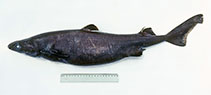 Etmopterus granulosus
चित्र स्रोत: AP Graham, K.
तस्वीरे | Google image
चित्र स्रोत: AP Graham, K.
वर्गीकरण / नाम आम नाम | उपशब्द | Catalog of Fishes(वर्ग, प्रजाति) | ITIS | CoL | WoRMS | Cloffa
इलाज़मौबरांकी (शारक और रेज़) (sharks and rays) > Squaliformes (Sleeper and dogfish sharks) > Etmopteridae (Lantern sharks)
Etymology: Etmopterus: Greek, ethmos, -ou = sieve or ethmoides bone + Greek, pteron = wing, fin (Ref. 45335).
More on author: Günther.
Etymology: Etmopterus: Greek, ethmos, -ou = sieve or ethmoides bone + Greek, pteron = wing, fin (Ref. 45335).
More on author: Günther.
पर्यावरण: पर्यावरण / जलवायु क्षेत्र / गहराई सीमा / वितरण सीमा पारिस्थितिकी
समुद्री pelagic-oceanic; गहराई सीमा 220 - 1638 m (Ref. 132203), usually 400 - 600 m (Ref. 124555). Deep-water; 29°S - 59°S
वितरण प्रदेशों | ऐफ ऐ ओ क्षेत्र | पारिस्थितिकी प्रणालियों | संयोग | बिन्दु नक्शा | भूमिका | Faunafri
Indian Ocean, Southern Pacific and Southern Atlantic (Ref. 106604). Reported from off the western Cape coast but the identity of South African specimens is questionable (Ref. 127434).
प्रथम परिपक्वता पर लंबाई / आकार / वज़न / आयु
परिपक्व अवधि: Lm ? range ? - 75 cm
Max length : 67.0 cm TL पुल्लिंग / अलिंग; (Ref. 132178); 94.0 cm TL (female); अधिकतम प्रकाशित वज़न: 1.7 kg (Ref. 132178); अधिकतम प्रकाशित वज़न: 1.7 kg
Max length : 67.0 cm TL पुल्लिंग / अलिंग; (Ref. 132178); 94.0 cm TL (female); अधिकतम प्रकाशित वज़न: 1.7 kg (Ref. 132178); अधिकतम प्रकाशित वज़न: 1.7 kg
संक्षिप्त वर्णन पहचान कुंजी | आकृति विज्ञान | मौरफोमैटरिक्स
पृष्ठीय रीढ़ (सम्पूर्ण) : 2; गुदा कांटा: 0. A large, heavy-bodied lanternshark with a big head (Ref. 5578), bladelike unicuspidate teeth in lower jaw and teeth with cusps and cusplets in upper jaw, stocky body, conspicuous lines of denticles on body, conspicuous black markings on underside of body and tail, with tail marking short and not extending far posteriorly (Ref. 247). Dark brown or black in color, possibly darker below (Ref. 26346).
Body shape (shape guide): elongated.
Body shape (shape guide): elongated.
Found on outermost continental shelves and upper slopes (Ref. 247). Feeds on bony fishes including lanternfish, barracudina, synaphobranchid eels, oreo dories, hake, rattails, bathylagids, idiacanthids; also on squids (including histioteuthids and ommastrephids), octopuses, euphausiids, mysids, penaeid shrimp, salps, sponges and ribbonworms (Nemertina) (Ref. 124555). Bioluminescence observed, with the dorsal photophores, flank markings, and brighter pectoral fin and claspers are likely to be used for intraspecific communications and the ventrally emitted light is likely to be used for counterillumination (Ref. 123656). Ovoviviparous (Ref. 205), with 10-13 in a litter, size at birth about 18 cm (Ref. 6871) to possibly 30 cm (Ref. 124555), Minimum depth reported taken from Ref. 247.
जीवन चक्र और संभोग व्यवहार परिपक्व अवधि | पुनरुत्पत्ति | मछलीऔ का अंडे देना | अंडे | उपजाऊपन | लार्वा
Ovoviviparous, with 10-13 in a litter (Ref. 6871). Size at birth about 18 cm (Ref. 6871). Distinct pairing with embrace (Ref. 205).
मुख्य संदर्भ
अपने संदर्भ अपलोड करें | संदर्भ | संयोजक | सहयोगीयो
Compagno, L.J.V., 1984. FAO Species Catalogue. Vol. 4. Sharks of the world. An annotated and illustrated catalogue of shark species known to date. Part 1 - Hexanchiformes to Lamniformes. FAO Fish. Synop. 125(4/1):1-249. Rome, FAO. (Ref. 247)
आईयूसीएन रेड लिस्ट स्थिति (Ref. 130435: Version 2025-2 (Global))
Least Concern (LC) ; Date assessed: 02 July 2017
CITES
Not Evaluated
मनुष्यों के लिए ख़तरा
Harmless
मानव उपयोग
मात्स्यिकी: कोई रुचि बग़ैर
FAO - Publication: search | FishSource | हमारे चारों ओर समुद्र
अधिक जानकारी
जनसंख्या गतिशीलता
विकास मापदंड
अधिकतम आयु/आकार
लंबाई-वजन संबंध
लंबाई-लंबाई संबंध
लंबाई-आवृत्तियाँ
सामूहिक रूपांतरण
भर्ती
बहुतायत
विकास मापदंड
अधिकतम आयु/आकार
लंबाई-वजन संबंध
लंबाई-लंबाई संबंध
लंबाई-आवृत्तियाँ
सामूहिक रूपांतरण
भर्ती
बहुतायत
जीवन चक्र
पुनरुत्पत्ति
परिपक्व अवधि
परिपक्वता/गिल्स संबंध
उपजाऊपन
मछलीऔ का अंडे देना
स्पॉनिंग एकत्रीकरण
अंडे
अंडे का विकास
लार्वा
लारवल गतिकी
पुनरुत्पत्ति
परिपक्व अवधि
परिपक्वता/गिल्स संबंध
उपजाऊपन
मछलीऔ का अंडे देना
स्पॉनिंग एकत्रीकरण
अंडे
अंडे का विकास
लार्वा
लारवल गतिकी
फिजियोलॉजी
शारीरिक संरचना
पोषक तत्व
प्राणवायु की खपत
तैराकी का प्रकार
तैराकी की गति
दृश्य वर्णक
मछली की आवाज
रोग एवं परजीवी
विषाक्तता (LC50s)
शारीरिक संरचना
पोषक तत्व
प्राणवायु की खपत
तैराकी का प्रकार
तैराकी की गति
दृश्य वर्णक
मछली की आवाज
रोग एवं परजीवी
विषाक्तता (LC50s)
मानव संबंधी
जलकृषि प्रणालियाँ
जलीयकृषि रूपरेखाऐ
खींच
सिगुएटेरा के मामले
टिकट, सिक्के, विविध.
जलकृषि प्रणालियाँ
जलीयकृषि रूपरेखाऐ
खींच
सिगुएटेरा के मामले
टिकट, सिक्के, विविध.
साधन
ई-पुस्तक | कार्यक्षेत्र पथप्रदर्शक | लंबाई आवृति इंद्रजालिक | जीवन-इतिहास उपकरण | बिन्दु नक्शा |
कैच-एमएसवाई |
विशेष रिपोर्ट
एक्वेरियम के रखरखाव की जांच करें | प्रजातियों के तथ्य पत्रक की जाँच करें | जलीय कृषि तथ्य पत्रक की जाँच करें
XML डाउनलोड करें
सारांश पृष्ठ | बिंदु डेटा | आम नाम | तस्वीरें
इंटरनेट स्रोत
AFORO (otoliths) | Aquatic Commons | BHL | Cloffa | Websites from users | Check FishWatcher | CISTI | Catalog of Fishes: वर्ग, प्रजाति | DiscoverLife | ECOTOX | FAO - Publication: search | Faunafri | Fishipedia | Fishtrace | GloBI | Google Books | Google Scholar | Google | IGFA World Record | OneZoom | Open Tree of Life | Otolith Atlas of Taiwan Fishes | PubMed | Reef Life Survey | Socotra Atlas | TreeBase | Tree of Life | Wikipedia: Go, खोज | World Records Freshwater Fishing | प्राणीशास्त्रीय अभिलेख
मॉडल पर आधारित अनुमान
पसंदीदा तापमान (संदर्भ 123201): 1.7 - 9.2, mean 3.2 °C (based on 174 cells).
जातिवृति विविधता सूचकांक (संदर्भ 82804): PD50 = 0.5000 [Uniqueness, from 0.5 = low to 2.0 = high].
Bayesian length-weight: a=0.00380 (0.00314 - 0.00460), b=3.07 (3.01 - 3.13), in cm total length, based on LWR estimates for this species (Ref. 93245).
ट्रॉफिक स्तर (संदर्भ 69278): 4.2 ±0.2 se; based on diet studies.
लौटाव (संदर्भ 120179): निम्न, न्यूनतम जनसंख्या दुगनी होने का समय 4.5 - 14 वर्ष। (Fec=10).
पोषक तत्व (Ref. 124155): Calcium = 7.13 [1.44, 36.37] mg/100g; Iron = 0.343 [0.085, 1.239] mg/100g; Protein = 19.4 [16.8, 21.5] %; Omega3 = 0.328 [0.118, 1.004] g/100g; Selenium = 12.4 [3.4, 39.9] μg/100g; VitaminA = 20.1 [4.0, 113.6] μg/100g; Zinc = 0.385 [0.186, 0.758] mg/100g (wet weight);