



Uploaden van uw Foto's en video's
Google afbeelding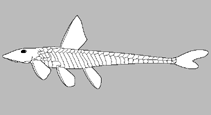 No image available for this species;
drawing shows typical species in Loricariidae.
Google afbeelding
drawing shows typical species in Loricariidae.
Classificatie / Namen Lokale namen | Synoniemen | Catalog of Fishes(Genus, Soort(en)) | ITIS | CoL | WoRMS | Cloffa
> Siluriformes (Catfishes) > Loricariidae (Armored catfishes) > Hypoptopomatinae
Etymology: Hisonotus: Greek, isos = equal + Greek, noton = back (Ref. 45335); acuen: The specific name 'acuen' is in reference to the Xavante indigenous peoples, who in anthropological literature are known as 'acuen'. These people are constituted by the natives inhabiting the east of the Mato Grosso State, living in the margins of the rivers Culuene, Xingu, Mortes and Araguaia.
Eponymy: The Xavante are an indigenous ethnic group who live in the region inhabiting region between Rio das Mortes and Rio Culuene, Mato Grosso, Brazil. They are known in anthropological literature as acuen. (See also Xavante) (Ref. 128868), visit book page.
Etymology: Hisonotus: Greek, isos = equal + Greek, noton = back (Ref. 45335); acuen: The specific name 'acuen' is in reference to the Xavante indigenous peoples, who in anthropological literature are known as 'acuen'. These people are constituted by the natives inhabiting the east of the Mato Grosso State, living in the margins of the rivers Culuene, Xingu, Mortes and Araguaia.
Eponymy: The Xavante are an indigenous ethnic group who live in the region inhabiting region between Rio das Mortes and Rio Culuene, Mato Grosso, Brazil. They are known in anthropological literature as acuen. (See also Xavante) (Ref. 128868), visit book page.
Milieu: milieu / Klimaatzone / Diepte / verspreidingsgebied Ecologie
; zoet water demersaal. Tropical
Verspreiding Gebieden | FAO regio's | Ecosystemen | Voorkomen | Verspreidingskaart | Introducties | Faunafri
South America: upper rio Xingu basin in Mato Grosso State, Brazil.
Grootte / Gewicht / Leeftijd
Korte beschrijving Determinatiesleutels | Morfologie | Morfometrie
Dorsale zachte stralen (totaal) : 9; Anale zachte stralen: 6; Wervels: 27. Hisonotus acuen is distinguished from all congeners with the exception of H. bockmanni, H. chromodontus, H. insperatus, H. luteofrenatus, H. oliveirai and H. paresi by the possession of a functional V-shaped spinelet, (vs. non-functional spinelet, a square ossification, or spinelet absent). It can be diagnosed from H. insperatus, H. paresi, H. luteofrenatus, and H. oliveirai by having odontodes not forming longitudinally aligned rows on head and trunk (vs. odontodes forming longitudinally aligned rows on head and trunk). It differs from H. insperatus and H. luteofrenatus by having 4-5 lateral series of abdominal plates (vs. 6?8 and 7?8, respectively) and from H. insperatus by having 22-24 lateral median plates (vs. 25?26). It can be distinguished from H. luteofrenatus, H. oliveirai and H. paresi by having a single rostral plate at tip of snout (vs. presence of a pair of rostral plates at tip of snout); from H. bockmanni by the absence of unpaired platelets at typical adipose fin position (vs. presence of the unpaired platelets); from H. chromodontus by having yellowish tipped teeth (vs. reddish-brown teeth), caudal-fin color pattern mostly hyaline, except for dark blotch on origin of rays, and dark brown chromatophores largely concentrated on rays near lower caudal spine (vs. caudal-fin mostly dark brown with chromatophores largely concentrated on rays and membranes, and with two hyaline spots on middle of the fin); from H. paresi by the absence of conspicuous dark dorsal saddle and longitudinal stripe on the body (vs. inconspicuous dark saddles and stripe of the body) and from H. insperatus by having 14-27 premaxillary teeth (vs. 6?12) and 12-23 dentary teeth (vs. 5?11) (Ref. 106073).
Body shape (shape guide): elongated.
Body shape (shape guide): elongated.
Facultative air-breathing in the genus (Ref. 126274); Inhabits flat areas in creeks of headwaters of the rio Xingu basin in places of shallow clear waters with low current. Found associated with vegetation that covers the bottom and the border of the headwaters (Ref. 106073).
Levenscyclus en paargedrag Maturiteit | Voortplanting | Paaien | Eieren | Fecunditeit | Larven
Hoofdreferentie
Upload uw referenties | Referenties | Coördinator : Fisch-Muller, Sonia | Medewerkers
Silva, G.S.C., F.F. Roxo and C. Oliveira, 2014. Hisonotus acuen, a new and phenotypically variable cascudinho (Siluriformes, Loricariidae, Hypoptopomatinae) from the upper rio Xingu basin, Brazil. ZooKeys 442:105-125. (Ref. 106073)
CITES
Not Evaluated
Gevaar voor de mens
Harmless
Gebruik door de mens
FAO - Publication: search | FishSource |
Meer informatie
Trofische ecologie
Voedsel (prooien)
Dieetsamenstelling
Voedselconsumptie
Voedselrantsoenen
Predatoren
Voedsel (prooien)
Dieetsamenstelling
Voedselconsumptie
Voedselrantsoenen
Predatoren
Populatiedynamica
Groeiparameters
Max. leeftijden / maten
Lengte-gewicht rel.
Lengte-lengte rel.
Lengtefrequenties
Massaconversie
Rekrutering
Abundantie
Groeiparameters
Max. leeftijden / maten
Lengte-gewicht rel.
Lengte-lengte rel.
Lengtefrequenties
Massaconversie
Rekrutering
Abundantie
Levenscyclus
Voortplanting
Maturiteit
Rijpheid/kieuwen rel.
Fecunditeit
Paaien
Paaibestanden
Eieren
Ontwikkeling van de eieren
Larven
Larvale populatiedynamiek
Voortplanting
Maturiteit
Rijpheid/kieuwen rel.
Fecunditeit
Paaien
Paaibestanden
Eieren
Ontwikkeling van de eieren
Larven
Larvale populatiedynamiek
Anatomie
Kieuwoppervlak
Hersenen
Otoliet
Kieuwoppervlak
Hersenen
Otoliet
Fysiologie
Lichaamssamenstelling
Voedingsstoffen
Zuurstofverbruik
Type zwemmen
Zwemsnelheid
Visuele pigmenten
Vis geluid
Ziekten en parasieten
Toxiciteit (LC50)
Lichaamssamenstelling
Voedingsstoffen
Zuurstofverbruik
Type zwemmen
Zwemsnelheid
Visuele pigmenten
Vis geluid
Ziekten en parasieten
Toxiciteit (LC50)
Genetica
genoom
Genetica
Heterozygositeit
Erfelijkheid
Genetische diversiteit
genoom
Genetica
Heterozygositeit
Erfelijkheid
Genetische diversiteit
Menselijk gerelateerd
Aquacultuursystemen
Aquacultuurprofielen
Kweeklijnen
Ciguatera gevallen
Postzegels, munten, diversen.
Aquacultuursystemen
Aquacultuurprofielen
Kweeklijnen
Ciguatera gevallen
Postzegels, munten, diversen.
Tools
Speciale rapporten
Bekijk gegevens voor het houden in een aquarium | Bekijk Fact Sheets voor de soort | Bekijk Aquacultuur Fact Sheets
Download XML
Internetbronnen
AFORO (otoliths) | Aquatic Commons | BHL | Cloffa | Websites from users | Bekijk FishWatcher | CISTI | Catalog of Fishes: Genus, Soort(en) | DiscoverLife | ECOTOX | FAO - Publication: search | Faunafri | Fishipedia | Fishtrace | GloBI | Google Books | Google Scholar | Google | IGFA World Record | OneZoom | Open Tree of Life | Otolith Atlas of Taiwan Fishes | PubMed | Reef Life Survey | Socotra Atlas | TreeBase | Tree of Life | Wikipedia: ga naar, zoek | World Records Freshwater Fishing | Zoobank | Zoological Record
Schattingen op basis van modellen
Fylogenetische diversiteitsindex (Ref. 82804): PD50 = 0.5000 [Uniqueness, from 0.5 = low to 2.0 = high].
Bayesian length-weight: a=0.00977 (0.00434 - 0.02202), b=3.06 (2.87 - 3.25), in cm total length, based on LWR estimates for this (Sub)family-body shape (Ref. 93245).
Trofisch niveau (Ref. 69278): 2.5 ±0.1 se; based on size and trophs of closest relatives
Weerstandsvermogen (Ref. 120179): Hoog, minimale populatieverdubbelingstijd minder dan 15 maanden (Preliminary K or Fecundity.).