



Waarneming toevoegen in Fish Watcher
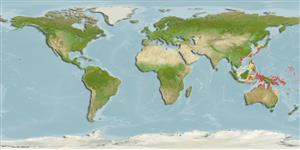
| Native range | All suitable habitat | Point map | Year 2050 |
|
| This map was computer-generated and has not yet been reviewed. |
| Gobiodon aoyagii AquaMaps Data sources: GBIF OBIS |
Uploaden van uw Foto's en video's
Afbeeldingen | Google afbeelding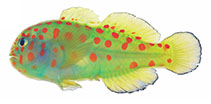 Gobiodon aoyagii
Female Afbeelding van Suzuki, T.
Afbeeldingen | Google afbeelding
Female Afbeelding van Suzuki, T.
Classificatie / Namen Lokale namen | Synoniemen | Catalog of Fishes(Genus, Soort(en)) | ITIS | CoL | WoRMS | Cloffa
> Gobiiformes (Gobies) > Gobiidae (Gobies) > Gobiinae
Etymology: Gobiodon: Latin, gobius = gudgeon + Greek, odous = teeth (Ref. 45335); aoyagii: Named for Hyoji Aoyagi (1912-1971), a Japanese ichthyologist.
Eponymy: Dr Hyoji Aoyagi (1912–1971) was a Japanese ichthyologist. [...] (Ref. 128868), visit book page.
Etymology: Gobiodon: Latin, gobius = gudgeon + Greek, odous = teeth (Ref. 45335); aoyagii: Named for Hyoji Aoyagi (1912-1971), a Japanese ichthyologist.
Eponymy: Dr Hyoji Aoyagi (1912–1971) was a Japanese ichthyologist. [...] (Ref. 128868), visit book page.
Milieu: milieu / Klimaatzone / Diepte / verspreidingsgebied Ecologie
marien benthopelagisch; diepte 2 - 10 m (Ref. 94251). Subtropical
Verspreiding Gebieden | FAO regio's | Ecosystemen | Voorkomen | Verspreidingskaart | Introducties | Faunafri
Western Pacific: Japan to Australia, including the Philippines, East Indies (Cocos Is. Or Indonesia) and Papua New Guinea.
Grootte / Gewicht / Leeftijd
Korte beschrijving Determinatiesleutels | Morfologie | Morfometrie
Dorsale stekels (totaal) : 7; Dorsale zachte stralen (totaal) : 9 - 11; Anale stekels: 1; Anale zachte stralen: 8 - 9; Wervels: 25 - 27. This species is distinguished by the following characters: many reddish spots/stripes on a yellow-green or sky-blue body; when alive or freshly-collected, it differs from similar reddish-spotted/lined congeners, G. erythrospilus and G. histrio, by having the following unique coloration: 2 reddish circular spots (rather than linear spots) on pectoral-fin base (vs. reddish markings on pectoral-fin base usually forming vertical bars in G. erythrospilus and G. histrio, except for small specimens of the former with discontinuous bars); reddish spots on ventral surface of head (vs. none); reddish crescent-like bar along bases of pectoral fin rays absent (vs. present); in in alcohol-preserved specimens, all reddish spots are largely or entirely faded, but this species can be readily identified by having its unique squamation, i.e., 3-4 rows of weakly ctenoid and/or cycloid scales on caudal peduncle (vs. no scales or a single row of minute cycloid scales on caudal peduncle in the congeners); with a deep, inflected interopercular-isthmus groove; unsegmented caudal-fin rays, upper with 5-6, lower with 4-6; no distinct dusky spot at dorsoposterior corner of operculum (Ref. 94251).
Body shape (shape guide): short and / or deep; Cross section: oval.
Body shape (shape guide): short and / or deep; Cross section: oval.
Facultative air-breathing in the genus (Ref. 126274); Observed in protected bays and reef edges and slopes of Japan, in the interstices among branches of corals of the genus Acropora. In Papua New Guinea and the Great Barrier Reef, it is reported to almost totally be confined to Acropora tenuis (Ref. 94251).
Levenscyclus en paargedrag Maturiteit | Voortplanting | Paaien | Eieren | Fecunditeit | Larven
Hoofdreferentie
Upload uw referenties | Referenties | Coördinator | Medewerkers
Shibukawa, K., Suzuki, T. and M. Aizawa, 2013. Gobiodon aoyagii, a new coral goby (Actinopterygii, Gobiidae, Gobiinae) from the West Pacific, with redescription of a similarly colored Congener Gobiodon erythrospilus Bleeker, 1875. Bull. Nat. Mus. Nat. Sci. 39(3):143-165. (Ref. 94251)
Status op de Rode Lijst van het IUCN (Ref. 130435: Version 2025-2 (Global))
Kwetsbaar (VU) (A4c); Date assessed: 26 June 2018
CITES
Not Evaluated
Gevaar voor de mens
Harmless
Gebruik door de mens
FAO - Publication: search | FishSource |
Meer informatie
Trofische ecologie
Voedsel (prooien)
Dieetsamenstelling
Voedselconsumptie
Voedselrantsoenen
Predatoren
Voedsel (prooien)
Dieetsamenstelling
Voedselconsumptie
Voedselrantsoenen
Predatoren
Ecologie
Ecologie
Ecologie
Populatiedynamica
Groeiparameters
Max. leeftijden / maten
Lengte-gewicht rel.
Lengte-lengte rel.
Lengtefrequenties
Massaconversie
Rekrutering
Abundantie
Groeiparameters
Max. leeftijden / maten
Lengte-gewicht rel.
Lengte-lengte rel.
Lengtefrequenties
Massaconversie
Rekrutering
Abundantie
Levenscyclus
Voortplanting
Maturiteit
Rijpheid/kieuwen rel.
Fecunditeit
Paaien
Paaibestanden
Eieren
Ontwikkeling van de eieren
Larven
Larvale populatiedynamiek
Voortplanting
Maturiteit
Rijpheid/kieuwen rel.
Fecunditeit
Paaien
Paaibestanden
Eieren
Ontwikkeling van de eieren
Larven
Larvale populatiedynamiek
Anatomie
Kieuwoppervlak
Hersenen
Otoliet
Kieuwoppervlak
Hersenen
Otoliet
Fysiologie
Lichaamssamenstelling
Voedingsstoffen
Zuurstofverbruik
Type zwemmen
Zwemsnelheid
Visuele pigmenten
Vis geluid
Ziekten en parasieten
Toxiciteit (LC50)
Lichaamssamenstelling
Voedingsstoffen
Zuurstofverbruik
Type zwemmen
Zwemsnelheid
Visuele pigmenten
Vis geluid
Ziekten en parasieten
Toxiciteit (LC50)
Genetica
genoom
Genetica
Heterozygositeit
Erfelijkheid
Genetische diversiteit
genoom
Genetica
Heterozygositeit
Erfelijkheid
Genetische diversiteit
Menselijk gerelateerd
Aquacultuursystemen
Aquacultuurprofielen
Kweeklijnen
Ciguatera gevallen
Postzegels, munten, diversen.
Aquacultuursystemen
Aquacultuurprofielen
Kweeklijnen
Ciguatera gevallen
Postzegels, munten, diversen.
Tools
Speciale rapporten
Bekijk gegevens voor het houden in een aquarium | Bekijk Fact Sheets voor de soort | Bekijk Aquacultuur Fact Sheets
Download XML
Internetbronnen
AFORO (otoliths) | Aquatic Commons | BHL | Cloffa | Websites from users | Bekijk FishWatcher | CISTI | Catalog of Fishes: Genus, Soort(en) | DiscoverLife | ECOTOX | FAO - Publication: search | Faunafri | Fishipedia | Fishtrace | GloBI | Google Books | Google Scholar | Google | IGFA World Record | OneZoom | Open Tree of Life | Otolith Atlas of Taiwan Fishes | PubMed | Reef Life Survey | Socotra Atlas | TreeBase | Tree of Life | Wikipedia: ga naar, zoek | World Records Freshwater Fishing | Zoobank | Zoological Record
Schattingen op basis van modellen
Gewenste temperatuur (Ref. 123201): 24.9 - 29.3, mean 28.6 °C (based on 1154 cells).
Fylogenetische diversiteitsindex (Ref. 82804): PD50 = 0.5000 [Uniqueness, from 0.5 = low to 2.0 = high].
Bayesian length-weight: a=0.01995 (0.00906 - 0.04395), b=3.01 (2.83 - 3.19), in cm total length, based on all LWR estimates for this body shape (Ref. 93245).
Trofisch niveau (Ref. 69278): 3.3 ±0.4 se; based on size and trophs of closest relatives
Weerstandsvermogen (Ref. 120179): Hoog, minimale populatieverdubbelingstijd minder dan 15 maanden (Preliminary K or Fecundity.).