



Characidium papachibe Peixoto & Wosiacki, 2013
muatnaik fotos/gambar dan video
imej Google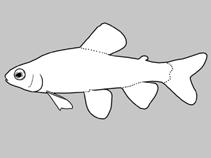 No image available for this species;
drawing shows typical species in Crenuchidae.
imej Google
drawing shows typical species in Crenuchidae.
klasifikasi / Nama Nama-nama umum | Sinonim (persamaan) | Catalog of Fishes(Marga, Jenis) | ITIS | CoL | WoRMS | Cloffa
> Characiformes (Characins) > Crenuchidae (South American darters) > Characidiinae
Etymology: Characidium: Diminutive of Charax, -akos = a fish without identification (Ref. 45335); papachibe: The name is a reference to 'papa-chibé, a traditional name associated with the State of Pará natives, and pays homage to the people of Pará.
Eponymy: Papa-chibé is a name traditionally associated with people from the Brazilian state of Pará, which is where this species occurs. (Ref. 128868), visit book page.
Etymology: Characidium: Diminutive of Charax, -akos = a fish without identification (Ref. 45335); papachibe: The name is a reference to 'papa-chibé, a traditional name associated with the State of Pará natives, and pays homage to the people of Pará.
Eponymy: Papa-chibé is a name traditionally associated with people from the Brazilian state of Pará, which is where this species occurs. (Ref. 128868), visit book page.
Lingkungan: lingkungan / zona iklim / kisaran kedalaman / jangkauan distribusi Ekologi
; air tawar bentopelagis; pH range: 6.2 - 6.3; kisaran kedalaman 1 - 2 m (Ref. 93226). Tropical; 25°C - 27°C (Ref. 93226)
Penyebaran Wilayah | Daerah-daerah FAO | Ekosistem | Kemunculan | peta titik | Introduksi | Faunafri
South America: Rio Aruã, tributary of the Rio Tapajós basin, lower Amazon in Brazil.
Ukuran / Berat / umur
deskripsi pendek Kunci identifiaksi (pengenalan) | Morfologi | Morfometrik
duri punggung lunak (Keseluruhan (total)) : 12 - 13; Sirip dubur lunak: 8 - 9; vertebrata, bertulang belakang: 34. It is diagnosed from other species of Characidium, except C. serrano and C. heirmostigmata, by having anteriorly oblique, midlateral bands centered on lateral line or just ventral thereof and not reaching either the dorsum or the ventrum, anterior bands. It differs from from C. serrano and C. heirmostigmata by having the following characters: 3 scales above and 3 below the lateral line (vs. 4 or 5 above and 4 or 5 below the lateral line in C. serrano and C. heirmostigmata); 10 scales around the caudal peduncle (vs. 12 in C. serrano and C. heirmostigmata); and snout length 15.0-18.8% HL (vs. 23.4-26.9% HL in C. serrano and 20.3- 27.8% HL in C. heirmostigmata). It can be further distinguished from C. heirmostigmata by having 12-15 oblique bars (vs. 8-11), 8 or 9 anal-fin rays (vs. 10 or 11), 10 or 11 pectoral-fin rays (vs. 13 or 14), and head length 25.7-29.2% SL (vs. 22.4-24.6% SL). It can be further separated from C. serrano by having 29-33 scales on the lateral line (vs. 37-39) and interorbital distance 19.0-25.0% HL (vs. 11.9-17.2 HL). This species is slightly similar to the psammophile species C. heinianum, C. longum, C. pellucidum, and C. pteroides because of its reticulated color pattern. However, it is distinguished from those species by the presence of the anteriorly oblique bars. It can be further distinguished from C. longum by having 10 or 11 pectoral-fin rays (vs. 13 or 14), 10 scale series around the caudal peduncle (vs. 12), body depth at dorsal-fin origin 18.9-25.7% SL (vs. 9.3-15.8% SL), and body depth at anal-fin origin 12.2-17.8% SL (vs. 7.5-11.0% SL); from another psammophile species, Geryichthys sterbai, by the presence of the adipose fin (vs. absence), by the presence of ectopterygoid teeth (vs. absence), by the 10 scale series around the caudal peduncle (vs. 12); and by absence of rhomboidal bars (vs. presence) (Ref. 93226).
Body shape (shape guide): fusiform / normal.
Body shape (shape guide): fusiform / normal.
Inhabits stream with shallow margins about 1-1.8 m deep, dense aquatic vegetation, sandy bottom and margins composed of decaying plant matter (Ref. 93226).
Siklus hidup dan perilaku kawin Kematangan | Reproduksi, perkembang biakan | Pemijahan | telur-telur | Fekunditas | Larva
rujukan utama
Unggah referensi Anda | Acuan | Koordinator | mitra
Peixoto, L.A.W. and W.B. Wosiacki, 2013. A new species of Characidium Agassiz (Characiformes: Crenuchidae) from the Lower Amazon. Copeia 2013(1):52-57. (Ref. 93226)
Status IUCN Red List (Ref. 130435: Version 2025-2 (Global))
kurang bimbang (LC) ; Date assessed: 07 November 2018
CITES
Not Evaluated
ancaman kepada manusia
Harmless
penggunaan manusia
FAO - Publication: search | FishSource |
informasi lanjut
Ekologi trofik
Item makanan (mangsa)
Komposisi makanan
Konsumsi makanan
Ransum makanan
Pemangsa
Item makanan (mangsa)
Komposisi makanan
Konsumsi makanan
Ransum makanan
Pemangsa
Ekologi
Ekologi
Ekologi
Dinamika populasi
Parameter pertumbuhan
Maks. usia / ukuran
Panjang-berat rel.
Panjang-panjang rel.
ukuran frekuensi
Konversi massa
pemulihan
Kelimpahan
Parameter pertumbuhan
Maks. usia / ukuran
Panjang-berat rel.
Panjang-panjang rel.
ukuran frekuensi
Konversi massa
pemulihan
Kelimpahan
Siklus hidup
Reproduksi, perkembang biakan
Kematangan
Kedewasaan / insang rel.
Fekunditas
Pemijahan
Agregasi pemijahan
telur-telur
pekembangan telor
Larva
Dinamika larva
Reproduksi, perkembang biakan
Kematangan
Kedewasaan / insang rel.
Fekunditas
Pemijahan
Agregasi pemijahan
telur-telur
pekembangan telor
Larva
Dinamika larva
Anatomi
Area insang
Otak
Otolith
Area insang
Otak
Otolith
Fisiologi
Komposisi tubuh
Nutrisi
Konsumsi oksigen
Jenis renang
Kecepatan berenang
Pigmen visual
Suara ikan
Penyakit & Parasit
Toksisitas (LC50)
Komposisi tubuh
Nutrisi
Konsumsi oksigen
Jenis renang
Kecepatan berenang
Pigmen visual
Suara ikan
Penyakit & Parasit
Toksisitas (LC50)
Genetika
genom
Genetika
Heterozigositas
Diturunkan
Keanekaragaman Genetik
genom
Genetika
Heterozigositas
Diturunkan
Keanekaragaman Genetik
Yang berhubungan dengan manusia
Sistem akuakultur
profil budidaya air
Strain
Kasus Ciguatera
Perangko, koin, dll.
Sistem akuakultur
profil budidaya air
Strain
Kasus Ciguatera
Perangko, koin, dll.
Alat, peralatan
E-book | Penuntun lapangan | tanda freqkuenci panjang | peringkat sejarah hidup | peta titik |
Tangkap-MSY |
laporan khas
muat turun XML
Sumber internet
AFORO (otoliths) | Aquatic Commons | BHL | Cloffa | Websites from users | semak peneliti ikan | CISTI | Catalog of Fishes: Marga, Jenis | DiscoverLife | ECOTOX | FAO - Publication: search | Faunafri | Fishipedia | Fishtrace | GloBI | Google Books | Google Scholar | Google | IGFA World Record | OneZoom | Open Tree of Life | Otolith Atlas of Taiwan Fishes | PubMed | Reef Life Survey | Socotra Atlas | TreeBase | Tree of Life | Wikipedia: pergi, Cari | World Records Freshwater Fishing | Zoobank | Catatan Zoologi
Estimasi berdasarkan model
Indeks keanekaragaman filogenetik (Acuan 82804): PD50 = 0.5000 [Uniqueness, from 0.5 = low to 2.0 = high].
Bayesian length-weight: a=0.01122 (0.00514 - 0.02450), b=3.04 (2.87 - 3.21), in cm total length, based on all LWR estimates for this body shape (Ref. 93245).
Tingkat Trofik (Acuan 69278): 3.2 ±0.3 se; based on size and trophs of closest relatives