



Haplochromis bwathondii Niemantsverdriet & Witte, 2010
ارفع صور و مقاطع فيديو
صور قوقل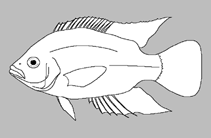 No image available for this species;
drawing shows typical species in Cichlidae.
صور قوقل
drawing shows typical species in Cichlidae.
التصنيف / الأسماء الأسماء الشائعة | مرادفات | Catalog of Fishes(جنس, الانواع) | ITIS | CoL | WoRMS | Cloffa
> Cichliformes (Cichlids, convict blennies) > Cichlidae (Cichlids) > Pseudocrenilabrinae
Etymology: Haplochromis: Greek, Haploos = single + Greek, chromis = a fish, perhaps a perch (Ref. 45335); bwathondii: This species is named in honour of Prof. Dr. Philip O.J. Bwathondi, Director General of the Tanzania Fisheries Research Institute (TAFIRI) from August 1983 until the end of 2006; during this period Prof. Bwathondi supported the research of the Haplochromis Ecology Survey Team (HEST) in many ways (Ref. 85523).
Eponymy: Professor Dr Philip O J Bwathondi was Director General of the Tanzania Fisheries Research Institute (TAFIRI) (1983–2006). During this period, he supported the research of the Haplochromis Ecology Survey Team (HEST) in many ways. (Ref. 128868), visit book page.
Etymology: Haplochromis: Greek, Haploos = single + Greek, chromis = a fish, perhaps a perch (Ref. 45335); bwathondii: This species is named in honour of Prof. Dr. Philip O.J. Bwathondi, Director General of the Tanzania Fisheries Research Institute (TAFIRI) from August 1983 until the end of 2006; during this period Prof. Bwathondi supported the research of the Haplochromis Ecology Survey Team (HEST) in many ways (Ref. 85523).
Eponymy: Professor Dr Philip O J Bwathondi was Director General of the Tanzania Fisheries Research Institute (TAFIRI) (1983–2006). During this period, he supported the research of the Haplochromis Ecology Survey Team (HEST) in many ways. (Ref. 128868), visit book page.
البيئة: الوسط / المنطقة المناخية / نطاق العمق / نطاق التوزيع البيئة
; المياه العذبة محيطي. Tropical
التوزيع الأقاليم | مناطق الفاو | النظام البيئي | الظهور | نقطة علي الخريطة | مقدمة | Faunafri
Africa: Lake Victoria (Ref. 85523).
الحجم / وزن / العمر
وصف مختصر مفاتيح التعريف | الوصف الخارجي | قياسات المظهر الخارجي
فقرات: 28 - 30. Diagnosis: Haplochromis bwathondii is a small sized (less than 9 cm standard length), micrognathic species with a normal to relatively slender body outline, body depth 29.7-35.7% of standard length; with bicuspid and tricuspid teeth in the oral jaws and a moderately curved dorsal head profile; it has a melanin pattern of dusky, interrupted, longitudinal bands and vertical bars, producing a so-called 'chess board pattern'; this pattern also occurs in several oral shelling molluscivores, insectivores and algae scrapers, but these species generally are larger, have a strongly curved dorsal head profile and a lower jaw length/width ratio of less than 1.5, whereas in H. bwathondii it ranges from 2.0 to 2.8 (Ref. 85523). Haplochromis bwathondii differs from other small species with a 'chess board pattern' and a lower jaw length/width ratio of more than 1.5, H. sphex and H. sauvagei, in live colouration of sexually active males, by having red in the rostral part of the body; further, it differs from H. sphex by having a deeper body and a larger eye (Ref. 85523). On first impression the colours of sexually active males of H. bwathondii and H. sauvagei look alike; however males of H. bwathondii have a less distinct 'chess board pattern', are less yellow and have a silvery iridescent area on each scale, giving them a silvery appearance; furthermore H. bwathondii has a larger eye, thinner lips, a narrower lower jaw and less stout teeth with a relatively larger flange than H. sauvagei (Ref. 85523).
Body shape (shape guide): fusiform / normal.
Body shape (shape guide): fusiform / normal.
Found in the sub-littoral areas of the Mwanza Gulf, over mud bottoms; it is a mainly pelagic species (Ref. 85523). Before the ecological changes in Lake Victoria, this species fed mainly on Cyanophyta, both during day and night; Aulacoseira and occasionally other small diatoms such as Nitzschia were also consumed, as well as adult insects and insect pupae from the water surface (Ref. 85523). This species is a female mouth brooder that spawns the whole year (Ref. 85523).
دورة الحياة وسلوك التزاوج النضج | التكاثر | وضع البيض | بيض | الخصوبة | اليرقات
This species is a female mouth brooder that spawns the whole year (Ref. 85523).
المرجع الرئيسي
قم بتحميل مراجعك | مراجع | المنظم : Kullander, Sven O. | المتعاونين
de Zeeuw, M.P., M. Mietes, P. Niemantsverdriet, S. ter Huurne and F. Witte, 2010. Seven new species of detritivorous and phytoplanktivorous haplochromines from Lake Victoria. Zool. Meded. Leiden 84:201-250. (Ref. 85523)
حالة القائمة الحمراء للاتحاد الدولي لحفظ الطبيعة والموارد الطبيعية (Ref. 130435: Version 2025-2 (Global))
الضعفاء (VU) (D2); Date assessed: 31 March 2010
CITES
Not Evaluated
خطر للأنسان
Harmless
استخدامات بشرية
FAO - Publication: search | FishSource |
مزيد من المعلومات
علم البيئة الغذائية
المواد الغذائية (الفرائس)
التركيبة الغذائية
استهلاك الأغذية
الحصص الغذائية
مفتريسات
المواد الغذائية (الفرائس)
التركيبة الغذائية
استهلاك الأغذية
الحصص الغذائية
مفتريسات
الديناميكيات السكانية
معاملات النمو
الحد الأقصى للأعمار/الأحجام
علاقة الطول بالوزن.
علاقة الطول بالطول.
الطول- الترددات
التحويل الجماعي
توظيف
الوفرة
معاملات النمو
الحد الأقصى للأعمار/الأحجام
علاقة الطول بالوزن.
علاقة الطول بالطول.
الطول- الترددات
التحويل الجماعي
توظيف
الوفرة
التشريح
منطقة الخياشيم
الدماغ
الأوتوليث
منطقة الخياشيم
الدماغ
الأوتوليث
علم وظائف الأعضاء
تكوين الجسم
المغذيات
استهلاك الأوكسجين
نوع السباحة
سرعة السباحة
الأصباغ البصرية
صوت السمك
الأمراض والطفيليات
السمية (LC50s)
تكوين الجسم
المغذيات
استهلاك الأوكسجين
نوع السباحة
سرعة السباحة
الأصباغ البصرية
صوت السمك
الأمراض والطفيليات
السمية (LC50s)
جيني
الوراثة
جيني
التغاير
التوريث
التنوع الوراثي
الوراثة
جيني
التغاير
التوريث
التنوع الوراثي
ذات الصلة بالبشر
أنظمة الاستزراع المائي
ملامح تربية الأحياء المائية
سلالات
حالات سيغواتيرا
طوابع بريدية وعملات معدنية ومتنوعة
أنظمة الاستزراع المائي
ملامح تربية الأحياء المائية
سلالات
حالات سيغواتيرا
طوابع بريدية وعملات معدنية ومتنوعة
أدوات
كتاب إلكتروني | دليل الميدان | معالج تردد الطول-التردد | أداة تاريخ الحياة | نقطة علي الخريطة |
Catch-MSY |
تقارير خاصة
البحث عن صيانت الأحواض المائيه | التحقق من وجود صفحات حقائق الأنواع | البحث عنا حقائق حول الأحواض المائيه
تنزيل XML
مصادر علي الأنترنت
AFORO (otoliths) | Aquatic Commons | BHL | Cloffa | Websites from users | البحث في مراقبي الأسماك | CISTI | Catalog of Fishes: جنس, الانواع | DiscoverLife | ECOTOX | FAO - Publication: search | Faunafri | Fishipedia | Fishtrace | GloBI | Google Books | Google Scholar | Google | IGFA World Record | OneZoom | Open Tree of Life | Otolith Atlas of Taiwan Fishes | PubMed | Reef Life Survey | Socotra Atlas | TreeBase | شجرة الحياة | Wikipedia: ذهب, بحث | World Records Freshwater Fishing | Zoobank | سجلات علم الحيوانات
تقديرات تستند إلى النماذج
مؤشر التنوع الشُعبي الوراثي (مرجع 82804): PD50 = 0.5000 [Uniqueness, from 0.5 = low to 2.0 = high].
Bayesian length-weight: a=0.01445 (0.00671 - 0.03113), b=2.99 (2.82 - 3.16), in cm total length, based on LWR estimates for this (Sub)family-body shape (Ref. 93245).
مستوى غذائي (مرجع 69278): 3.3 ±0.4 se; based on size and trophs of closest relatives