



Epinephelus lanceolatus (Bloch, 1790)
Giant grouper
เพิ่มการสังเกตของคุณใน Fish Watcher
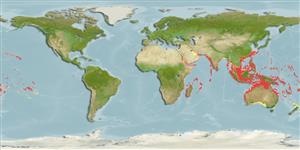
| Native range | All suitable habitat | Point map | Year 2050 |
|
| This map was computer-generated and has not yet been reviewed. |
| Epinephelus lanceolatus AquaMaps Data sources: GBIF OBIS |
อัพโหลดของคุณ ภาพถ่าย และ วิดีโอ
รูปภาพหลายรูป | วิดีโอ | แสตมป์ เหรียญ อื่นๆ | Google image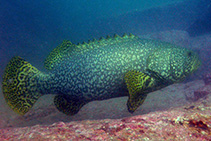 Epinephelus lanceolatus
ภาพโดย To, W.-L.
รูปภาพหลายรูป | วิดีโอ | แสตมป์ เหรียญ อื่นๆ | Google image
ภาพโดย To, W.-L.
การจำแนกประเภท / ชื่อ ชื่อสามัญ | ชื่อพ้อง | Catalog of Fishes(สกุล, ชนิด) | ITIS | CoL | WoRMS | Cloffa
> Perciformes/Serranoidei (Groupers) > Epinephelidae (Groupers)
Etymology: Epinephelus: Greek, epinephelos = cloudy (Ref. 45335).
More on author: Bloch.
Etymology: Epinephelus: Greek, epinephelos = cloudy (Ref. 45335).
More on author: Bloch.
สิ่งแวดล้อม : สิ่งแวดล้อม / เขตภูมิอากาศ / ระดับความลึก / ระยะการกระจายสินค้า นิเวศวิทยา
เกี่ยวกับทะเล,น้ำเค็ม; กร่อย เกี่ยวกับหินโสโครก; ระดับความลึก 1 - 200 m (Ref. 89972), usually ? - 50 m (Ref. 37816). Tropical; 29°N - 39°S, 24°E - 122°W (Ref. 5222)
การแพร่กระจาย อาณาเขต | พื้นที่จำแนกตาม FAO | ระบบนิเวศหลายระบบ | การปรากฏขึ้น,การเกิดขึ้น,พบ | ตำแหน่งบนแผนที่ | การแนะนำ | Faunafri
Indo-Pacific: Red Sea to Algoa Bay, South Africa and eastward to the Hawaiian and Pitcairn islands, north to southern Japan, south to Australia. Absence in the Persian Gulf is puzzling.
ความยาวเมื่อครบกำหนดครั้งแรก / ขนาด / น้ำหนัก / อายุ
วัยเจริญพันธุ์: Lm ?, range 129 - ? cm
Max length : 270 cm TL เพศผู้/กระเทย; (Ref. 5213); common length : 190 cm TL เพศผู้/กระเทย; (Ref. 5450); น้ำหนักสูงสุดที่มีการรายงาน: 400.0 kg (Ref. 26367)
Max length : 270 cm TL เพศผู้/กระเทย; (Ref. 5213); common length : 190 cm TL เพศผู้/กระเทย; (Ref. 5450); น้ำหนักสูงสุดที่มีการรายงาน: 400.0 kg (Ref. 26367)
คำอธิบายสั้นๆ เครื่องมือที่ใช้ในการแยกชนิดสัตว์,สิ่งมีชีวิตออกจากกัน | สัณฐานวิทยา | ความยาวต่างๆ
เงี่ยงครีบหลัง (รวม) : 11; ก้านครีบอ่อนที่หาง (รวม) : 14 - 16; เงี่ยงครีบก้น: 3; ก้านครีบอ่อนที่ก้น: 8. This species is distinguished by the following characters: robust body, its width 1.5-1.75 in body depth; body depth 2.3-3.4 in SL (for specimens 12-179 cm SL); head length 2.2-2.7 in SL; eye diameter 5.8-14 in HL; interorbital width 3.3 (at 177 cm SL) to 6.2 (at 12 cm SL) in HL; preopercle finely serrate, the corner rounded; upper edge of operculum convex; midlateral part of lower jaw with 2-3 rows of teeth (at 20-25 cm SL) increasing to 15-16 rows in specimen of 177 cm SL; canine teeth at front of jaws small or absent; pill rakers of first gill arch 8-10 + 14-17; dorsal fin third to eleventh spines subequal, shorter than longest soft rays; short pelvic fins, 23.0-2.7 in head length; caudal fin rounded; lateral-line scales 54-62, the anterior scales with branched tubules (except small juveniles). Colour: small juveniles (less than 15 cm) yellow, with 3 irregular black areas, the first from spinous dorsal fin to belly and chest and extending onto head, the second from base of soft dorsal fin to anal fin and the last at base of caudal fin; subadults (25-60 cm) with irregular white or yellow spots on the black areas and fins with black spots; adults (90-165 cm) dark brown with faint mottling, the fins with numerous small black spots; large adults 180-250 cm) dark brown, fins darker (Ref. 39231, 89707, 90102).
Body shape (shape guide): fusiform / normal; Cross section: compressed.
Body shape (shape guide): fusiform / normal; Cross section: compressed.
The largest bony fish found in coral reefs (Ref. 9710). Individuals more than a meter long have been caught from shore and in harbors. Common in shallow waters. Found in caves or wrecks; also in estuaries. Juveniles secretive in reefs and rarely seen (Ref. 48635). Benthopelagic and benthic (Ref. 58302). Feed on spiny lobsters, fishes, including small sharks and batoids, and juvenile sea turtles and crustaceans. In South African estuaries, the main prey item is the mud crab, Scylla serrata. Unconfirmed reports of fatal attacks on humans. Nearly wiped out in heavily fished areas (Ref. 9710). Large individuals may be ciguatoxic (Ref. 37816). In the Hong Kong live fish markets (Ref. 27253). It is not common enough to be of commercial importance; rare in some places due to spearfishing; also caught with hook-and-line and spear (Ref. 39231).
วงจรชีวิตและพฤติกรรมการผสมพันธุ์ วัยเจริญพันธุ์ | การสืบพันธุ์ | การวางไข่ | เซลสืบพันธ์ของเพศเมีย(ไข่) | ความดกของไข่ | ตัวอ่อน
อ้างอิงหลัก
อัพโหลดข้อมูลอ้างอิงของคุณ | อ้างอิง | ผู้ประสานงาน | ผู้ร่วมมือ
Heemstra, P.C. and J.E. Randall, 1993. FAO Species Catalogue. Vol. 16. Groupers of the world (family Serranidae, subfamily Epinephelinae). An annotated and illustrated catalogue of the grouper, rockcod, hind, coral grouper and lyretail species known to date. Rome: FAO. FAO Fish. Synop. 125(16):382 p. (Ref. 5222)
สถานะบัญชีแดงของ IUCN (Ref. 130435: Version 2025-2 (Global))
Data deficient (DD) ; Date assessed: 18 November 2016
CITES
Not Evaluated
ภัยคุกคามต่อมนุษย์
Traumatogenic (Ref. 4690)
การใช้ของมนุษย์
การประมง: การประมงยังชีพ; การเพาะเลี้ยงสัตว์น้ำ: การค้า; การตกปลาเป็นกีฬา: ใช่; สถานที่แสดงสัตว์และพืชน้ำ: การค้า
FAO - Publication: search | FishSource | ทะเลรอบๆเรา
ข้อมูลเพิ่มเติม
พลวัตของประชากร
พารามิเตอร์การเจริญเติบโต
อายุสูงสุด / ขนาด
ความยาว-น้ำหนักสัมพันธ์
ความยาว-ความยาวสัมพันธ์
ความยาว-ความถี่
การแปลงมวล
การทดแทนที่
อุดมสมบรูณ์
พารามิเตอร์การเจริญเติบโต
อายุสูงสุด / ขนาด
ความยาว-น้ำหนักสัมพันธ์
ความยาว-ความยาวสัมพันธ์
ความยาว-ความถี่
การแปลงมวล
การทดแทนที่
อุดมสมบรูณ์
วงจรชีวิต
การสืบพันธุ์
วัยเจริญพันธุ์
ความสมบูรณ์พันธุ์/เหงือกที่เกี่ยวข้อง
ความดกของไข่
การวางไข่
การรวมตัวของสปอน
เซลสืบพันธ์ของเพศเมีย(ไข่)
การพัฒนาไข่
ตัวอ่อน
พลวัตของสัตว์น้ำวัยอ่อน
การสืบพันธุ์
วัยเจริญพันธุ์
ความสมบูรณ์พันธุ์/เหงือกที่เกี่ยวข้อง
ความดกของไข่
การวางไข่
การรวมตัวของสปอน
เซลสืบพันธ์ของเพศเมีย(ไข่)
การพัฒนาไข่
ตัวอ่อน
พลวัตของสัตว์น้ำวัยอ่อน
การแพร่กระจาย
อาณาเขต
พื้นที่จำแนกตาม FAO
ระบบนิเวศหลายระบบ
การปรากฏขึ้น,การเกิดขึ้น,พบ
การแนะนำ
BRUVS - วิดีโอ
อาณาเขต
พื้นที่จำแนกตาม FAO
ระบบนิเวศหลายระบบ
การปรากฏขึ้น,การเกิดขึ้น,พบ
การแนะนำ
BRUVS - วิดีโอ
สรีรวิทยา
องค์ประกอบของร่างกาย
สารอาหาร
การใช้ออกซิเจน
ประเภทการว่ายน้ำ
ระดับความเร็วในการว่ายน้ำ
เม็ดสีที่มองเห็นได้
เสียงปลา
โรคและปรสิต
ความเป็นพิษ (LC50s)
องค์ประกอบของร่างกาย
สารอาหาร
การใช้ออกซิเจน
ประเภทการว่ายน้ำ
ระดับความเร็วในการว่ายน้ำ
เม็ดสีที่มองเห็นได้
เสียงปลา
โรคและปรสิต
ความเป็นพิษ (LC50s)
เกี่ยวข้องกับมนุษย์
ระบบการเพาะเลี้ยงสัตว์น้ำ
ประวัติการเพาะเลี้ยงสัตว์น้ำ
สายพันธุ์
กรณีซิเกวเทอรา
แสตมป์ เหรียญ อื่นๆ
ระบบการเพาะเลี้ยงสัตว์น้ำ
ประวัติการเพาะเลี้ยงสัตว์น้ำ
สายพันธุ์
กรณีซิเกวเทอรา
แสตมป์ เหรียญ อื่นๆ
เครื่องมือ
แบบทดสอบชีววิทยา | หนังสืออิเล็กทรอนิกส์ | คู่มือภาคสนาม | เครื่องมือที่ใช้ในการแยกชนิดสัตว์,สิ่งมีชีวิตออกจากกัน | ผู้มีความชำนาญในเรื่องความถี่ของความยาว | เครื่องมือในการศึกษาชีวประวัติ | ตำแหน่งบนแผนที่ |
จับ-MSY |
รายงานพิเศษ
ตรวจสอบการบำรุงรักษาตู้ปลา | ตรวจสอบเอกสารข้อเท็จจริงเกี่ยวกับสายพันธุ์ | ตรวจสอบเอกสารข้อเท็จจริงเกี่ยวกับการเพาะเลี้ยงสัตว์น้ำ
ดาวน์โหลด XML
หน้าสรุป | ข้อมูลสำคัญ | ชื่อสามัญ | ภาพถ่าย
แหล่งที่มาจากอินเตอร์เน็ต
AFORO (otoliths) | Alien/Invasive Species database | Aquatic Commons | BHL | Cloffa | Websites from users | Check FishWatcher | CISTI | Catalog of Fishes: สกุล, ชนิด | DiscoverLife | DORIS | ECOTOX | FAO - Publication: search | Faunafri | Fishipedia | Fishtrace | GloBI | Google Books | Google Scholar | Google | IGFA World Record | ฐานข้อมูลแห่งชาติ | OneZoom | Open Tree of Life | Otolith Atlas of Taiwan Fishes | สถานแสดงสัตว์น้ำของรัฐ | PubMed | Reef Life Survey | Socotra Atlas | TreeBase | แผนภูมิชีวิตแบบต้นไม้ | Wikipedia: Go, ค้นหา | World Records Freshwater Fishing | บันทึกทางด้านสัตววิทยา
การประมาณค่าตามแบบจำลอง
อุณหภูมิที่ต้องการ (อ้างอิง 123201): 24.3 - 29.1, mean 28.1 °C (based on 1346 cells).
ดัชนีความหลากหลายทางวิวัฒนาการ (อ้างอิง 82804): PD50 = 0.5000 [Uniqueness, from 0.5 = low to 2.0 = high].
Bayesian length-weight: a=0.01148 (0.00555 - 0.02374), b=3.04 (2.87 - 3.21), in cm total length, based on LWR estimates for this Genus-body shape (Ref. 93245).
ระดับชั้นอาหาร (อ้างอิง 69278): 4.0 ±0.60 se; based on food items.
ความสามารถในการกลับคืนสู่ปกติ (อ้างอิง 120179): ต่ำมาก, เวลาต่ำสุดที่จะทำให้ประชากรเพิ่มขึ้นเป็น 2 เท่าใช้เวลามากกว่า 14 ปี (Preliminary K or Fecundity.).
สารอาหาร (Ref. 124155): Calcium = 9.03 [3.72, 21.56] mg/100g; Iron = 0.376 [0.174, 0.785] mg/100g; Protein = 18.7 [17.0, 20.3] %; Omega3 = 0.104 [0.054, 0.200] g/100g; Selenium = 66.4 [30.6, 148.3] μg/100g; VitaminA = 117 [25, 595] μg/100g; Zinc = 0.982 [0.614, 1.516] mg/100g (wet weight);