



Pseudanos winterbottomi Sidlauskas & Santos, 2005
Hochladen Photos und videos
Bilder | Google Bild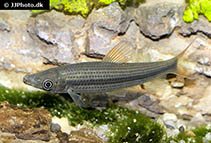 Pseudanos winterbottomi
Photo von JJPhoto
Bilder | Google Bild
Photo von JJPhoto
Klassifizierung / Names Namen | Synonyme | Catalog of Fishes(Gattung, Arten) | ITIS | CoL | WoRMS | Cloffa
> Characiformes (Characins) > Anostomidae (Headstanders)
Etymology: Pseudanos: Derived from Greek, pseudes = false (Ref. 45335); winterbottomi: Named in honor of Richard Winterbottom for his significant contributions to anostomine systematics and natural history.
Eponymy: Dr Richard ‘Rick’ Winterbottom (d: 1944) is an evolutionary biologist and ichthyologist who was born in Zambia. [...] (Ref. 128868), visit book page.
Etymology: Pseudanos: Derived from Greek, pseudes = false (Ref. 45335); winterbottomi: Named in honor of Richard Winterbottom for his significant contributions to anostomine systematics and natural history.
Eponymy: Dr Richard ‘Rick’ Winterbottom (d: 1944) is an evolutionary biologist and ichthyologist who was born in Zambia. [...] (Ref. 128868), visit book page.
Umwelt: Milieu / Klimazone / Tiefenbereich / Verbreitungsgebiet Ökologie
; süßwasser benthopelagisch. Tropical
Verbreitung Territorien | FAO Gebiete | Ökosysteme | Vorkommen | Punkt Karte | Einführungen | Faunafri
South America: Rio Tapajos drainage in Brazil and throughout Rio Orinoco drainage, including the rios Casiquiare, Cinaruco, San Bartolo and Ventuari.
Größe / Gewicht / Alter
Kurzbeschreibung Bestimmungsschlüssel | Morphologie | Morphometrie
Wirbelzahl: 38 - 44. The only member of the subfamily Anostominae with a single longitudinal stripe. It also lacks transverse bars across the dorsum. Resembles P. gracilis but is distinguished by the following characters: a dark horizontal stripe along the lower half of the lateral-line scale row and the upper half of the row adjoining; four branchiostegal rays; two pores on the sensory canal of the nasal bone between its anterior and posterior openings; four pores associated with the sensory canal of infraorbital one and arranged in an approximate square; nearly complete closure of the metapterygoid/quadrate fenestra; absence of a posterior process of the ectopterygoid running ventral to the palatine in lateral view; presence of a dorsal process of the mesopterygoid that wraps around the posterior of the palatine; and a palatine with a high arch and thick, blocklike morphology (Ref. 55429).
Body shape (shape guide): fusiform / normal.
Body shape (shape guide): fusiform / normal.
Adults are found in deep and clearwater pool (Ref. 55429). Stomach contents contain sand, woody debris and a fibrous plant material (Ref. 55429). Distinct pairs breed on densely grown weedy places (Ref. 205).
Lebenszyklus und Paarungsverhalten Geschlechtsreife | Fortpflanzung | Ablaichen | Eier | Fruchtbarkeit | Larven
Distinct pairs breed on densely grown weedy places (Ref. 205).
Hauptreferenz
Laden Sie Ihre Referenzen hoch | Referenzen | Koordinator : Garavello, Júlio | Partner
Sidlaukas, B.L. and G.M. dos Santos, 2005. Pseudanos winterbottomi: a new anostomine species (Teleostei: Characiformes: Anostomidae) from Venezuela and Brazil, and comments on its phylogenetic relationships. Copeia 2005(1):109-123. (Ref. 55429)
IUCN Rote Liste Status (Ref. 130435: Version 2025-2 (Global))
nicht bedroht (LC) ; Date assessed: 26 June 2020
CITES
Not Evaluated
Bedrohung für Menschen
Harmless
Nutzung durch Menschen
Fischereien: nicht kommerziell
FAO - Publication: search | FishSource |
Mehr Information
Trophische Ökologie
Lebensmittel (Beutetiere)
Nahrungszusammensetzung
Nahrungsaufnahme
Lebensmittelrationen
Räuber
Lebensmittel (Beutetiere)
Nahrungszusammensetzung
Nahrungsaufnahme
Lebensmittelrationen
Räuber
Ökologie
Ökologie
Ökologie
Populationsdynamik
Wachstumsparameter
Max. Alter/Größen
Länge-Gewicht-Rel.
Länge-Länge-Verhältnis.
Längenhäufigkeiten
Massenkonvertierung
Rekrutierung
Dichte
Wachstumsparameter
Max. Alter/Größen
Länge-Gewicht-Rel.
Länge-Länge-Verhältnis.
Längenhäufigkeiten
Massenkonvertierung
Rekrutierung
Dichte
Lebenszyklus
Fortpflanzung
Geschlechtsreife
Reifung/Kiemen rel.
Fruchtbarkeit
Ablaichen
Laichaggregationen
Eier
Eientwicklung
Larven
Larven Pop.Dyn.
Fortpflanzung
Geschlechtsreife
Reifung/Kiemen rel.
Fruchtbarkeit
Ablaichen
Laichaggregationen
Eier
Eientwicklung
Larven
Larven Pop.Dyn.
Anatomie
Kiemenoberfläche
Gehirn
Otolith
Kiemenoberfläche
Gehirn
Otolith
Physiologie
Körperliche Zusammensetzung
Nährstoffe
Sauerstoffverbrauch
Schwimmart
Schwimmgeschwindigkeit
Visuelle Pigmente
Fischgeräusche
Krankheiten und Parasiten
Toxizität (LC50s)
Körperliche Zusammensetzung
Nährstoffe
Sauerstoffverbrauch
Schwimmart
Schwimmgeschwindigkeit
Visuelle Pigmente
Fischgeräusche
Krankheiten und Parasiten
Toxizität (LC50s)
Genetik
Genom
Genetik
Heterozygotie
Vererbbarkeit
Genetische Vielfalt
Genom
Genetik
Heterozygotie
Vererbbarkeit
Genetische Vielfalt
Menschenbezogen
Aquakultur-Systeme
Aquakultur Profile
Zuchtlinien
Ciguatera-Fälle
Briefmarken, Münzen, Verschiedenes.
Aquakultur-Systeme
Aquakultur Profile
Zuchtlinien
Ciguatera-Fälle
Briefmarken, Münzen, Verschiedenes.
Tools
Zusatzinformationen
Download XML
Zusammenfassung | Punktdaten | Namen | Photos
Internet Quellen
AFORO (otoliths) | Aquatic Commons | BHL | Cloffa | Websites from users | FishWatcher Einträge suchen | CISTI | Catalog of Fishes: Gattung, Arten | DiscoverLife | ECOTOX | FAO - Publication: search | Faunafri | Fishipedia | Fishtrace | GloBI | Google Books | Google Scholar | Google | IGFA World Record | OneZoom | Open Tree of Life | Otolith Atlas of Taiwan Fishes | PubMed | Reef Life Survey | Socotra Atlas | TreeBase | Tree of Life | Wikipedia: Gehe zu, Suchen | World Records Freshwater Fishing | Zoobank | Zoologischer Rekord
Schätzungen auf der Grundlage von Modellen
Phylogenetischer Diversitätsindex (Ref. 82804): PD50 = 0.5312 [Uniqueness, from 0.5 = low to 2.0 = high].
Bayesian length-weight: a=0.01072 (0.00507 - 0.02267), b=3.08 (2.91 - 3.25), in cm total length, based on LWR estimates for this (Sub)family-body shape (Ref. 93245).
Trophische Ebene (Ref. 69278): 2.5 ±0.1 se; based on size and trophs of closest relatives
Widerstandsfähigkeit (Ref. 120179): hoch, Verdopplung der Population dauert weniger als 15 Monate. (Preliminary K or Fecundity.).