



Haplochromis paradoxus (Lippitsch & Kaufman, 2003)
分類 / 名前 共通名の | 類義語 | Catalog of Fishes(部類, 種) | ITIS | CoL | WoRMS | Cloffa
> Cichliformes (Cichlids, convict blennies) > Cichlidae (Cichlids) > Pseudocrenilabrinae
Etymology: Haplochromis: Greek, Haploos = single + Greek, chromis = a fish, perhaps a perch (Ref. 45335); paradoxus: From the Greek 'paradoxos', meaning 'contrary to expectation, incredible'; the species name is a double entendre, in reference to the strange appearance of the fishes, especially their strongly oblique gape and lower jaw, and to their seemingly paradoxical zoogeographical situation (Ref. 51927).
Etymology: Haplochromis: Greek, Haploos = single + Greek, chromis = a fish, perhaps a perch (Ref. 45335); paradoxus: From the Greek 'paradoxos', meaning 'contrary to expectation, incredible'; the species name is a double entendre, in reference to the strange appearance of the fishes, especially their strongly oblique gape and lower jaw, and to their seemingly paradoxical zoogeographical situation (Ref. 51927).
環境:環境 / 気候帯 / 深さの範囲 / 分布範囲 生態学
; 新鮮な水 底生の漂泳性. Tropical
分布 領土 | 国連食糧農業機関の区域 | エコシステム | 事件 | 目的のマップ | 導入 | Faunafri
サイズ / 重さ / 年齢
簡単な記述 検索表 | 形態学 | 形態計測学
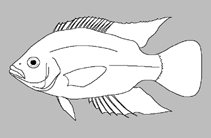
背面の脊椎 (合計) : 14 - 16; 背鰭 (合計) : 9 - 11; 肛門の骨: 3; 臀鰭: 8 - 9; 脊つい: 29 - 30. Diagnosis: Haplochromis paradoxus differs from all known paedophagous species of Haplochromis of the Lake Edward system by its more numerous outer teeth, 36-65 vs. 16-35, that are strongly recurved and closely set in long tooth bands (Ref. 127594). It is further distinct from H. gracilifur and H. molossus by a longer snout, 28.7-36.0% of head length vs. 24.0-26.7% and 25.1-30.7%, respectively, and longer head, 32.2-36.2% of standard length vs. 29.8-30.7% and 29.5-32.0%, respectively (Ref. 127594). It differs from H. taurinus by its smaller eyes, 25.3-32.1% of head length vs. 32.9-40.2%, and from H. relictidens by its more slender head, 41.7-51.2% of head length vs. 47.7-54.7% (Ref. 127594). Mature males dorsally grey to bluish and ventrally intense yellow vs. different colour patterns in other paedophages (Ref. 127594). Haplochromis paradoxus can be distinguished from piscivorous sensu stricto species from Lake Edward system by its small teeth with very strongly recurved necks and short, bluntly pointed, and usually weakly tricuspid crowns vs. larger, straight to recurved, and acutely pointed teeth in piscivores; its lips are slightly thickened, and its maxillae reach posteriorly before vertical through anterior edge of eyes vs. lips are not thickened and maxilla generally exceed this point in piscivorous species (Ref. 127594). It's a haplochromine species with a strongly oblique gape and lower jaw, in connection with a pronounced concavity in the outline of the head in front of the eye (Ref. 51927). It is distinguished from members of the genus Pyxichromis by a lower body depth, 31.5-33.5% of standard length vs. 35-42%; a lower cheek, 20-24% of head length vs. 24-32%; and the dentition of the oral jaws consisting of bicuspid and tricuspid teeth in both jaws (Ref. 51927).
Body shape (shape guide): fusiform / normal.
Body shape (shape guide): fusiform / normal.
ライフサイクルと交尾行動 成熟 | 繁殖 | 放精 | 卵 | 生産力 | 幼生
主な参考文献
参考文献のアップロード | 参考文献 | コーディネーター : Kullander, Sven O. | 協力者
Vranken, N., M. Van Steenberge and J. Snoeks, 2019. Grasping ecological opportunities: not one but five paedophagous species of Haplochromis (Teleostei: Cichlidae) in the Lake Edward system. Hydrobiologia 832(1):105-134. (Ref. 127594)
CITES
Not Evaluated
人間に対する脅威
Harmless
人間の用途
FAO - Publication: search | FishSource |
より多くの情報
養殖生態
食料品(獲物)
餌の構成
摂食量
食料配給
捕食動物
食料品(獲物)
餌の構成
摂食量
食料配給
捕食動物
生態学
生態学
生態学
人口動態
成長のパラメーター
最大年齢/サイズ
長さ-重量比。
長短関係。
体長組成
質量変換
補充
豊度
成長のパラメーター
最大年齢/サイズ
長さ-重量比。
長短関係。
体長組成
質量変換
補充
豊度
ライフサイクル
繁殖
成熟
成熟度/エラ
生産力
放精
産卵群
卵
卵の開発
幼生
幼生の動力
繁殖
成熟
成熟度/エラ
生産力
放精
産卵群
卵
卵の開発
幼生
幼生の動力
解剖学
カマ
脳
オトリス
カマ
脳
オトリス
生理学
体組成
栄養素
酸素消費
水泳タイプ
泳ぐ速さ
視覚色素
フィッシュ・サウンド
病気と寄生虫
毒性(LC50)
体組成
栄養素
酸素消費
水泳タイプ
泳ぐ速さ
視覚色素
フィッシュ・サウンド
病気と寄生虫
毒性(LC50)
遺伝子の
ゲノム
遺伝子の
ヘテロ接合性
遺伝
遺伝的多様性
ゲノム
遺伝子の
ヘテロ接合性
遺伝
遺伝的多様性
用具
特記事項
XMLをダウンロードして下さい
インターネットの情報源
AFORO (otoliths) | Aquatic Commons | BHL | Cloffa | Websites from users | Check FishWatcher | CISTI | Catalog of Fishes: 部類, 種 | DiscoverLife | ECOTOX | FAO - Publication: search | Faunafri | Fishipedia | Fishtrace | GloBI | Google Books | Google Scholar | Google | IGFA World Record | OneZoom | Open Tree of Life | Otolith Atlas of Taiwan Fishes | PubMed | Reef Life Survey | Socotra Atlas | TreeBase | 生命の木 | Wikipedia: 行く, 検索する | World Records Freshwater Fishing | 動物に関する記録
モデルに基づく推定値
系統多様性指数 (参照 82804): PD50 = 0.5000 [Uniqueness, from 0.5 = low to 2.0 = high].
Bayesian length-weight: a=0.01445 (0.00671 - 0.03113), b=2.99 (2.82 - 3.16), in cm total length, based on LWR estimates for this (Sub)family-body shape (Ref. 93245).
栄養段階 (参照 69278): 3.3 ±0.4 se; based on size and trophs of closest relatives
回復力 (参照 120179): 高い, 15か月以下の倍増期間の最小個体群 (Preliminary K or Fecundity.).