Coris julis, Mediterranean rainbow wrasse : fisheries, gamefish, aquarium

Coris julis (Linnaeus, 1758)

Mediterranean rainbow wrasse
เพิ่มการสังเกตของคุณใน Fish Watcher
Native range | All suitable habitat | Point map | Year 2050
This map was computer-generated and has not yet been reviewed.
Coris julis   AquaMaps   Data sources: GBIF OBIS
อัพโหลดของคุณ ภาพถ่าย และ วิดีโอ
รูปภาพหลายรูป | วิดีโอ | แสตมป์ เหรียญ อื่นๆ | Google image

การจำแนกประเภท / ชื่อ ชื่อสามัญ | ชื่อพ้อง | Catalog of Fishes(สกุล, ชนิด) | ITIS | CoL | WoRMS | Cloffa

> Eupercaria/misc (Various families in series Eupercaria) > Labridae (Wrasses) > Julidinae
Etymology: Coris: Greek, kore, -es = pupil and also with themenaing of "maid" (Ref. 45335).
More on author: Linnaeus.

สิ่งแวดล้อม : สิ่งแวดล้อม / เขตภูมิอากาศ / ระดับความลึก / ระยะการกระจายสินค้า นิเวศวิทยา

เกี่ยวกับทะเล,น้ำเค็ม เกี่ยวกับหินโสโครก; ระดับความลึก 0 - 120 m (Ref. 27115), usually 1 - 60 m (Ref. 4742). Temperate; 18°C - 22°C (Ref. 27115); 59°N - 1°S, 32°W - 36°E

การแพร่กระจาย อาณาเขต | พื้นที่จำแนกตาม FAO | ระบบนิเวศหลายระบบ | การปรากฏขึ้น,การเกิดขึ้น,พบ | ตำแหน่งบนแผนที่ | การแนะนำ | Faunafri

Eastern Atlantic: Sweden to south of Cape Lopez, Gabon. Also known from the Mediterranean Sea. Specimen of Coris from Cape Verde and Senegal southward are probably Coris atlantica (Ref. 33411), here still treated as a junior synonym pending a definite publication of validity.

ขนาด / น้ำหนัก / อายุ

วัยเจริญพันธุ์: Lm ?  range ? - ? cm
Max length : 30.0 cm SL เพศผู้/กระเทย; (Ref. 2683); common length : 20.0 cm SL เพศผู้/กระเทย; (Ref. 4742); อายุสูงสุดที่ได้รายงาน: 7 ปี (Ref. 72479)

คำอธิบายสั้นๆ เครื่องมือที่ใช้ในการแยกชนิดสัตว์,สิ่งมีชีวิตออกจากกัน | สัณฐานวิทยา | ความยาวต่างๆ

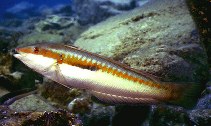
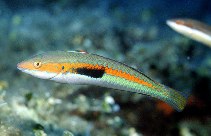
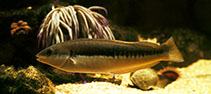
เงี่ยงครีบหลัง (รวม) : 8 - 10; ก้านครีบอ่อนที่หาง (รวม) : 11 - 12; เงี่ยงครีบก้น: 3; ก้านครีบอ่อนที่ก้น: 11 - 12. Snout with 4-6 cephalic pores. Spiny rays flexible. No scales on head and on base of dorsal and anal fins. Vertebrae 25-26. Males: first 3 dorsal rays elongated, with an orange or red and black spot. Along the flanks, a- longitudinal zigzag orange or red stripe. Females and juveniles: a longitudinal large whitish stripe along flanks, a mid-longitudinal zigzag, dark brown stripe.
Body shape (shape guide): fusiform / normal.

ชีววิทยา     ภาคผนวก (เช่น epibenthic)

Occurs in the littoral zone, near rocks and eelgrass beds. Usually found between 1-60 m, but old males stay in deeper water. Found in deeper waters during winter. Sometimes solitary, among rocks, often with numerous specimens in its immediate vicinity. Buries itself in sand at night or when frightened. Feeds on small gastropods, sea urchins, shrimps, worms, isopods and amphipods. Sexually mature when 1 year old. Protogynous species; females change sex to become males; specimen above 18 cm length are all males (Ref. 35388). Pelagic eggs (Ref. 4742).

วงจรชีวิตและพฤติกรรมการผสมพันธุ์ วัยเจริญพันธุ์ | การสืบพันธุ์ | การวางไข่ | เซลสืบพันธ์ของเพศเมีย(ไข่) | ความดกของไข่ | ตัวอ่อน

Females change sex to males before 18 cm TL. Sex reversal is completed in several weeks up to 5.5 months (Ref. 34185, 34255, 35388). Also Ref. 103751.

อ้างอิงหลัก อัพโหลดข้อมูลอ้างอิงของคุณ | อ้างอิง | ผู้ประสานงาน : Westneat, Mark | ผู้ร่วมมือ

Quignard, J.-P. and A. Pras, 1986. Labridae. p. 919-942. In P.J.P. Whitehead, M.-L. Bauchot, J.-C. Hureau, J. Nielsen and E. Tortonese (eds.) Fishes of the north-eastern Atlantic and the Mediterranean. UNESCO, Paris. Vol. 2. (Ref. 4742)

สถานะบัญชีแดงของ IUCN (Ref. 130435: Version 2025-2 (Global))

  Least Concern (LC) ; Date assessed: 11 February 2009

CITES

Not Evaluated

CMS (Ref. 116361)

Not Evaluated

ภัยคุกคามต่อมนุษย์

  Harmless


การใช้ของมนุษย์

การประมง: มีการค้าเพียงเล็กน้อย; การตกปลาเป็นกีฬา: ใช่; สถานที่แสดงสัตว์และพืชน้ำ: การค้า

ข้อมูลเพิ่มเติม

นิเวศวิทยาเขตร้อน
รายการอาหาร (เหยื่อ)
องค์ประอบของอาหาร
การบริโภคอาหาร
การจัดสรรอาหาร
ผู้ล่า
นิเวศวิทยา
นิเวศวิทยา
วงจรชีวิต
การสืบพันธุ์
วัยเจริญพันธุ์
ความสมบูรณ์พันธุ์/เหงือกที่เกี่ยวข้อง
ความดกของไข่
การวางไข่
การรวมตัวของสปอน
เซลสืบพันธ์ของเพศเมีย(ไข่)
การพัฒนาไข่
ตัวอ่อน
พลวัตของสัตว์น้ำวัยอ่อน
กายวิภาคศาสตร์
พื้นที่เหงือก
สมอง
หินโสต
สรีรวิทยา
องค์ประกอบของร่างกาย
สารอาหาร
การใช้ออกซิเจน
ประเภทการว่ายน้ำ
ระดับความเร็วในการว่ายน้ำ
เม็ดสีที่มองเห็นได้
เสียงปลา
โรคและปรสิต
ความเป็นพิษ (LC50s)
พันธุศาสตร์
จีโนม
พันธุศาสตร์
ความไม่สมดุลทางเชื้อชาติ
อัตราพันธุกรรม
ความหลากหลายทางพันธุกรรม
เกี่ยวข้องกับมนุษย์
ระบบการเพาะเลี้ยงสัตว์น้ำ
ประวัติการเพาะเลี้ยงสัตว์น้ำ
สายพันธุ์
กรณีซิเกวเทอรา
แสตมป์ เหรียญ อื่นๆ
การเข้าถึง
ผู้ร่วมมือ
อ้างอิง
อ้างอิง

เครื่องมือ

รายงานพิเศษ

ดาวน์โหลด XML

แหล่งที่มาจากอินเตอร์เน็ต

การประมาณค่าตามแบบจำลอง

อุณหภูมิที่ต้องการ (อ้างอิง 123201): 13.3 - 27.7, mean 19 °C (based on 636 cells).
ดัชนีความหลากหลายทางวิวัฒนาการ (อ้างอิง 82804):  PD50 = 0.5000   [Uniqueness, from 0.5 = low to 2.0 = high].
Bayesian length-weight: a=0.00851 (0.00732 - 0.00989), b=3.06 (3.02 - 3.10), in cm total length, based on LWR estimates for this species (Ref. 93245).
ระดับชั้นอาหาร (อ้างอิง 69278):  3.4   ±0.1 se; based on diet studies.
ความสามารถในการกลับคืนสู่ปกติ (อ้างอิง 120179):  ขนาดกลาง, เวลาต่ำสุดที่จะทำให้ประชากรเพิ่มขึ้นเป็น 2 เท่าใช้เวลา 1.4 - 4.4 ปี (K=0.11; tm=1).
ความเสี่ยงต่อการตกปลา (Ref. 59153):  Moderate vulnerability (39 of 100). 🛈
ความเสี่ยงต่อสภาพภูมิอากาศ (Ref. 125649):  Low to moderate vulnerability (28 of 100). 🛈
หมวดหมู่ราคา (Ref. 80766):   Very high.
สารอาหาร (Ref. 124155):  Calcium = 12.9 [4.0, 36.3] mg/100g; Iron = 0.195 [0.108, 0.408] mg/100g; Protein = 18.6 [15.7, 20.8] %; Omega3 = 0.372 [0.156, 0.851] g/100g; Selenium = 8.22 [2.61, 25.53] μg/100g; VitaminA = 81.3 [20.5, 383.2] μg/100g; Zinc = 1 [0, 2] mg/100g (wet weight);