



Salariopsis fluviatilis (Asso, 1801)
Freshwater blenny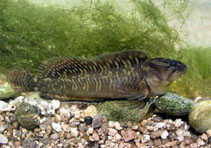
分類 / 名前 共通名の | 類義語 | Catalog of Fishes(部類, 種) | ITIS | CoL | WoRMS | Cloffa
> Blenniiformes (Blennies) > Blenniidae (Combtooth blennies) > Blenniinae
Etymology: Salariopsis: The suffix -opsis, from the ancient Greek 'view, appearance', is added to the epithet "Salaria" to highlight its apparent, but misleading, morphological similarity to the blenniid genus Salaria Forsskål, 1775 (Ref. 128181).
Etymology: Salariopsis: The suffix -opsis, from the ancient Greek 'view, appearance', is added to the epithet "Salaria" to highlight its apparent, but misleading, morphological similarity to the blenniid genus Salaria Forsskål, 1775 (Ref. 128181).
環境:環境 / 気候帯 / 深さの範囲 / 分布範囲 生態学
; 新鮮な水; 汽水性の 底生の; pH range: 6.5 - 7.5; dH range: 8 - 12; potamodromous (Ref. 138297). Subtropical; 18°C - 24°C (Ref. 13371); 47°N - 32°N, 7°W - 37°E
分布 領土 | 国連食糧農業機関の区域 | エコシステム | 事件 | 目的のマップ | 導入 | Faunafri
Africa, Europe: Africa: Rivers and brooks in Morocc and Algeria flowing to the Mediterranean; including Israel. Europe: Portugal (Ref. 13612), Spain, France, Italy, Croatia, Montenegro, Albania , Greece (Ref. 26100). Asia: Turkey.
サイズ / 重さ / 年齢
成熟: Lm ? range ? - ? cm
Max length : 15.4 cm TL オス/雌雄の選別がない; (Ref. 95757); common length : 8.0 cm TL オス/雌雄の選別がない; (Ref. 556); 最大記録サイズ: 5 年 (Ref. 59043)
Max length : 15.4 cm TL オス/雌雄の選別がない; (Ref. 95757); common length : 8.0 cm TL オス/雌雄の選別がない; (Ref. 556); 最大記録サイズ: 5 年 (Ref. 59043)
簡単な記述 検索表 | 形態学 | 形態計測学
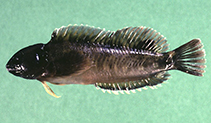
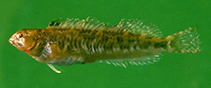
背面の脊椎 (合計) : 12 - 13; 背鰭 (合計) : 16 - 17; 肛門の骨: 2; 臀鰭: 16 - 19; 脊つい: 36. Diagnosis: This species is distinguished from its congeners in European inland waters by the following combination of characters: a broad diagonal band of tiny dots running from eye backward and downward; branched cirrus above eye; head length 25-31% SL; upper jaw with 16-24 teeth, lower jaw with 16-20; A II,16-19; D XII-XIII,16-17 (Ref. 59043).
Body shape (shape guide): fusiform / normal.
Body shape (shape guide): fusiform / normal.
Facultative air-breathing in the genus (Ref. 126274); Adults occur in rivers and brooks (Ref. 4342), in relatively shallow water as well as in low altitude lakes (Ref. 30578), on stone bottom; in streams, deepest and fastest microhabitats are preferred and sometimes coastal lagoons with low salinity (Ref. 59043). Reported from marine environment (Ref. 58342). A territorial species that lives up to 5 years (Ref. 59043). Adults feed on small benthic organisms, aquatic insects and pupae (Ref. 94105). Oviparous (Ref. 205). Females spawn for the first time at the end of the first year and spawning lasts up to 3 years but with most females dying at the end of the first spawning year. One female spawns up to 1,200 eggs (usually 200-300) in a single layer under a large stone; spawns several egg portions during the season. On the other hand, the males clean, fan and defend the eggs until hatching. Several females may spawn with one male, which may guard the eggs at different stages of development (Ref. 59043). Eggs are demersal and adhesive; eggs hatch in about a week (Ref. 205, 59043). Planktonic larvae until about 1.5 cm, are drifted to and remain in quiet pools or side arms of rivers (Ref. 59043). Populations are threatened due to pollution and water abstraction (Ref. 26100); most riverine populations affected by habitat alteration (especially siltation and alteration of stream morphology), and predation of exotic species. Presence of habitat suitable for the pelagic 'larval' stage downstream of spawning sites is a limiting factor; lacustrine population are apparently safer (Ref. 59043).
ライフサイクルと交尾行動 成熟 | 繁殖 | 放精 | 卵 | 生産力 | 幼生
Produces 200-300 eggs (Ref. 1672). Paternal care (Ref. 4342). Male cleans, fans and defends eggs until hatching. Several females spawn with one male, which may guard eggs at different stages of development. Eggs hatch in about a week (Ref.59043).
主な参考文献
参考文献のアップロード | 参考文献 | コーディネーター : Williams, Jeffrey T. | 協力者
Bath, H., 1986. Blenniidae. p. 355-357. In J. Daget, J.-P. Gosse and D.F.E. Thys van den Audenaerde (eds.) Check-list of the freshwater fishes of Africa (CLOFFA). ISNB, Brussels, MRAC, Tervuren; and ORSTOM, Paris. Vol. 2. (Ref. 4342)
CITES
Not Evaluated
人間に対する脅威
Harmless
人間の用途
水産業: 興味がない; 水族館・水槽: 商業
FAO - Publication: search | FishSource |
より多くの情報
解剖学
カマ
脳
オトリス
カマ
脳
オトリス
用具
オーガニック・クイズ | 電子書籍 | 野外観察図鑑 | 長さ-周波数ウィザード | 生活史の基盤ツール | 目的のマップ |
キャッチ-MSY |
特記事項
XMLをダウンロードして下さい
インターネットの情報源
AFORO (otoliths) | Aquatic Commons | BHL | Cloffa | Websites from users | Check FishWatcher | CISTI | Catalog of Fishes: 部類, 種 | DiscoverLife | DORIS | ECOTOX | FAO - Publication: search | Faunafri | Fishipedia | Fishtrace | GloBI | Google Books | Google Scholar | Google | IGFA World Record | 国のデーターベース | OneZoom | Open Tree of Life | Otolith Atlas of Taiwan Fishes | 公共の水族館 | PubMed | Reef Life Survey | Socotra Atlas | TreeBase | 生命の木 | Wikipedia: 行く, 検索する | World Records Freshwater Fishing | 動物に関する記録
モデルに基づく推定値
好ましい温度 (参照 123201): 16.2 - 19.7, mean 18.1 °C (based on 80 cells).
系統多様性指数 (参照 82804): PD50 = 0.6250 [Uniqueness, from 0.5 = low to 2.0 = high].
Bayesian length-weight: a=0.01000 (0.00707 - 0.01415), b=3.08 (2.98 - 3.18), in cm total length, based on LWR estimates for this species (Ref. 93245).
栄養段階 (参照 69278): 3.5 ±0.37 se; based on food items.
Generation time: 1.8 ( na - na) years. Estimated as median ln(3)/K based on 1 growth studies.
回復力 (参照 120179): 手段, 1.4年~4.4年の倍増期間の最小個体群 (Fec = 200).