This website uses cookies to enhance your browsing experience and ensure the functionality of our site. For more detailed information about the types of cookies we use and how we protect your privacy, please visit our Privacy Information page.
×
Cookie Settings
This website uses different types of cookies to enhance your experience. Please select your preferences below:
> Eupercaria/misc (Various families in series Eupercaria) > Labridae (Wrasses) > Julidinae
Etymology: Pseudojuloides:Greek, pseudes = false + Greek, iouis = a fish without identification, perhaps some of genus Coris cited by Plinius + Greek, oides = similar to (Ref. 45335); atavai:Name from Tahitian word 'atavai' meaning pretty, referring to the attractive coloration of both sexes of the species. Eponymy: Not an eponym but from the Tahitian word for ‘pretty’. (Ref. 128868), visit book page. More on authors: Randall & Randall.
Ambiente: milieu / zona climática / intervalo de profundidade / gama de distribuição Ecologia
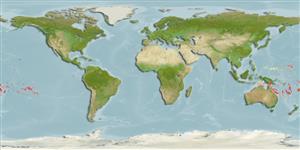
marinhas associadas(os) a recifes; intervalo de profundidade 12 - 31 m (Ref. 1602). Tropical; 14°N - 28°S
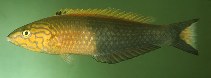
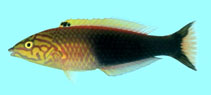
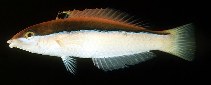
Espinhos dorsais (total) : 9; Raios dorsais moles (total) : 11; Espinhos anais: 3; Raios anais moles: 12; Vértebras: 25. This species is distinguished from its congeners by the following characters: body elongate with greatest body depth 22.6-25.3% SL; D IX,11; A III,12; pectoral-fin rays 13; tubed lateral-line scales 28. Colouration: interspinous membrane between anterior two to three spines of dorsal fin has a black spot; males with head yellow and extensively reticulate; abdominal region behind pelvic and pectoral fins is orange to orange-pink with yellow crosshatch markings; posterior part of body purple black; females are distinctly bicolored, orange-brown dorsally, white ventrally (Ref. 123182). Cross section: compressed.
Found well above the bottom of exposed seaward reefs (Ref. 9710) away from lagoons and sheltered bays (Ref. 123182). Feeds on small invertebrates (Ref. 89972).
Ciclo de vida e comportamento de acasalamento Maturidade | Reprodução | Desova | Ovos | Fecundidade | Larvas
Oviparous, distinct pairing during breeding (Ref. 205).
Randall, J.E. and H.A. Randall, 1981. A revision of the labrid fish genus Pseudojuloides, with descriptions of five new species. Pac. Sci. 35(1):51-74. (Ref. 2140)
Categoria na Lista Vermelha da IUCN (Ref. 130435: Version 2025-2 (Global))
Ciclo de vida Reprodução Maturidade Maturidade/Rel. das guelras Fecundidade Desova Agregações de desova Ovos Desenvolvimento dos ovos Larvas Dinâmica larvar
Fisiologia Composição corporal Nutrientes Consumo de oxigénio Tipo de natação Velocidade de natação Pigmentos visuais Som de peixe Doenças e Parasitas Toxicidade (LC50s)
Temperatura preferida (Ref. 123201): 24.7 - 26.3, mean 26.1 °C (based on 12 cells).
Índice de diversidade filogenética (Ref. 82804): PD50 = 0.5000 [Uniqueness, from 0.5 = low to 2.0 = high].
Bayesian length-weight: a=0.00977 (0.00468 - 0.02039), b=3.07 (2.90 - 3.24), in cm total length, based on LWR estimates for this (Sub)family-body shape (Ref. 93245).
Nível Trófico (Ref. 69278): 3.4 ±0.4 se; based on size and trophs of closest relatives
Resiliência (Ref. 120179): Elevada, tempo mínimo de duplicação da população menor que 15 meses (Preliminary K or Fecundity.).
Vulnerabilidade da pesca (Ref. 59153): Low vulnerability (10 of 100). 🛈