



Galeorhinus galeus (Linnaeus, 1758)
Tope shark
Добавить Ваши наблюдения в Fish Watcher
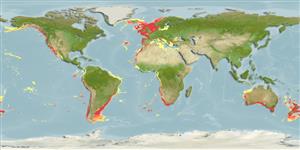
| Native range | All suitable habitat | Point map | Year 2050 |
|
| This map was computer-generated and has not yet been reviewed. |
| Galeorhinus galeus AquaMaps Data sources: GBIF OBIS |
Загрузить свой Фото и Видео
изображения | Видео | Изображение на Google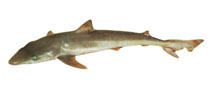 Galeorhinus galeus
Изображение сделано SeaFIC
изображения | Видео | Изображение на Google
Изображение сделано SeaFIC
Классификация / Имена народные названия | синонимы | Catalog of Fishes(род, виды) | ITIS | CoL | WoRMS | Cloffa
Пластиножаберные (акулы и скаты) (sharks and rays) > Carcharhiniformes (Ground sharks) > Triakidae (Houndsharks) > Galeorhininae
Etymology: Galeorhinus: galeo, probably based on G. galeus (see below); rhinus, an ancient name for sharks, from rhine (Gr.), rasp, alluding to their rasp-like skin (See ETYFish); galeus: From galeos, a small shark or dogfish per Aristotle (sometimes translated as weasel), possibly referring to the pointed snouts, swift movements and/or rapacious feeding behavior of smaller predatory sharks1 (See ETYFish).
More on author: Linnaeus.
Etymology: Galeorhinus: galeo, probably based on G. galeus (see below); rhinus, an ancient name for sharks, from rhine (Gr.), rasp, alluding to their rasp-like skin (See ETYFish); galeus: From galeos, a small shark or dogfish per Aristotle (sometimes translated as weasel), possibly referring to the pointed snouts, swift movements and/or rapacious feeding behavior of smaller predatory sharks1 (See ETYFish).
More on author: Linnaeus.
Окружающая среда: среда / климатическая зона / пределы глубины / диапазон распространения экология
морской донно-пелагический; мигрирует в океане (Ref. 51243); пределы глубины 0 - 1100 m (Ref. 26346), usually 2 - 471 m (Ref. 43939). Subtropical; 70°N - 58°S, 111°E - 37°E
распространение Территории | регионы FAO | Экосистемы | места находок | карта точек | интродукции | Faunafri
World-wide in cold to warm temperate waters.
Длина при первой зрелости / Размер / Вес / Возраст
половая зрелость: Lm 144.1, range 120 - 185 cm
Max length : 193 cm TL самец/пол неопределен; (Ref. 40637); 195.0 cm TL (female); common length : 160 cm TL самец/пол неопределен; (Ref. 9258); наибольший вес (опубликованные данные): 44.7 kg (Ref. 40637); наибольший возраст (опубликованны данные): 55 годы (Ref. 6871)
Max length : 193 cm TL самец/пол неопределен; (Ref. 40637); 195.0 cm TL (female); common length : 160 cm TL самец/пол неопределен; (Ref. 9258); наибольший вес (опубликованные данные): 44.7 kg (Ref. 40637); наибольший возраст (опубликованны данные): 55 годы (Ref. 6871)
Краткое описание определительные ключи | морфология | морфометрия
колючие лучи спинного плавника (общее число) : 0; колючие лучи анального плавника: 0. A large houndshark with a long, pointed snout, a large mouth, and small blade-like teeth; 2nd dorsal about as large as anal fin and terminal caudal lobe as long as rest of fin (Ref. 5578). Greyish above, white below; young with black markings on fins (Ref. 5578).
Body shape (shape guide): elongated.
Body shape (shape guide): elongated.
Mainly demersal on continental and insular shelves, but also on the upper slopes, at depths from near shore to 550 m (Ref. 6871), but has been shown to be pelagic in the open ocean (frequently caught on floating tuna longlines over deep water, and many New Zealand-tagged specimens have been recaptured in Australia) (Ref. 26346). Occurs in small schools that are highly migratory in higher latitudes in their range (Ref. 244). There is pronounced partial segregation by size and sex in some areas (Ref. 244). Feeds on fishes (bottom as well as pelagic species, Ref. 26346), crustaceans, cephalopods, worms, and echinoderms (Ref. 244). Ovoviviparous (Ref. 50449). Targeted for human consumption, liver for squalene oil, fins for soup (Ref. 244); also utilized as fishmeal (Ref. 13563). Marketed fresh, dried-salted, and frozen (Ref. 9987). Adapts well in captivity if carefully captured and handled (Ref. 12951).
Жизненный цикл и брачное поведение половая зрелость | размножение | нерест | икра | Плодовитость | личинки
Ovoviviparous, without a yolk-sac placenta (Ref. 244). Embryos feed solely on yolk (Ref. 50449). 6 to 52 young in a litter (Ref. 26346). Litter size increases with the size of the mother. Embryos reach 30-36 cm TL at birth (Ref. 6080). In the southern waters of Australia, newly born and older juveniles (30-70 cm long) aggregate in 'nursery areas' found in shallow waters.They move to deeper coastal waters to over-winter. The following spring finds most of these young returning to their nursery areas. The older ones, aged 2 years and over move instead to eastern Bass Strait where most of the immature stock are found. The length of an average full-term embryo is 32 cm. Spawning frequency is once every year, ovulation occurring in early summer and parturition is completed by January of the following year. Gestation period lasts for about 12 months (Ref. 6390, 6871).
Основная ссылка
Загрузите свои рекомендации | ссылки | координатор : Compagno, Leonard J.V. | соавторы
Compagno, L.J.V., 1984. FAO Species Catalogue. Vol. 4. Sharks of the world. An annotated and illustrated catalogue of shark species known to date. Part 2 - Carcharhiniformes. FAO Fish. Synop. 125(4/2):251-655. Rome: FAO. (Ref. 244)
Статус Красного Списка МСОП (Ref. 130435: Version 2025-2 (Global))
В критическом состоянии (CR) (A2bd); Date assessed: 14 February 2020
CITES
Not Evaluated
Угроза для людей
Harmless (Ref. 13563)
Использование человеком
рыболовство: важный объект промысла; объект спортивного рыболовства: да; аквариум: общественные аквариумы
FAO - рыболовство: посадки, Видовой профиль; Publication: search | FishSource | Море вокруг нас
дополнительная информация
Трофическая экология
Пищевые предметы (добыча)
состав пищи
потребление пищи
Продовольственные пайки
хищники
Пищевые предметы (добыча)
состав пищи
потребление пищи
Продовольственные пайки
хищники
Динамика численности населения
Параметры роста
Макс. возраст / размер
Отношение длины к весу.
Отношение длины к длине.
Размерный состав
Преобразование массы
пополнение
численность
Параметры роста
Макс. возраст / размер
Отношение длины к весу.
Отношение длины к длине.
Размерный состав
Преобразование массы
пополнение
численность
Жизненный цикл
размножение
половая зрелость
Зрелость/Жиры относительно.
Плодовитость
нерест
Нерестовые скопления
икра
Развитие икры
личинки
динамика численности личинок
размножение
половая зрелость
Зрелость/Жиры относительно.
Плодовитость
нерест
Нерестовые скопления
икра
Развитие икры
личинки
динамика численности личинок
Физиология
Состав тела
Питательные вещества
Потребление кислорода
Тип плавания
Скорость плавания
Зрительные пигменты
Звук рыбы
Болезни и паразиты
Токсичность (LC50s)
Состав тела
Питательные вещества
Потребление кислорода
Тип плавания
Скорость плавания
Зрительные пигменты
Звук рыбы
Болезни и паразиты
Токсичность (LC50s)
Связанные с человеком
Системы аквакультуры
особенности рыбоводства
степень растяжения
Случаи заболевания сигуатерой
Марки, монеты и прочее.
Системы аквакультуры
особенности рыбоводства
степень растяжения
Случаи заболевания сигуатерой
Марки, монеты и прочее.
инструменты
Органическая викторина | Электронная книга | полевой определитель | определительные ключи | Длина-Частота | онтогенез | карта точек |
Catch-MSY |
Специальные отчеты
Проверить содержание в аквариумах | Проверить опубликованные видовые данные | Проверить опубликованные данные по аквакультуре
Скачать в формате XML
ресурсы в Интернет
AFORO (otoliths) | Aquatic Commons | BHL | Cloffa | Websites from users | Проверить FishWatcher | CISTI | Catalog of Fishes: род, виды | DiscoverLife | ECOTOX | FAO - рыболовство: посадки, Видовой профиль; Publication: search | Faunafri | Fishipedia | Fishtrace | GloBI | Google Books | Google Scholar | Google | IGFA World Record | национальные базы данных | OceanAdapt | OneZoom | Open Tree of Life | Otolith Atlas of Taiwan Fishes | общественные аквариумы | PubMed | Reef Life Survey | Socotra Atlas | TreeBase | Tree of Life | Wikipedia: Вперёд, поиск | World Records Freshwater Fishing | Зоологическая летопись
Оценки, основанные на моделях
Предпочтительная температура (ссылка 123201): 6.7 - 23.2, mean 12.3 °C (based on 7314 cells).
Индекс филогенетического разнообразия (ссылка 82804): PD50 = 1.0000 [Uniqueness, from 0.5 = low to 2.0 = high].
Bayesian length-weight: a=0.00479 (0.00363 - 0.00631), b=2.99 (2.91 - 3.07), in cm total length, based on LWR estimates for this species (Ref. 93245).
Трофический уровень (ссылка 69278): 4.3 ±0.1 se; based on diet studies.
Generation time: 11.9 (6.9 - 14.7) years. Estimated as median ln(3)/K based on 12 growth studies.
устойчивость к внешним воздействиям (ссылка 120179): низкий, минимальное время удвоения популяции 4.5-14 лет (rm=0.033; tmax=55; Fec=6-52).
Prior r = 0.06, 95% CL = 0.04 - 0.09, Based on 2 full stock assessments.
Питательные вещества (Ref. 124155): Calcium = 8.56 [1.46, 48.15] mg/100g; Iron = 0.465 [0.128, 1.502] mg/100g; Protein = 20 [18, 22] %; Omega3 = 0.18 [0.11, 0.30] g/100g; Selenium = 44.2 [13.5, 139.5] μg/100g; VitaminA = 13.1 [4.2, 44.7] μg/100g; Zinc = 0.409 [0.194, 0.769] mg/100g (wet weight); based on nutrient studies.