Electrophorus electricus, Electric eel : fisheries, gamefish, aquarium

Electrophorus electricus (Linnaeus, 1766)

Electric eel
را بارگذاری کني تصاوير و فيلم ها
عکس ها | تصوير گوگل
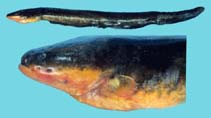
Image of Electrophorus electricus (Electric eel)
Electrophorus electricus
عکس از Holm, E.

رده بندی / نام‌ها اسامي عام | مترادف | Catalog of Fishes(جنس, گونه ها) | ITIS | CoL | WoRMS | Cloffa

> Gymnotiformes (Knifefishes) > Gymnotidae (Naked-back knifefishes) > Electrophorinae
Etymology: Electrophorus: Greek, elektron = amber + Greek,pherein = to carry (Ref. 45335).
More on author: Linnaeus.

Taxonomic Remarks
If confirmed as having been actually made available before Gymnotus electricus Linnaeus (1766), Gymnotus tremulus Houttuyn (1764) should be regarded as the senior synonym. However, following Articles 23.9.1 and 23.9.2 of the Code (ICZN, 1999), Gymnotus electricus must be regarded as the valid name, and qualified as a nomen protectum, and Gymnotus tremulus as a nomen oblitum. It seems that both Houttuyn’s (1764) and Linnaeus’ (1766) descriptions were based on previous descriptions by other authors (i.e., primarily, Gronovius and Seba), and that no specimens were actually examined by these authors regarding their proposals of new species. Gronovius’ specimen (or specimens) is currently probably lost, but Seba’s specimen (which apparently have come from the Essequibo river; Seba, 1758, III, p.108, pl. 34, fig. 6) is probably housed in the Rijksmuseum van Natuurlijke Historie, Leiden (Netherlands). That should, then, be considered the remaining name-bearing type for both species above (ICZN, 1999, Article 72.5.6).

محیط زیست: محیط زیست / منطقه آب و هوایی / تغييرات عمق / محدوده توزیع بوم شناسي

; آب شيرين موجوداتی که در محدوده وسیعی از آبهای آزاد از نزدیک بستر و یا روی کف بستر، در قسمت های میان آبی تا سطح آب و در برخی گونه ها با قابلیت پرواز، زندگی و تغذیه می کنند.. Tropical; 23°C - 28°C (Ref. 1672)

پراكنش سرزمین‌ها | مناطق سازمان خوار و بار جهاني (FAO) | اکوسیستم‌ها | ظهور | نقشه نقطه ای | معرفي | Faunafri

South America: restricted to the Guiana Shield.

اندازه / وزن / سن

بلوغ: Lm ?  range ? - ? cm
Max length : 250 cm SL جنس نر / بدون خواص جنسي; (Ref. 27188); بيشينه وزن گزارش شده: 20.0 kg (Ref. 27188)

توصيف مختصر كليدهاي شناسايي | ريخت شناسي | ريخت ستجي بوسيله انداره گيري

خارهاي باله پشتي (کل) : 0; شعاع نرم باله پشتي (کل) : 0. This species is distinguished by the following characters: ventral outline of head U-shaped, widest at terminus of branchial opening and lateral-line pores 88-101 (vs. ovoid, widest anterior to branchial opening, 112-146 in E. voltai); differs from E. varii with skull depressed, cleithrum lies between vertebrae 5 and 6 (vs. (vs. skull deep with cleithrum lying between vertebrae 1 and 2), pectoral-fin rays 32-38 (vs. 20-28) and lateral-line pores 88-101 (vs. 124-186). Low-voltage (Sachs’ organ) electric organ discharges or EODs and high-voltage (main/Hunter’s organ) with head-positive monophasic waveform. Low voltage EOD 2.03-2.19 ms duration; high-voltage EOD 480 V at 760mm TL (Ref. 120918).
Body shape (shape guide): elongated; Cross section: oval.

زيست شناسي     واژه نامه (بعنوان مثال epibenthic)

Prefer muddy bottoms and calm waters; frequently found in coastal plains, swamps and creeks but is also found inland where a favorable biotope exist. Juveniles feed on invertebrates, adults feed on fish and small mammals (Ref. 12225), first-born larvae prey on other eggs and embryos coming from late spawning batches (Ref. 40645). The electric organ of this species consists of flattened electrocytes, numbering to about hundreds of thousands, connected in series (Ref. 10840; 10011). Generates two type of electric organ discharges (EODs) from different electric organs which are of myogenic derivation: 1) low-voltage EODs (about 10 V) emitted by the Sach's organ at rates of up to 25 Hz, and 2) high-voltage EODs (about 50-fold) emitted by the main and Hunter's organs at peak rates of up to several hundred Hz. Low-voltage EOD has been associated with electro location whereas high-voltage EOD has been noted during predatory attacks (Ref. 10011). An EOD of 500 V was recorded from a 1 m specimen (Ref. 10530), making it a potentially dangerous species. Incorporation of this species in fish-based house security systems has been suggested (see Ref. 9506). Also possesses high-frequency sensitive tuberous receptors patchily distributed over the body that seems useful for hunting other gymnotiforms (Ref. 10583). A nocturnal species; captive specimens showed higher low-voltage EOD activity during the night compared to daytime (Ref. 10011). This cycle seems to be free-running (internally controlled) (Ref. 10829). Probably a fractional spawner; fecundity count was17,000 eggs (Ref. 10630). An obligatory air breather (Ref. 10011) and can withstand poorly oxygenated water (Ref. 26457). Used in experimental studies.

چرخه زندگی و رفتار جفت‌گیری بلوغ | تولید مثل | تخم ریزی | تخم ها | باروری | توزاد ( لارو)

Males construct foam nests and guard the growing larvae until mid-January when the first seasonal rains flood the breeding area, causing the about 10 cm long young eels to disperse (Ref. 40645). Males outnumber females (3:1) and are considerably larger than females (Ref. 40645). There are three successive batches of eggs deposited in a spawning period. Not all eels with fully developed gonads (in Goiapi drainnage) participated in the annual spawning activity suggesting that mating success depends in part on finding suitable breeding sites (Ref. 40645).

مآخذ اصلی مراجع خود را بارگذاری کنید | مراجع | هماهنگ كننده : Campos-da-Paz, Ricardo | همكاران

de Santana, C.D., W.G.R. Crampton, C.B. Dillman, R.G. Frederico, M.H. Sabaj, R. Covain, J. Ready, J. Zuanon, R.R. de Oliveira, R.N. Mendes-Júnior, D.A. Bastos, T.F. Teixeira, J. Mol, W. Ohara, N.C. de Castro, L.A. Peixoto et al., 2019. Unexpected species diversity in electric eels with a description of the strongest living bioelectricity generator. Nature Communications (2019)10:4000. [+authors; Nagamachi, C.; Sousa, L.; Montag, L.F.A.; Ribeiro, F.; Waddell, J.C.; Piorsky, N.M.; Vari, R.P.; Wosiacki, W.B.] (Ref. 120918)

وضعيت در فهرست قرمز IUCN (Ref. 130435: Version 2025-2 (Global))

  حداقل نگرانی (LC) ; Date assessed: 12 August 2020

CITES

Not Evaluated

CMS (Ref. 116361)

Not Evaluated

خطر برای انسان ها

Other


استفاده انسانی

ماهي گيري – شيلات: تجاري; ماهي ها ي سرگرم كننده: بله; آكواريوم: آکواریوم عمومی
FAO - Publication: search | FishSource |

اطلاعات بيشتر

بوم‌شناسی گرمسیری
اقلام غذایی (طعمه‌ها)
تركيب غذايي
مصرف غذايي
جیره غذایی
شکارچیان
بوم شناسي
بوم شناسي
پویایی جمعیت
پارامترهای رشد
حداکثر سن/اندازه
نسبت طول-وزن.
طول-طول نسبی.
نوسانات طولی
تبدیل انبوه
بازسازی
فراواني
چرخه زندگی
تولید مثل
بلوغ
بلوغ/آبشش‌ها
باروری
تخم ریزی
تجمعات تخم‌ریزی
تخم ها
نمو تخم
توزاد ( لارو)
پويايي لاروي
آناتومی
منطقه آبششي
مغز
اتولیت
فیزیولوژی
ترکیب بدن
مواد مغذی
مصرف اکسیژن
نوع شنا
سرعت شنا
رنگدانه‌های بصری
صدای ماهی
بیماری‌ها و انگل‌ها
سمیت (LC50s)
ژنتيك
ژنوم
ژنتيك
هتروزیگوسیتی
وارث
تنوع ژنتیکی
مرتبط با انسان
سیستم‌های آبزی‌پروری
نمايه هاي آبزي پروري
نژادها
موارد سیگواترا
تمبر، سکه، متفرقه.
اطلاع رسانی
همكاران
مراجع
مراجع

ابزارها

گزارش های ويژه

بارگيری XML

منابع اينترنتي

AFORO (otoliths) | Aquatic Commons | BHL | Cloffa | Websites from users | فيش واچر را ببينيد | CISTI | Catalog of Fishes: جنس, گونه ها | DiscoverLife | ECOTOX | FAO - Publication: search | Faunafri | Fishipedia | Fishtrace | GloBI | Google Books | Google Scholar | Google | IGFA World Record | OneZoom | Open Tree of Life | Otolith Atlas of Taiwan Fishes | آکواریوم عمومی | PubMed | Reef Life Survey | Socotra Atlas | TreeBase | Tree of Life | Wikipedia: برو, جستجو | World Records Freshwater Fishing | سوابق جانورشناسی

تخمین‌ها بر اساس مدل‌ها

شاخص تنوع فیلوژنتیکی (مرجع 82804):  PD50 = 0.6250   [Uniqueness, from 0.5 = low to 2.0 = high].
Bayesian length-weight: a=0.00389 (0.00180 - 0.00842), b=3.12 (2.94 - 3.30), in cm total length, based on all LWR estimates for this body shape (Ref. 93245).
سطح تروفیک (مرجع 69278):  3.9   ±0.52 se; based on food items.
جهندگی (مرجع 120179):  متوسط, كمينه زمان لازم براي دو برابر شدن جمعيت 4/1 – 4/4 سال (tm=3; tmax=6 (captive); Fec=17,000).
آسیب‌پذیری ماهیگیری (Ref. 59153):  Very high vulnerability (90 of 100). 🛈
طبقه قيمت (Ref. 80766):   Unknown.