



Bathyraja interrupta (Gill & Townsend, 1897)
Bering skate
เพิ่มการสังเกตของคุณใน Fish Watcher
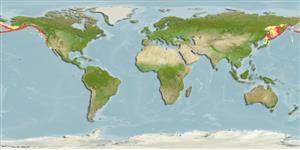
| Native range | All suitable habitat | Point map | Year 2050 |
|
| This map was computer-generated and has not yet been reviewed. |
| Bathyraja interrupta AquaMaps Data sources: GBIF OBIS |
อัพโหลดของคุณ ภาพถ่าย และ วิดีโอ
รูปภาพหลายรูป | Google image Bathyraja interrupta
ภาพโดย Orlov, A.
รูปภาพหลายรูป | Google image
ภาพโดย Orlov, A.
การจำแนกประเภท / ชื่อ ชื่อสามัญ | ชื่อพ้อง | Catalog of Fishes(สกุล, ชนิด) | ITIS | CoL | WoRMS | Cloffa
sub class Elasmobranchii (ฉลามและกระเบน) (sharks and rays) > Rajiformes (Skates and rays) > Arhynchobatidae (Softnose skates)
Etymology: Bathyraja: Greek, bathys = deep + Latin, raja, -ae = a ray (Raja sp) (Ref. 45335); interrupta: Name refers to the interrupted row of thorns down the middorsal and tail.
More on authors: Gill & Townsend.
Etymology: Bathyraja: Greek, bathys = deep + Latin, raja, -ae = a ray (Raja sp) (Ref. 45335); interrupta: Name refers to the interrupted row of thorns down the middorsal and tail.
More on authors: Gill & Townsend.
สิ่งแวดล้อม : สิ่งแวดล้อม / เขตภูมิอากาศ / ระดับความลึก / ระยะการกระจายสินค้า นิเวศวิทยา
เกี่ยวกับทะเล,น้ำเค็ม สัตว์หน้าดินในเขตน้ำลึก; ระดับความลึก 23 - 1500 m (Ref. 27436), usually 200 - 500 m (Ref. 126515). Deep-water
การแพร่กระจาย อาณาเขต | พื้นที่จำแนกตาม FAO | ระบบนิเวศหลายระบบ | การปรากฏขึ้น,การเกิดขึ้น,พบ | ตำแหน่งบนแผนที่ | การแนะนำ | Faunafri
North Pacific: Bering Sea, Alaska south to British Columbia, Canada.
ขนาด / น้ำหนัก / อายุ
คำอธิบายสั้นๆ เครื่องมือที่ใช้ในการแยกชนิดสัตว์,สิ่งมีชีวิตออกจากกัน | สัณฐานวิทยา | ความยาวต่างๆ
This moderately-sized skates (82.5 cm TL) with disc length (47.7-54.0% TL) are distinguished by the following; head length moderate (18.4-21.4% TL), posterior lobe of pelvic fins are long (10.4-23.4% TL); claspers are long and robust, tip rounded and not bulbous, no pseudosiphon, with a weak, but long pseudorhipidion, U-shaped cleft, projection rounded and protrudes from tip, has a very large sentina, sentinel present; teeth in 22-32 rows on upper jaw, teeth in 23-32 rows on lower jaw; total vertebrae 133; dorsal surface covered in small, sandpaper-like prickles; thorns in a non-continuous row, mature males with strong alar thorns, no malar thorns, middorsal thorns strong (1-8), nuchal thorns robust (2-5), tail thorns moderate (18-26), interdorsal thorns weak (0-1). Colouration: dorsal brown to grey, with numerous small dark spots on body; ventral white, often with dark brown blotches on underside of tail (Ref. 126515).
Cross section: flattened.
Cross section: flattened.
Inhabit the outer continental shelf, on mud or sand bottoms (Ref. 27436). Frequently found buried in substrate (Ref. 27436). Feed on benthic invertebrates including euphausiids, crabs, and various shrimps (e.g., pandalids, hippolytids, crangonids) and bony fishes. Reported size at maturity for males is 69-70 cm TL and for females 71-72 cm TL, with a maximum size of at least 89 cm TL (Ref. 126515). Oviparous. Distinct pairing with embrace. Young may tend to follow large objects, such as their mother (Ref. 205). Eggs are deposited in sandy or muddy flats (Ref. 205). Egg cases are small (7.8-7.9 cm TL), colour golden brown, covered with small and coarse prickles that form longitudinal rows. The egg cases with lateral keels very wide, horns taper and become thin and filamentous at their ends, with the anterior horn being more robust (Ref. 126515). Although the pectoral fins may be used to prepare a variety of dishes, they are generally considered not saleable, and incidental catches are usually discarded (Ref. 27436). Occasionally used to produce mink feed and fertilizer (Ref. 27436). Minimum depth reported from Ref. 6793.
วงจรชีวิตและพฤติกรรมการผสมพันธุ์ วัยเจริญพันธุ์ | การสืบพันธุ์ | การวางไข่ | เซลสืบพันธ์ของเพศเมีย(ไข่) | ความดกของไข่ | ตัวอ่อน
Oviparous, paired eggs are laid. Embryos feed solely on yolk (Ref. 50449). Distinct pairing with embrace. Young may tend to follow large objects, such as their mother (Ref. 205).
อ้างอิงหลัก
อัพโหลดข้อมูลอ้างอิงของคุณ | อ้างอิง | ผู้ประสานงาน : McEachran, John | ผู้ร่วมมือ
Knuckey, J.D.S. and D.A. Ebert, 2022. A taxonomic revision of Northeast Pacific softnose skates (Rajiformes: Arhynchobatidae: Bathyraja Ishiyama). Zootaxa 5142(1):1-89. (Ref. 126515)
สถานะบัญชีแดงของ IUCN (Ref. 130435: Version 2025-2 (Global))
Least Concern (LC) ; Date assessed: 19 September 2023
CITES
Not Evaluated
ภัยคุกคามต่อมนุษย์
Harmless
การใช้ของมนุษย์
การประมง: bycatch
FAO - Publication: search | FishSource |
ข้อมูลเพิ่มเติม
พลวัตของประชากร
พารามิเตอร์การเจริญเติบโต
อายุสูงสุด / ขนาด
ความยาว-น้ำหนักสัมพันธ์
ความยาว-ความยาวสัมพันธ์
ความยาว-ความถี่
การแปลงมวล
การทดแทนที่
อุดมสมบรูณ์
พารามิเตอร์การเจริญเติบโต
อายุสูงสุด / ขนาด
ความยาว-น้ำหนักสัมพันธ์
ความยาว-ความยาวสัมพันธ์
ความยาว-ความถี่
การแปลงมวล
การทดแทนที่
อุดมสมบรูณ์
วงจรชีวิต
การสืบพันธุ์
วัยเจริญพันธุ์
ความสมบูรณ์พันธุ์/เหงือกที่เกี่ยวข้อง
ความดกของไข่
การวางไข่
การรวมตัวของสปอน
เซลสืบพันธ์ของเพศเมีย(ไข่)
การพัฒนาไข่
ตัวอ่อน
พลวัตของสัตว์น้ำวัยอ่อน
การสืบพันธุ์
วัยเจริญพันธุ์
ความสมบูรณ์พันธุ์/เหงือกที่เกี่ยวข้อง
ความดกของไข่
การวางไข่
การรวมตัวของสปอน
เซลสืบพันธ์ของเพศเมีย(ไข่)
การพัฒนาไข่
ตัวอ่อน
พลวัตของสัตว์น้ำวัยอ่อน
การแพร่กระจาย
อาณาเขต
พื้นที่จำแนกตาม FAO
ระบบนิเวศหลายระบบ
การปรากฏขึ้น,การเกิดขึ้น,พบ
การแนะนำ
BRUVS - วิดีโอ
อาณาเขต
พื้นที่จำแนกตาม FAO
ระบบนิเวศหลายระบบ
การปรากฏขึ้น,การเกิดขึ้น,พบ
การแนะนำ
BRUVS - วิดีโอ
กายวิภาคศาสตร์
พื้นที่เหงือก
สมอง
หินโสต
พื้นที่เหงือก
สมอง
หินโสต
สรีรวิทยา
องค์ประกอบของร่างกาย
สารอาหาร
การใช้ออกซิเจน
ประเภทการว่ายน้ำ
ระดับความเร็วในการว่ายน้ำ
เม็ดสีที่มองเห็นได้
เสียงปลา
โรคและปรสิต
ความเป็นพิษ (LC50s)
องค์ประกอบของร่างกาย
สารอาหาร
การใช้ออกซิเจน
ประเภทการว่ายน้ำ
ระดับความเร็วในการว่ายน้ำ
เม็ดสีที่มองเห็นได้
เสียงปลา
โรคและปรสิต
ความเป็นพิษ (LC50s)
เกี่ยวข้องกับมนุษย์
ระบบการเพาะเลี้ยงสัตว์น้ำ
ประวัติการเพาะเลี้ยงสัตว์น้ำ
สายพันธุ์
กรณีซิเกวเทอรา
แสตมป์ เหรียญ อื่นๆ
ระบบการเพาะเลี้ยงสัตว์น้ำ
ประวัติการเพาะเลี้ยงสัตว์น้ำ
สายพันธุ์
กรณีซิเกวเทอรา
แสตมป์ เหรียญ อื่นๆ
เครื่องมือ
หนังสืออิเล็กทรอนิกส์ | คู่มือภาคสนาม | ผู้มีความชำนาญในเรื่องความถี่ของความยาว | เครื่องมือในการศึกษาชีวประวัติ | ตำแหน่งบนแผนที่ |
จับ-MSY |
รายงานพิเศษ
ตรวจสอบการบำรุงรักษาตู้ปลา | ตรวจสอบเอกสารข้อเท็จจริงเกี่ยวกับสายพันธุ์ | ตรวจสอบเอกสารข้อเท็จจริงเกี่ยวกับการเพาะเลี้ยงสัตว์น้ำ
ดาวน์โหลด XML
หน้าสรุป | ข้อมูลสำคัญ | ชื่อสามัญ | ภาพถ่าย
แหล่งที่มาจากอินเตอร์เน็ต
AFORO (otoliths) | Aquatic Commons | BHL | Cloffa | Websites from users | Check FishWatcher | CISTI | Catalog of Fishes: สกุล, ชนิด | DiscoverLife | ECOTOX | FAO - Publication: search | Faunafri | Fishipedia | Fishtrace | GloBI | Google Books | Google Scholar | Google | IGFA World Record | OceanAdapt | OneZoom | Open Tree of Life | Otolith Atlas of Taiwan Fishes | PubMed | Reef Life Survey | Socotra Atlas | TreeBase | แผนภูมิชีวิตแบบต้นไม้ | Wikipedia: Go, ค้นหา | World Records Freshwater Fishing | บันทึกทางด้านสัตววิทยา
การประมาณค่าตามแบบจำลอง
อุณหภูมิที่ต้องการ (อ้างอิง 123201): 1 - 5.4, mean 2.1 °C (based on 298 cells).
ดัชนีความหลากหลายทางวิวัฒนาการ (อ้างอิง 82804): PD50 = 0.5000 [Uniqueness, from 0.5 = low to 2.0 = high].
Bayesian length-weight: a=0.00457 (0.00306 - 0.00683), b=3.05 (2.93 - 3.17), in cm total length, based on LWR estimates for this species & Genus-body shape (Ref. 93245).
ระดับชั้นอาหาร (อ้างอิง 69278): 3.4 ±0.46 se; based on food items.
ความสามารถในการกลับคืนสู่ปกติ (อ้างอิง 120179): ต่ำมาก, เวลาต่ำสุดที่จะทำให้ประชากรเพิ่มขึ้นเป็น 2 เท่าใช้เวลามากกว่า 14 ปี (Fec=6).
สารอาหาร (Ref. 124155): Calcium = 6.86 [1.23, 37.25] mg/100g; Iron = 0.31 [0.08, 1.00] mg/100g; Protein = 15.3 [12.7, 17.9] %; Omega3 = 0.488 [0.155, 1.875] g/100g; Selenium = 15.6 [4.2, 49.6] μg/100g; VitaminA = 8.6 [2.0, 38.8] μg/100g; Zinc = 0.38 [0.19, 0.71] mg/100g (wet weight);